GRACE JOURNAL | グレイスジャーナル
インタビュー|美容医療における日本と海外の違いとは ― 繊細な日本人の肌とTERASTIE誕生の理由
この記事の要点
2026年6月20日、世界最大級の美容医療学会IMCASの公式インタビューを受け、「美容医療における日本と海外の違いは?」という質問にお答えしました。
「アジア人の肌は強い」と思われがちですが、これは大きな誤解で、日本人の肌は本当に繊細です。欧米のスキンケアやデバイス治療をそのまま持ち込むと、良い結果が得られないばかりか、治療終了後しばらくしてから肝斑などの色素斑が強く再発する例もあります。この記事では、インタビューでお話しした「治療が終わった後の顔」から逆算する治療戦略と、当院がオリジナルスキンケアTERASTIE(テラスティ)を開発した理由をご報告します。
はじめに
2026年6月20日、IMCAS ASIA 2026(バンコク)の会期中に、IMCASの公式インタビューを受けました。IMCASは皮膚科・形成外科・美容医療の分野で世界最大級の国際学会です。
いただいた質問は、「美容医療における日本と海外の違いは?」というもの。世界中の医師が視聴するインタビューで、私が最初にお伝えしたのは、とてもシンプルな一言でした。
「日本人のお肌は、本当に繊細です」――今回はこのインタビューでお話しした内容を、日々スキンケアや治療の選択に迷われている方に向けてまとめます。
1. 「アジア人の肌は強い」という、大きな誤解
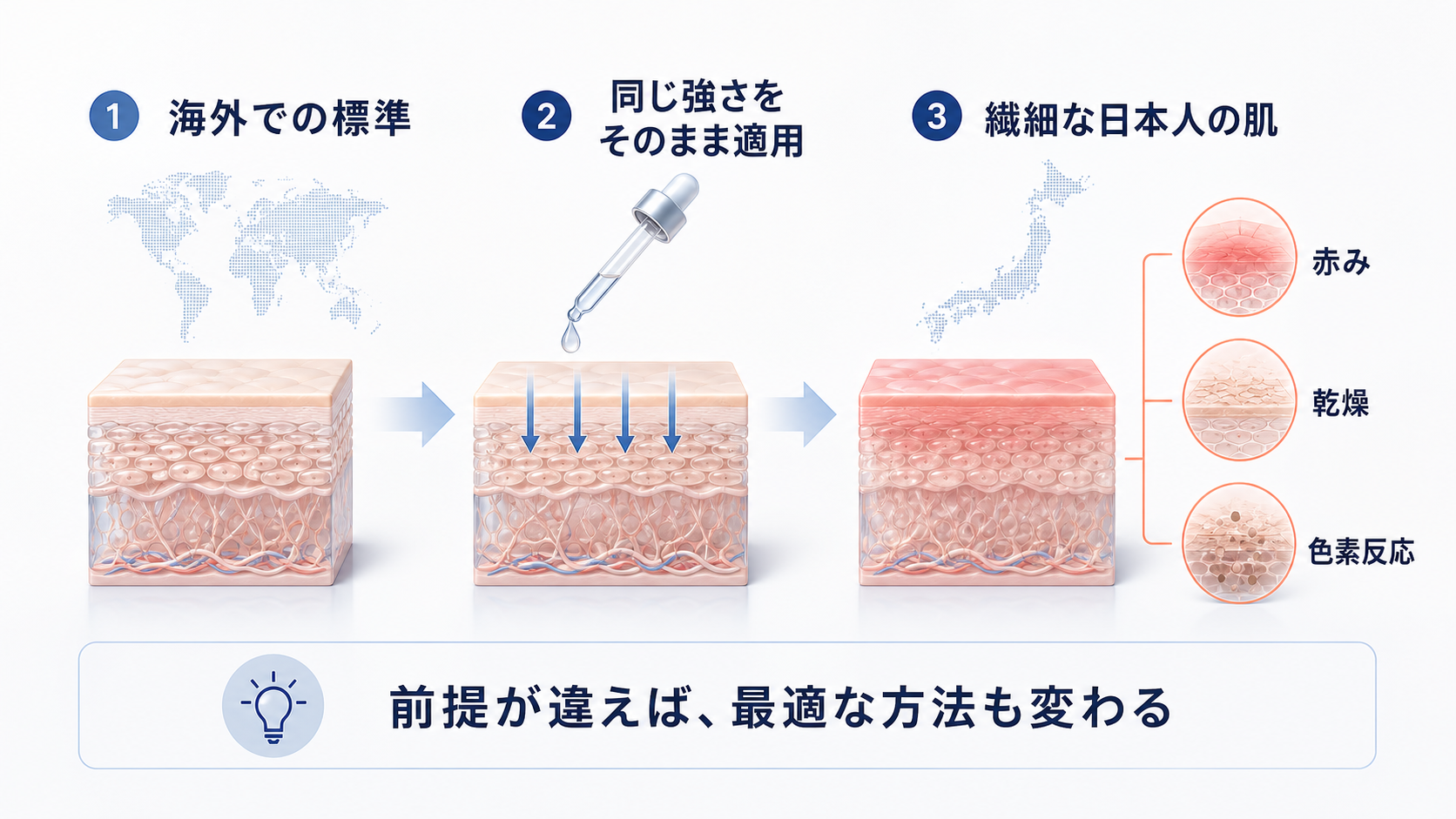
海外では、「アジア人の肌は、西洋人と比べると強いのでは?」と思われていることがあります。しかしこれは、大きな、大きな誤解だといえます。
アメリカやEU圏で使用されているスキンケア製品をそのまま持ってきて、同じように使おうとしても、良い結果が得られないばかりか、副反応がかえって強く出てしまうことがあります。
デバイス治療(レーザーや高周波などの機器を使う治療)も同様です。海外の先生方と同じような設定・同じような使い方をしても、思ったようなポジティブな結果が得られないことは、アジアの治療現場ではよく知られた事実です。
つまり、海外で優れた成績を上げている方法が、そのままの形で日本人の肌に合うとは限らない。ここが、日本と海外の違いを考えるうえでの出発点になります。
2. 「肌を強制的に生まれ変わらせる」方法の、その後に起きたこと
数年前、海外製のスキンケアで「肌を強制的に生まれ変わらせる」方法が多く使われた時期がありました。強力なビタミンA(レチノイド:肌のターンオーバー=生まれ変わりを強く促す成分)を用いる方法です。
この方法は、あるタイプの肌の方には非常に高い効果を発揮します。問題は、「その後」でした。
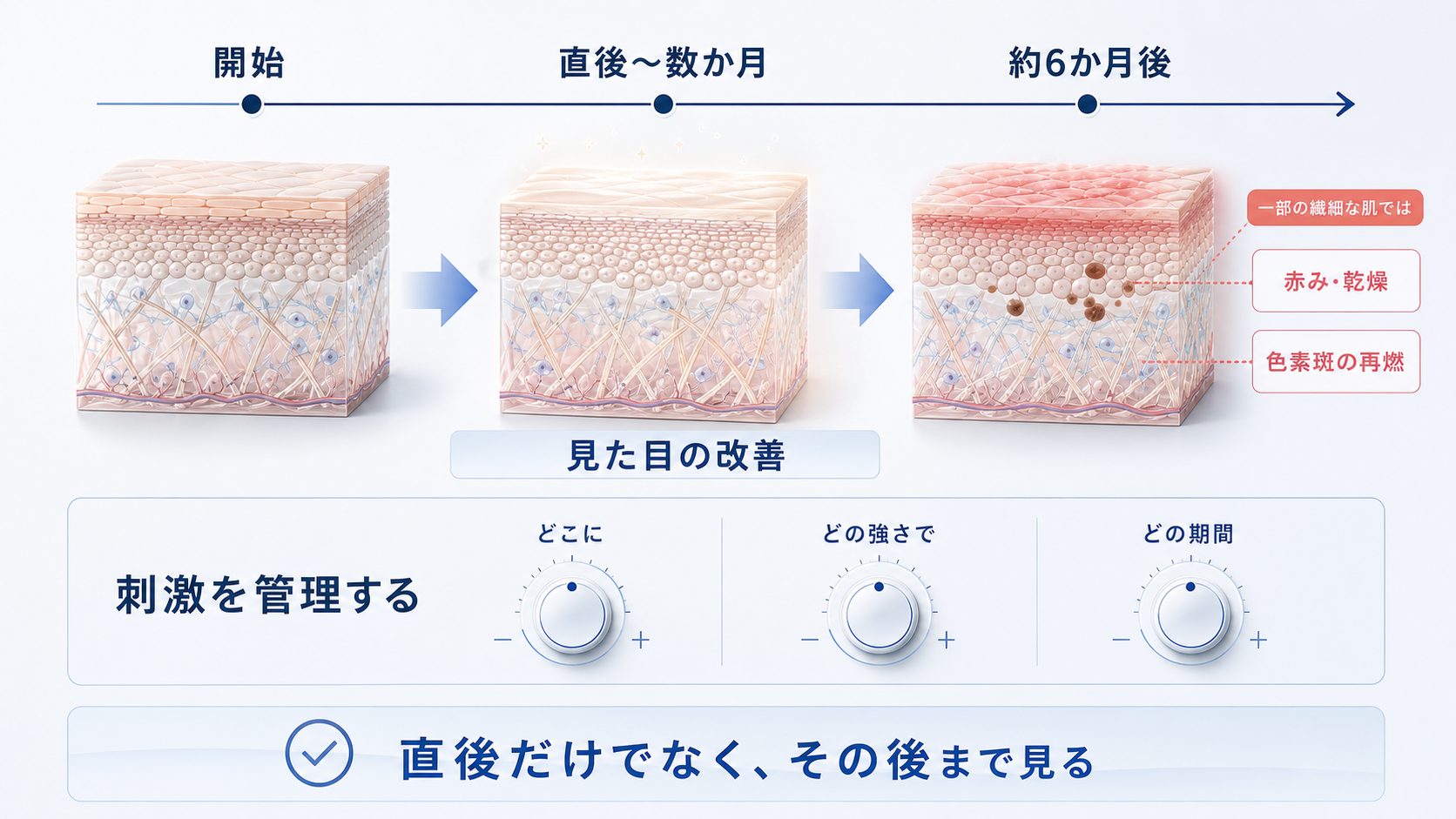
繊細な肌に海外と同じ方法をそのまま用いた場合、治療終了後6か月頃に、肝斑をはじめとした色素斑の強い再発を認める例が見られたのです。
「どこが、どのように刺激されるのか」の管理
デバイス治療と同様に、強制的に肌を刺激する場合は、どこが、どのように刺激されるのかをしっかり管理する必要があります。それがなされなかった例が、「治療して数か月はよかったけれど、その後急激に色が出てきた」という結果を生んでしまいました。
刺激そのものが悪いのではありません。管理されていない刺激が、繊細な肌にとって負担になるのです。
3. 「治療が終わった後の顔」から逆算する
新たな治療法やスキンケアを試してみること自体は、良いことです。ただしその際に必須になるのが、治療期間や直後の結果だけでなく、「終了後の顔に何が予想されるか」を見越した治療戦略です。
ある一時期だけきれいになったけれど、その後は以前より悪化してしまった――そのような治療法は、最善とは言えないと私は考えています。
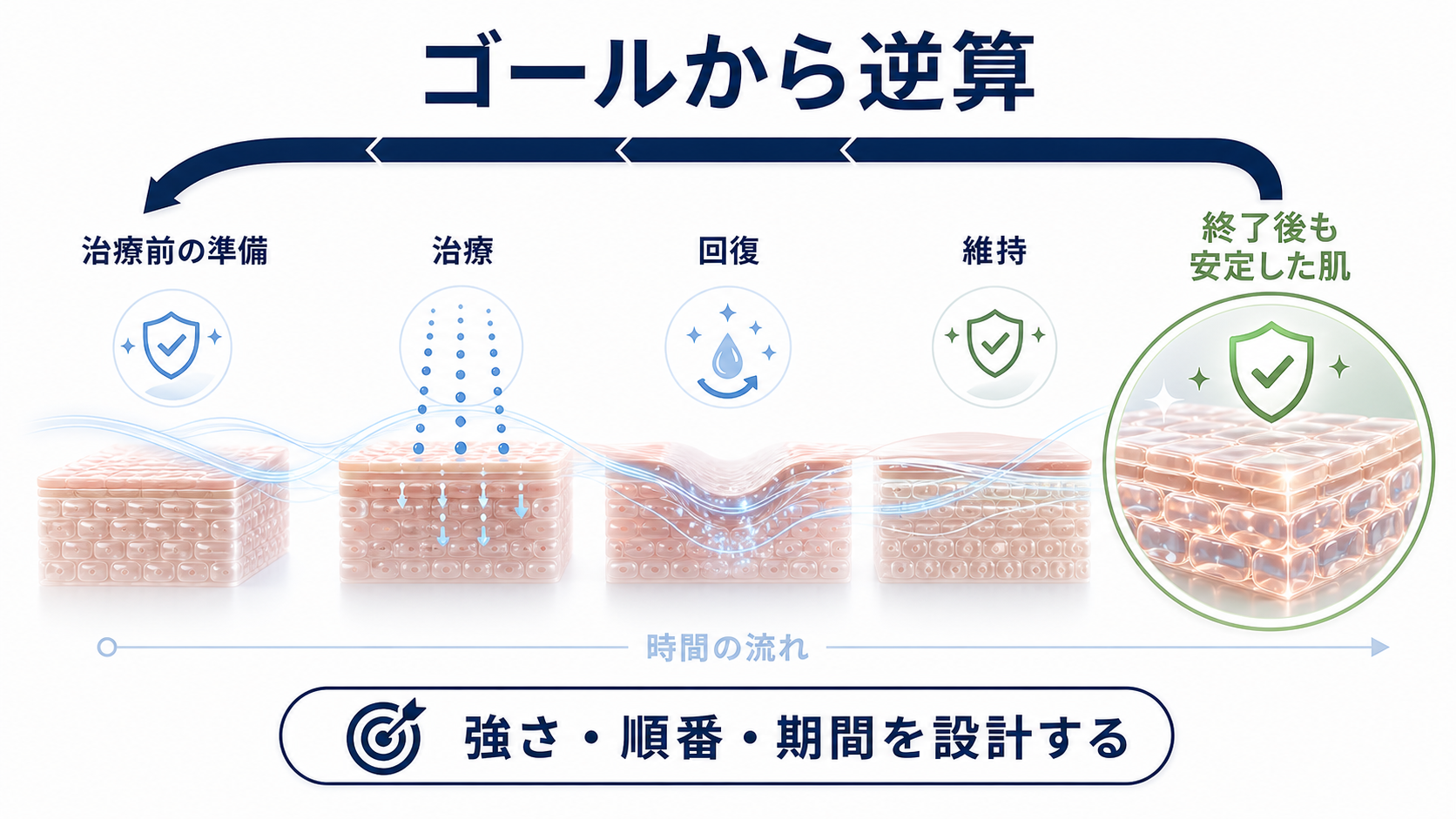
治療を始める前に、終わった後の肌がどうなっているかまでを設計しておく。繊細な日本人の肌では、この視点の有無が、数か月後・数年後の結果を分けます。
4. TERASTIEが生まれた理由 ― 治療・回復・維持、そして「準備」
残念ながら、当時世界を見回してみても、色素を生み出しやすく、ダメージを受けやすい肌に特化して、治療・回復・維持(メンテナンス)までをカバーできるスキンケアは存在しませんでした。
それが、当院がオリジナルスキンケアTERASTIE(テラスティ)を作った理由です。
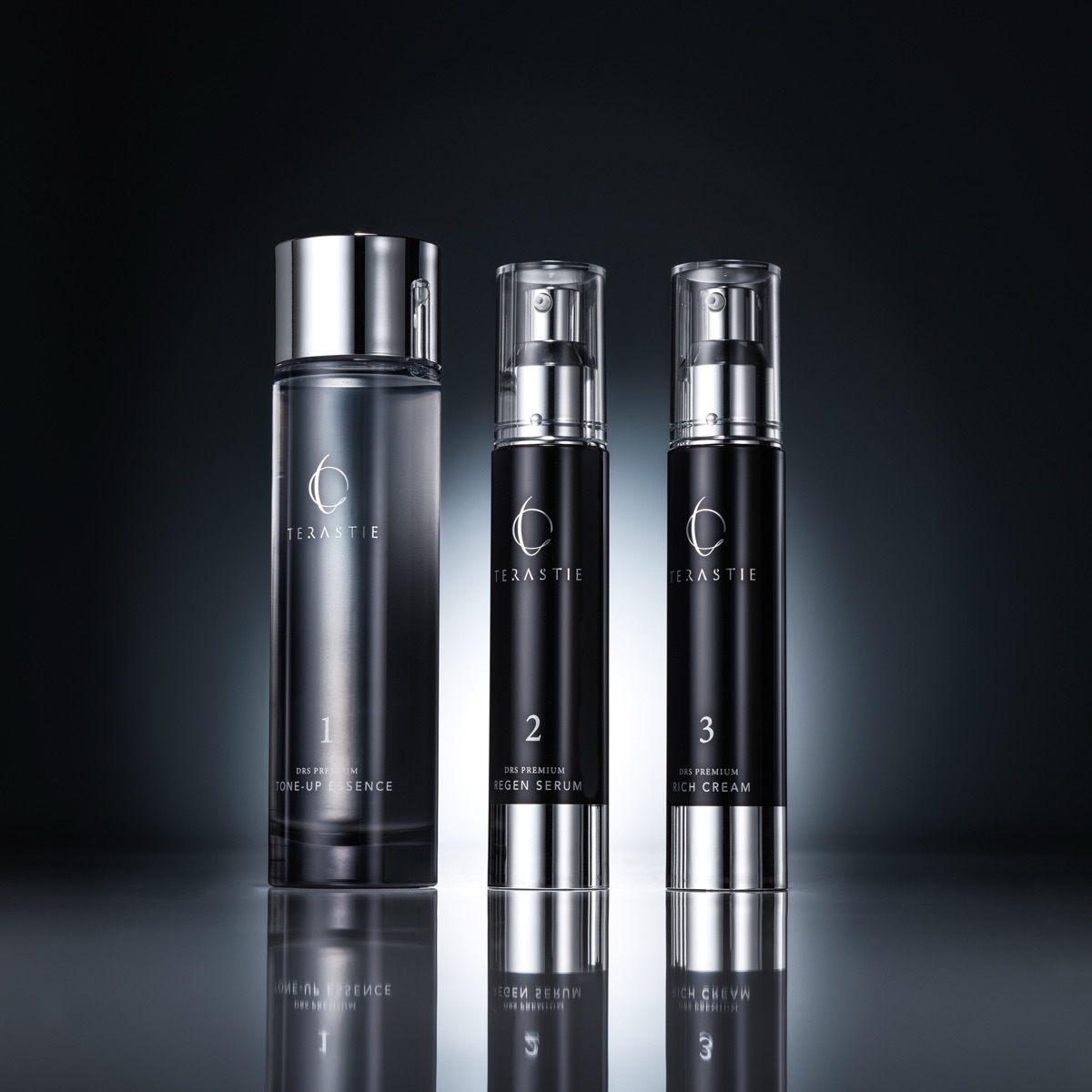
TERASTIEは、治療・回復・維持に加えて、治療の準備=Skin Priming(スキンプライミング:治療の前に肌の環境を整えておくこと)まで考慮した3ステップのスキンケアで、1・2・3それぞれに役割が異なります。
1 ― 肌を「整える」:トーンアップエッセンス(TONE-UP ESSENCE)
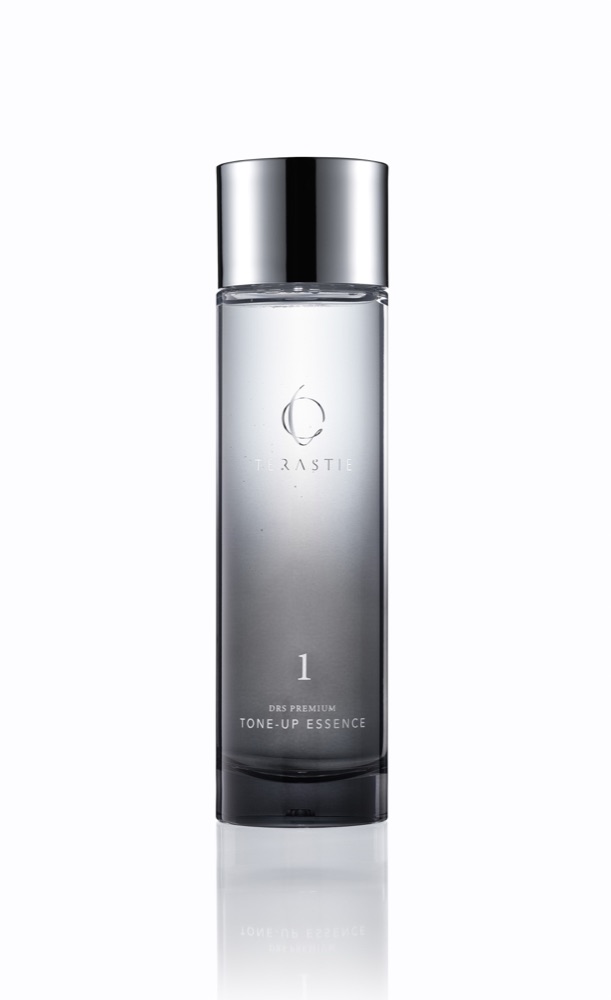
トーンアップエッセンスは、洗顔後の肌を整え、続くステップを受け入れる状態をつくります。トラネキサム酸とグルタチオンに、肌のバリア(外部刺激から肌を守る仕組み)を支える6種類のセラミド、ヒアルロン酸、肌荒れを防ぐグリチルリチン酸2Kを重ねました。
2 ― 管理された刺激で「働きかける」:リジェンセラム(REGEN SERUM)
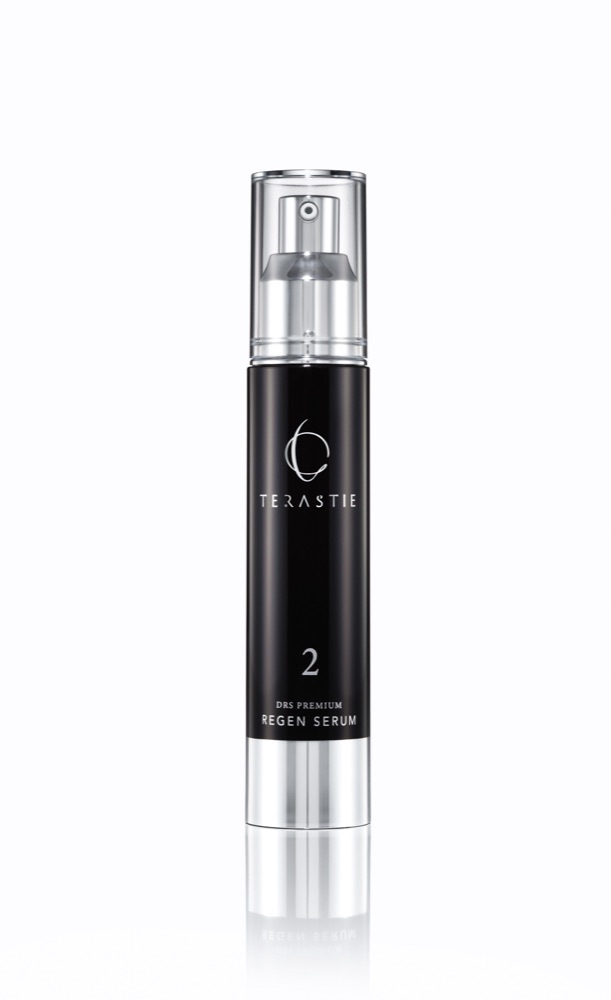
リジェンセラムは、レチノール(ビタミンAの一種)をナノ化し、赤みや乾燥といった刺激を抑えながら肌に届ける美容液です。6種類のペプチド、ナイアシンアミド、ビタミンC誘導体、3種類のヒアルロン酸、6種類のセラミド、スクワランを合わせています。
「どこが、どのように刺激されるのかを管理する」という考え方を、毎日のスキンケアに落とし込んだ一本です。
3 ― うるおいを守り「維持する」:リッチクリーム(RICH CREAM)
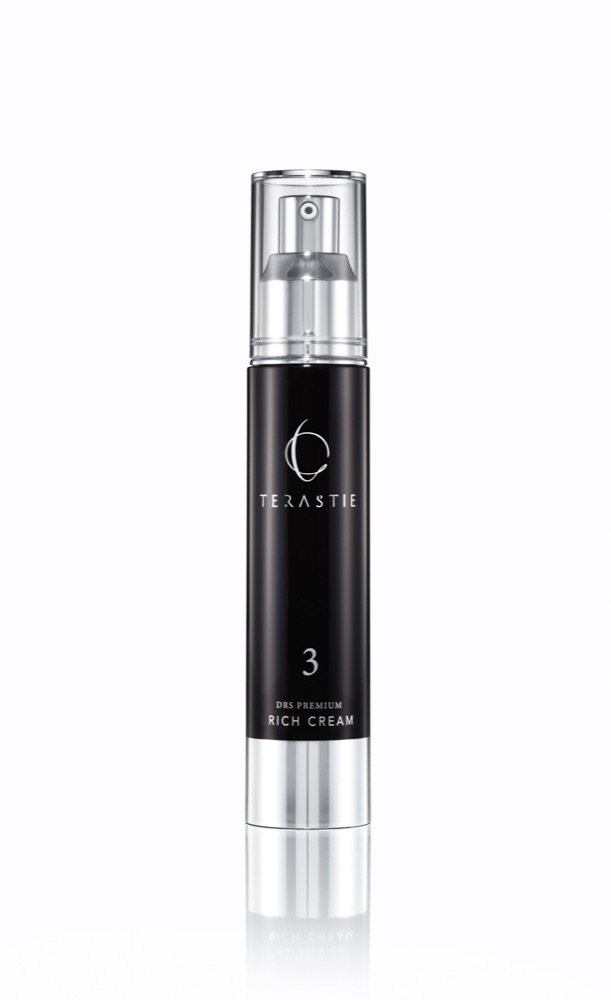
リッチクリームは、3種類のヒアルロン酸と3種類のセラミド、水溶性プロテオグリカン、トコトリエノール、バクチオール(植物由来の整肌成分)、3種類の天然保湿オイル(スクワラン・ホホバ種子油・コメヌカ油)で、働きかけた肌を静かに落ち着かせます。回復・維持(メンテナンス)を担う一本です。
5. インタビューを終えて ― 日本と海外、それぞれの良さを
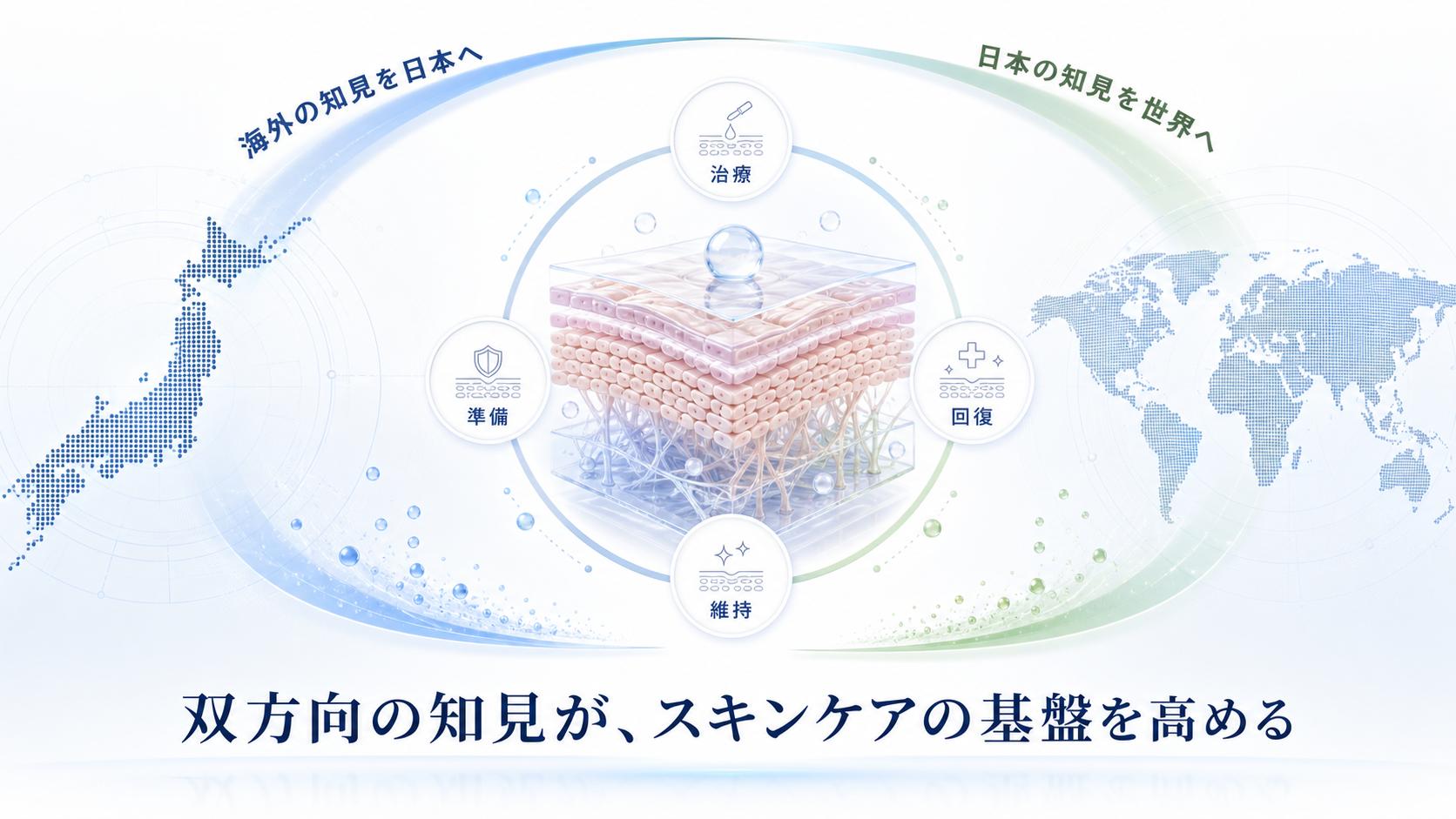
海外の肌に対するアプローチを知り、その良いところを日本のケアに取り入れる。さらには、繊細な肌と向き合い続けてきた私たちが持つ良さを、海外に向けて発信していく。
その双方向のやりとりこそが、スキンケアのベースを向上させていくのではないかと、私は考えています。世界の第一線で日本の知見が求められていることを、今回のインタビューであらためて実感しました。
繊細な肌に必要なのは、より強い方法ではなく、「終わった後」まで管理された方法です。
関連する記事
よくある質問
海外製のスキンケアは、使わないほうがよいのでしょうか?
製品そのものの良し悪しではなく、「繊細な日本人の肌に合った強さと使い方の管理がされているか」が重要です。特に強力なビタミンA(レチノイド)を含む製品を自己判断で長期間使用すると、肌への刺激が管理されないまま蓄積することがあります。使用中の製品や肌の変化について気になることがあれば、診察時にご相談ください。
ビタミンA(レチノイド)のスキンケアをやめた後に、シミや肝斑が濃くなることはありますか?
強力なビタミンAで肌のターンオーバーを強く促す方法を繊細な肌にそのまま用いた場合、終了後6か月頃に肝斑をはじめとした色素斑の再発を認めた例が報告されています。すべての方に起こるわけではなく、肌質や使い方によって経過は異なります。色の変化に気づいたら、自己判断で対処せず医師にご相談ください。
TERASTIE(テラスティ)は、どのようなスキンケアですか?
色素を生み出しやすく、ダメージを受けやすい繊細な肌を想定して当院が開発したオリジナルスキンケアです。治療の準備(Skin Priming)・治療中・回復・維持の各段階を支えることを考えて設計されており、1(トーンアップエッセンス)・2(リジェンセラム)・3(リッチクリーム)それぞれに役割が異なります。肌の状態に合わせた使い方は、診察時にご案内しています。
ご検討の方へ(注意点)
- スキンケア製品は化粧品であり、医薬品のような治療効果を保証するものではありません。使用感や肌の変化には個人差があります。
- 本記事で触れた治療(レーザー等のデバイス治療を含む)は自由診療(健康保険が適用されない治療)です。費用はカウンセリング時にご案内しています。
- 治療やスキンケアの効果・経過には個人差があります。すべての方に同じ結果が得られることを保証するものではありません。
- 強いレチノイド製品の使用中・使用後に赤み・皮むけ・色素の変化などが生じた場合は、自己判断を続けず医師にご相談ください。
- 記事中の写真はIMCAS公式インタビューの収録風景です。医療者向けにお話しした内容を、患者さんに向けて分かりやすく再構成しています。
「スキンケアをがんばってきたのに、かえって色が濃くなった気がする」「肝斑や色素斑の再発に悩んでいる」という方は、横浜あざみ野のヒルズグレイスクリニックまでご相談ください。
肌の状態を診たうえで、いま必要なのは治療か、回復か、それとも「準備」なのかからご説明します。
カウンセリングのご相談はこちら →
シミ・肝斑・毛穴など、肌に現れた悩みに向き合うとき、私が大切にしているのは、症状だけでなく、その症状が生じた肌の状態まで見極めることです。
レーザー・高周波・超音波などの機器は、同じ設定で照射しても、結果は一人ひとり異なります。その差を生むのは、肌が熱を受け止め、治療に応えられる状態にあるかどうか。だからこそ、必要に応じて肌が応えられる状態を整えながら、適切な治療を、適切な順序でご提案します。
この考えを治療設計の起点に据え、「Thermal Thread Technique®」として体系化し、2024年に『Lasers in Surgery and Medicine』誌へ発表しました。同論文は同誌のTop Viewed・Top Cited Articleに選出されています。高周波照射法「Mono-Bi CrossLIFT Technique」および、注入治療と医療機器を組み合わせる「CrossTALK® protocol」も『Journal of Cosmetic Dermatology』誌に発表しています。
米国レーザー医学会(ASLMS)専門医、医療法人社団光悠会理事長。Cynosure社のアドバイザリーボードには日本から唯一参加し、PicoSure Proの開発段階から携わり、第1号機による症例報告も行ってきました。世界最大のレーザー医学会ASLMSやIMCAS ASIA、KOREA DERMAなどの国際学会で招待講演を行い、国際的な医師教育プログラム「GMI」を主宰。海外の医師の指導・育成にも取り組んでいます。
これまでの治療で思うような手応えを得られなかった方にも、なぜその肌にその症状が起きているのかを見極め、必要な治療の順序からご提案します。肌を診て、治療を設計し、経過に合わせて組み立てを更新する。そこまでを含めて、肌治療だと考えています。詳しいプロフィール →
CLINIC INFORMATION
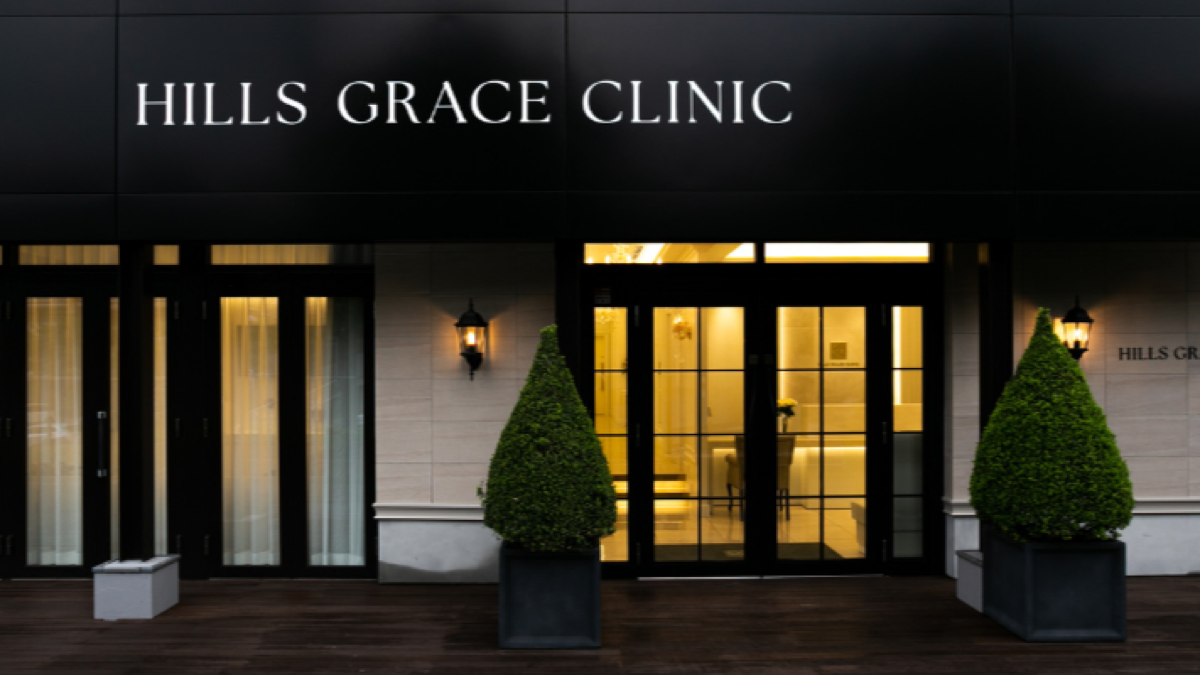
ヒルズグレイスクリニック
アクセスの詳細を見る →
肌を整える時間を、診察の外にも。

GRACE JOURNAL | Grace Journal
Interview | How does aesthetic medicine differ between Japan and other countries? Delicate Japanese skin and why TERASTIE was created
Key points
On 20 June 2026, I gave an official interview to IMCAS, one of the world’s largest aesthetic medicine congresses, and answered the question “How does aesthetic medicine differ between Japan and other countries?”
It is often assumed that “Asian skin is strong”, but this is a major misconception: Japanese skin is truly delicate. When Western skincare and device treatments are brought in unchanged, not only may good results fail to appear, but there are also cases in which pigmentation such as melasma recurs strongly some time after treatment has ended. In this article, I report on the treatment strategy that works backwards from “the face after treatment has ended”, which I discussed in the interview, and on why our clinic developed its original skincare line TERASTIE.
Introduction
On 20 June 2026, during IMCAS ASIA 2026 (Bangkok), I gave an official interview to IMCAS. IMCAS is one of the world’s largest international congresses in the fields of dermatology, plastic surgery and aesthetic medicine.
The question I was asked was “How does aesthetic medicine differ between Japan and other countries?” In an interview watched by physicians around the world, the first thing I said was one very simple sentence.
“Japanese skin is truly delicate.” – Here I summarise what I said in this interview for those who find themselves unsure, day to day, about choosing skincare and treatments.
1. “Asian skin is strong”: a major misconception
Outside Japan, people sometimes assume that “Asian skin may be stronger than Western skin”. But this, I would say, is a big, big misconception.
If skincare products used in the United States or the EU are brought over and used in the same way, not only may good results fail to appear, but adverse reactions can actually be stronger.
The same applies to device treatments (treatments using equipment such as lasers or radiofrequency). It is a well-known fact in clinical practice in Asia that using the same settings and the same approach as doctors overseas often does not produce the positive results one expects.
In other words, a method that achieves excellent results overseas will not necessarily suit Japanese skin as it is. This is the starting point for thinking about the differences between Japan and other countries.
2. What happened after methods that “forcibly renew the skin”
A few years ago, there was a period when methods using overseas skincare to “forcibly renew the skin” were widely used. These methods use potent vitamin A (retinoids: ingredients that strongly promote skin turnover, that is, the skin’s renewal).
This method is highly effective for people with a certain type of skin. The problem was “afterwards”.
When the same method as overseas was used unchanged on delicate skin, there were cases in which a strong recurrence of pigmentation, including melasma, was seen around 6 months after treatment ended.
Managing “where, and how, the skin is stimulated”
As with device treatments, when the skin is stimulated forcibly, it is necessary to manage carefully where, and how, it is stimulated. Cases in which this was not done led to outcomes such as “it was fine for a few months after treatment, but then pigmentation suddenly appeared”.
Stimulation itself is not the problem. It is unmanaged stimulation that places a burden on delicate skin.
3. Working backwards from “the face after treatment has ended”
Trying new treatments or skincare is a good thing in itself. What is essential when doing so, however, is a treatment strategy that anticipates “what can be expected of the face after treatment ends”, not only the treatment period or the immediate results.
A treatment that makes the skin look beautiful for a while but then leaves it worse than before – I do not consider such a treatment to be the best.
Before starting treatment, plan even how the skin will be once treatment has ended. With delicate Japanese skin, whether or not this perspective is present determines the results months and years later.
4. Why TERASTIE was created: treatment, recovery, maintenance – and “preparation”
Unfortunately, when I looked around the world at the time, there was no skincare specifically designed for skin that readily produces pigment and is easily damaged that could cover treatment, recovery and maintenance.
That is why our clinic created its original skincare line TERASTIE.
TERASTIE is a three-step skincare line designed with treatment, recovery and maintenance in mind, and also preparation for treatment, that is, Skin Priming (preparing the skin’s environment before treatment); steps 1, 2 and 3 each have a different role.
1 – “Conditioning” the skin: Tone-Up Essence (TONE-UP ESSENCE)
Tone-Up Essence conditions the skin after cleansing and prepares it to receive the following steps. To tranexamic acid and glutathione, we added six types of ceramide that support the skin barrier (the mechanism that protects the skin from external irritants), hyaluronic acid, and dipotassium glycyrrhizate to prevent rough skin.
2 – “Working on” the skin with managed stimulation: Regen Serum (REGEN SERUM)
Regen Serum is a serum that delivers nano-sized retinol (a form of vitamin A) to the skin while keeping irritation such as redness and dryness down. It combines six types of peptide, niacinamide, a vitamin C derivative, three types of hyaluronic acid, six types of ceramide and squalane.
It brings the idea of “managing where, and how, the skin is stimulated” into everyday skincare.
3 – Protecting moisture and “maintaining” the skin: Rich Cream (RICH CREAM)
Rich Cream gently calms skin that has been worked on, with three types of hyaluronic acid, three types of ceramide, water-soluble proteoglycan, tocotrienol, bakuchiol (a plant-derived skin-conditioning ingredient) and three natural moisturising oils (squalane, jojoba seed oil and rice bran oil). It is the product responsible for recovery and maintenance.
5. After the interview: the strengths of both Japan and other countries
Learning about approaches to skin overseas and bringing their strengths into care in Japan. And beyond that, sharing with the world the strengths we have built up through continuing to work with delicate skin.
I believe it is precisely this two-way exchange that raises the baseline of skincare. This interview reminded me once again that Japanese expertise is sought at the forefront of the field worldwide.
What delicate skin needs is not a stronger method, but a method managed all the way through to “after it has ended”.
Related articles
Frequently asked questions
Is it better not to use skincare products made overseas?
What matters is not whether the product itself is good or bad, but whether its strength and use are managed to suit delicate Japanese skin. In particular, if products containing potent vitamin A (retinoids) are used for long periods on your own judgement, irritation to the skin can build up without being managed. If you have any concerns about the products you are using or about changes in your skin, please ask at your consultation.
Can dark spots or melasma become darker after stopping vitamin A (retinoid) skincare?
Cases have been reported in which, when a method of strongly promoting skin turnover with potent vitamin A was used unchanged on delicate skin, a recurrence of pigmentation, including melasma, was seen around 6 months after it ended. This does not happen to everyone, and the course differs depending on skin type and how products are used. If you notice changes in pigmentation, please consult a doctor rather than dealing with them on your own judgement.
What kind of skincare is TERASTIE?
It is an original skincare line developed by our clinic with delicate skin in mind, skin that readily produces pigment and is easily damaged. It is designed to support each stage: preparation for treatment (Skin Priming), during treatment, recovery and maintenance, and 1 (Tone-Up Essence), 2 (Regen Serum) and 3 (Rich Cream) each have a different role. We advise you at your consultation on how to use it to suit the condition of your skin.
For those considering treatment (points to note)
- Skincare products are cosmetics and are not guaranteed to have therapeutic effects in the way medicines are. How they feel and changes in the skin vary between individuals.
- The treatments mentioned in this article (including device treatments such as lasers) are private, self-funded care (treatments not covered by health insurance). Fees are explained at your consultation.
- The effects and course of treatment and skincare vary between individuals. The same results are not guaranteed for everyone.
- If redness, peeling, changes in pigmentation or similar occur during or after use of strong retinoid products, do not continue on your own judgement; please consult a doctor.
- The photographs in this article show the recording of the official IMCAS interview. What I said for medical professionals has been reorganised here so that it is easy for patients to understand.
If you feel that “I’ve worked hard at my skincare, but my pigmentation seems to have got darker”, or are troubled by recurring melasma or pigmentation, please consult Hills Grace Clinic in Azamino, Yokohama.
After examining your skin, we will explain whether what you need now is treatment, recovery or “preparation”.
Enquire about a consultation here →
When addressing concerns that appear on the skin, such as pigmentation, melasma and pores, what I value is assessing not only the symptoms but also the state of the skin in which those symptoms arose.
With devices such as lasers, radiofrequency and ultrasound, results differ from person to person even when the same settings are used. What creates that difference is whether the skin is in a state to receive heat and respond to treatment. That is why, where needed, I prepare the skin so that it can respond, and propose the appropriate treatment in the appropriate order.
Placing this idea at the starting point of treatment design, I systematised it as the “Thermal Thread Technique®” and published it in “Lasers in Surgery and Medicine” in 2024. The paper was selected as a Top Viewed and Top Cited Article of the journal. I have also published the radiofrequency treatment method “Mono-Bi CrossLIFT Technique” and the “CrossTALK® protocol”, which combines injectable treatments with medical devices, in the “Journal of Cosmetic Dermatology”.
Specialist of the American Society for Laser Medicine and Surgery (ASLMS) and Chair of the Board of Koyukai Medical Corporation. I am the only member from Japan on Cynosure’s advisory board, have been involved with PicoSure Pro since its development stage, and have reported cases treated with the very first unit. I have given invited lectures at international congresses including ASLMS, the world’s largest society for laser medicine, IMCAS ASIA and KOREA DERMA, and I lead the international physician education programme “GMI”, also working to teach and train doctors overseas.
For those who have not seen the results they hoped for from previous treatments, too, I assess why those symptoms are occurring in that skin and propose treatment starting from the order in which it is needed. Examining the skin, designing the treatment, and updating the plan as it progresses: I consider all of this to be skin treatment. Full profile →
CLINIC INFORMATION
Hills Grace Clinic
Access details →
Caring for your skin beyond the consultation room
HOME CARE
Online shop
Doctor-selected skincare and supplements, delivered to your home. For some products, a free online consultation is available before purchase.
CONSULTATION
Consult us at the clinic
Every person's skin is different. We look into what lies behind pigmentation and melasma, and suggest the care and the order of treatment your skin needs now.