GRACE JOURNAL
TEA Bangkok with Jeisys / IMCAS ASIA 2026 Jeisysシンポジウム 登壇報告

この記事の要点
2026年6月、タイ・バンコクで開かれた「TEA Bangkok with Jeisys」と「IMCAS ASIA 2026」Jeisysシンポジウムに登壇しました。
テーマは、マイクロニードルRF(極細の針と高周波を組み合わせた肌の治療)をどう使いこなすか。当院が数ある機器のなかからポテンツァ(POTENZA)を選んでいる理由は、大きく二つあります。ひとつは「針」の使い分けができること、もうひとつは「熱の入れ方」を切り替えられること。この記事では、講演でお話しした内容をご紹介します。
はじめに
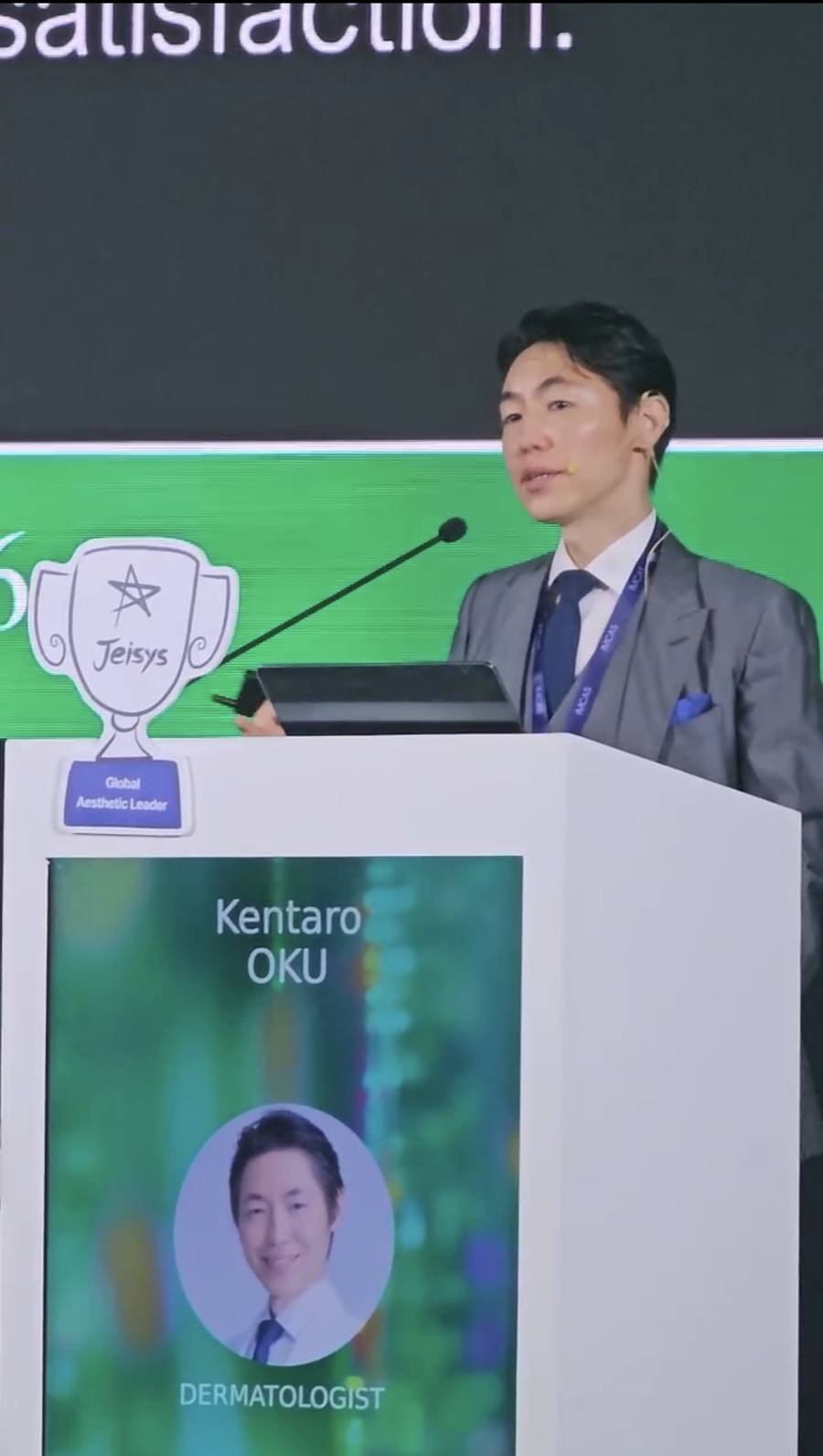
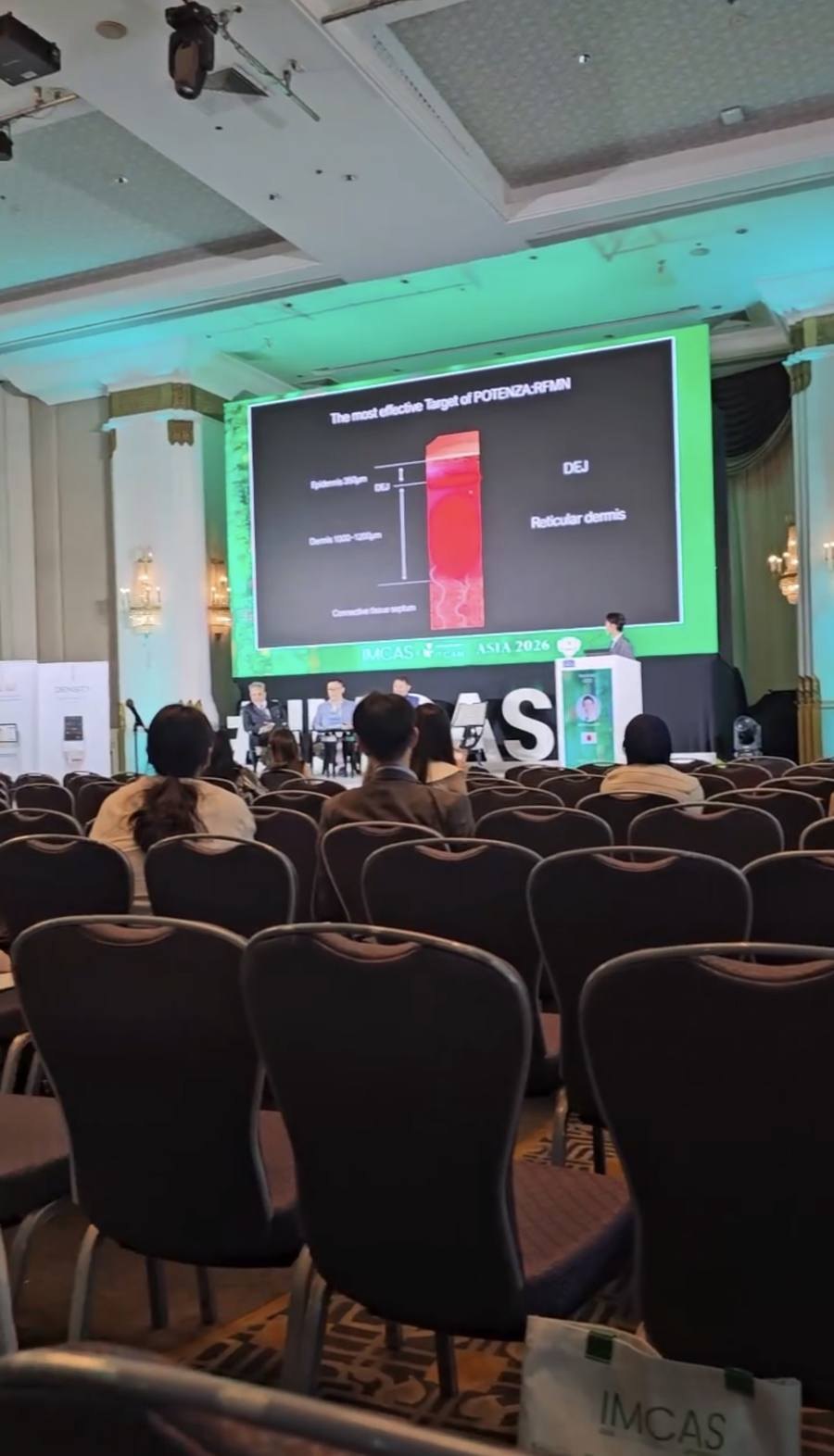
2026年6月、タイ・バンコクで開催された「TEA Bangkok with Jeisys」、および世界最大級の美容皮膚科学会のひとつ「IMCAS ASIA 2026」のJeisysシンポジウムに登壇いたしました。テーマは、マイクロニードルRF治療、そのなかでも当院が使用しているポテンツァ(POTENZA)についてです。
マイクロニードルRFは、いま日本を含め世界中の美容医療で広く使われるようになった治療です。ただ、機器はいくつもあり、同じ「マイクロニードルRF」という名前でも、できることは同じではありません。本稿では講演の中心となった「なぜポテンツァなのか」について、順を追ってお話しします。
1. マイクロニードルRFという治療の考え方
まず、この治療がどういうものかを整理しておきます。
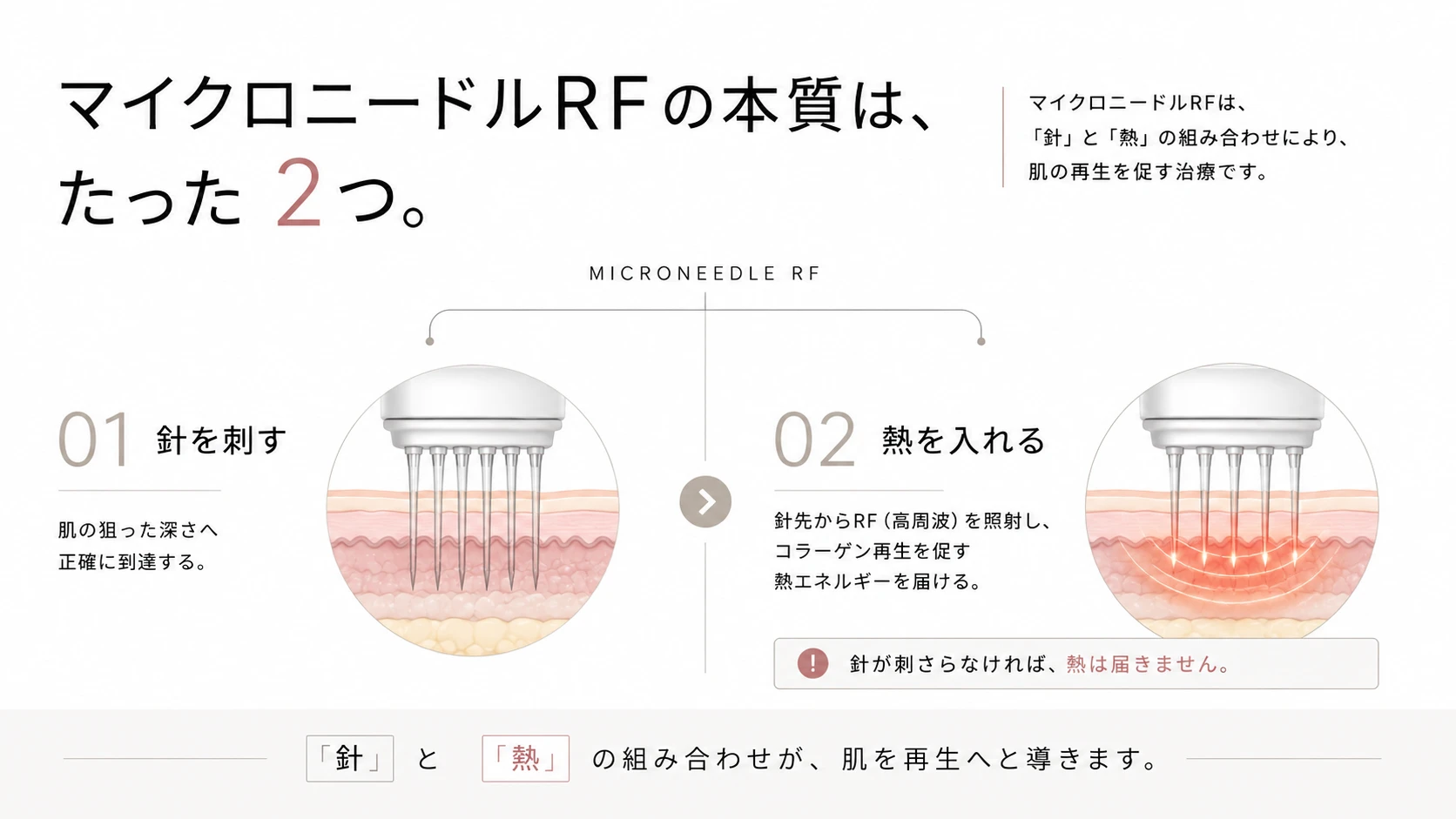
マイクロニードルRFは、髪の毛ほどの細さの針を肌に刺し、その先からRF(高周波:組織を内側から温めるエネルギー)を流して、肌の内側に熱を与える治療です。肌は与えられた熱を「修復すべき変化」として受け取り、コラーゲンをつくり直そうとする働きが促されます。毛穴・ニキビ痕・肌のたるみやハリなど、幅広い悩みに用いられています。
ポイントは、「針を使うこと」と「熱を入れること」の二つです。裏を返せば、この二つをどれだけ細かくコントロールできるかが、機器ごとの違いになります。
2. 一つめの理由──「針」を使い分けられること
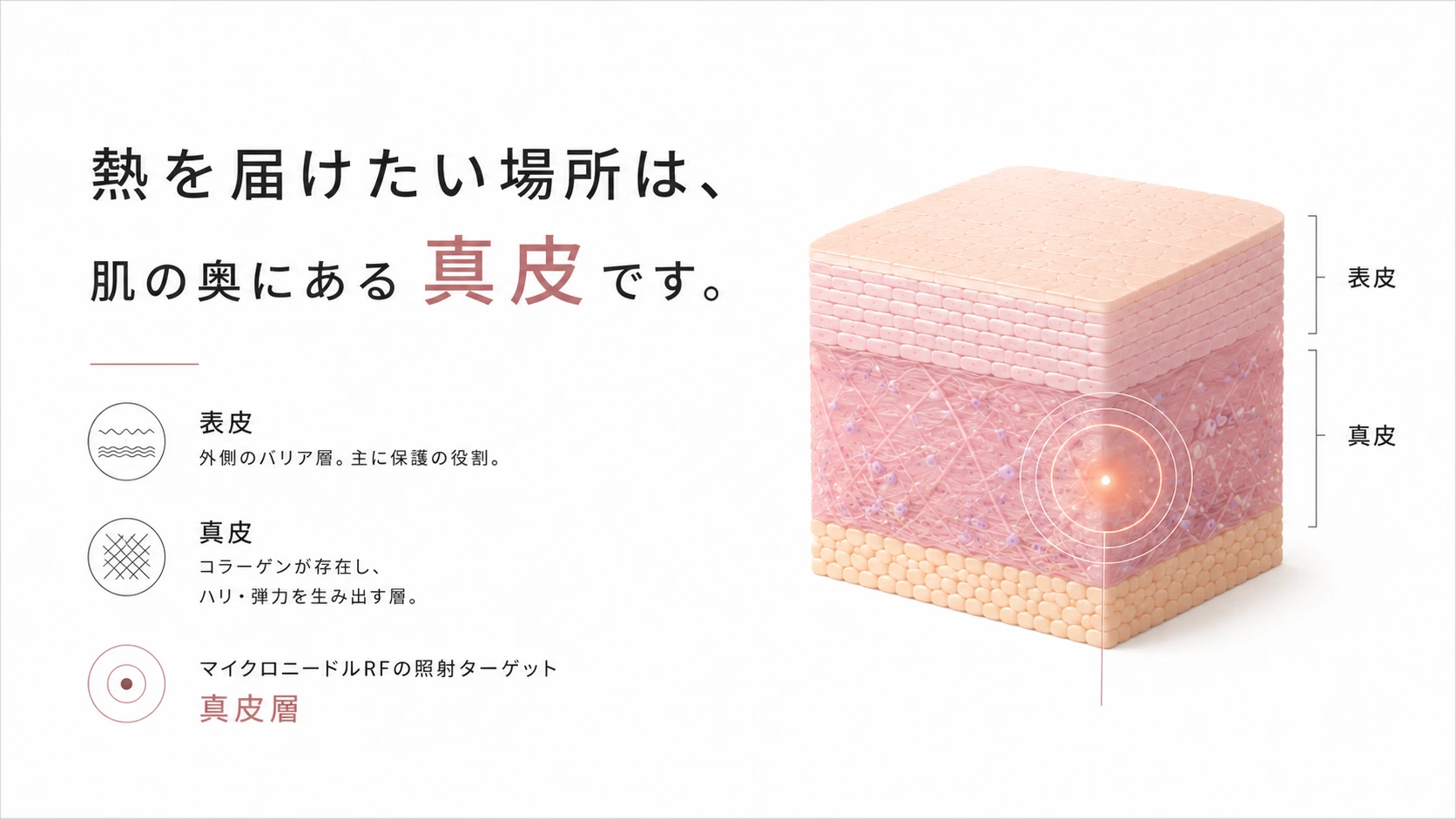
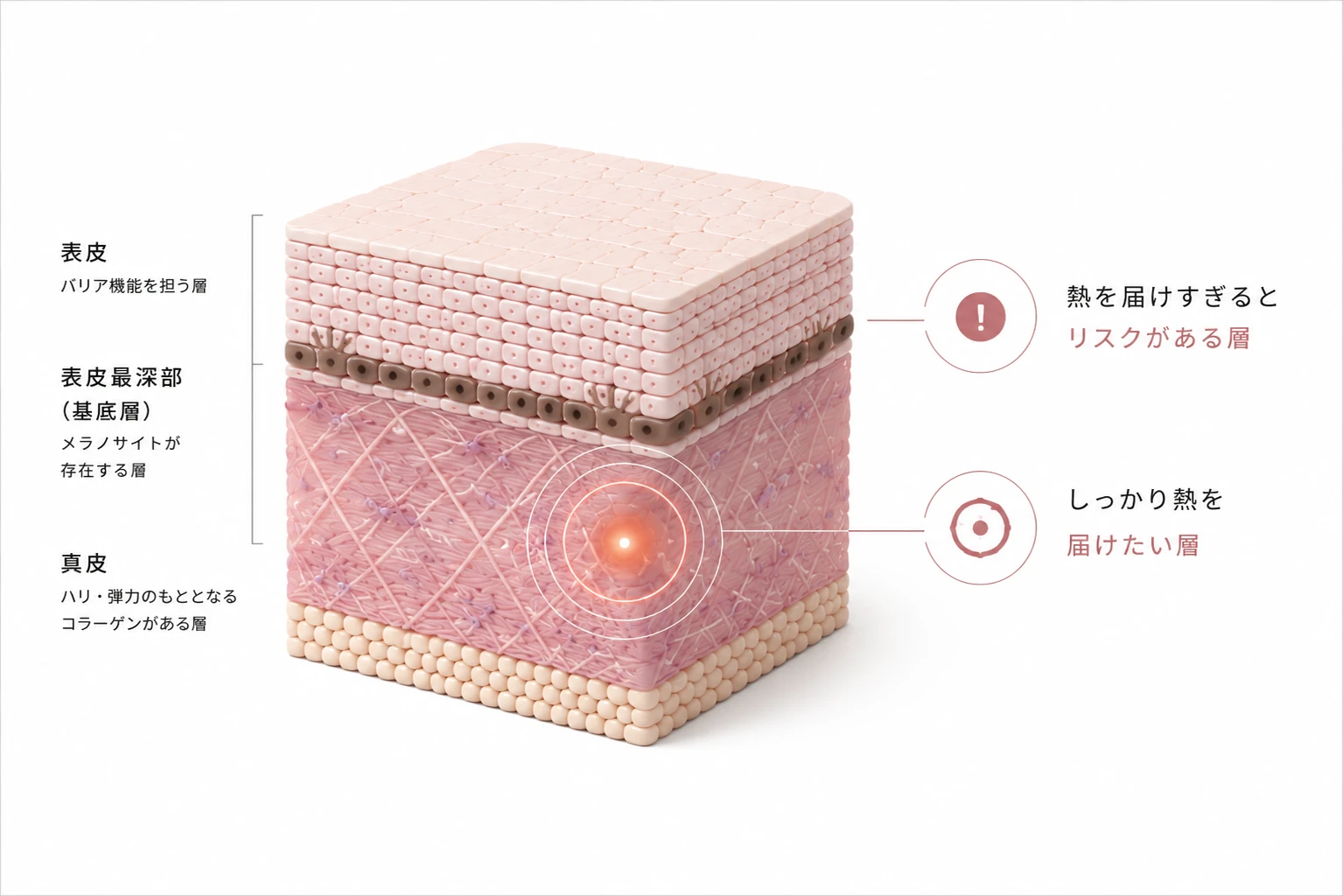
熱を届けたい場所は、肌の奥にある真皮(しんぴ)です。肌は大きく、外側の表皮と、その内側の真皮の二層に分かれています。ハリや弾力のもとになるコラーゲンがあるのは真皮のほうで、マイクロニードルRFが狙うのもここです。
守らなければいけない層がある
ところが、表皮のいちばん深いところにはメラノサイト(肌の色をつくる色素の工場にあたる細胞)が並んでいます。ここに過剰な熱が加わると、色素をつくる働きが急激に高まり、炎症後色素沈着(PIH)——治療のあとに茶色いシミのような跡が残る状態——につながることがあります。さらに強い熱が加わると細胞そのものが傷み、逆に色が抜けてしまう色素脱失が起きることもあります。
つまりこの治療では、真皮にはしっかり熱を入れ、表皮の最深部には熱を届けないという、相反する二つを同時に満たす必要があります。
絶縁ニードルと非絶縁ニードル
ここで効いてくるのが針の構造です。針には、針全体から熱が出るタイプ(非絶縁ニードル)と、決められた部分からだけ熱が出るタイプ(絶縁ニードル)があります。
針全体から熱が出るタイプでは、真皮に熱を入れようとすると、その通り道にある表皮にも熱が伝わります。本来なら負う必要のなかったリスクを、患者さんに負っていただくことになります。一方、絶縁ニードルであれば真皮だけを選んで温めることができ、その深さも細かく調整できます。
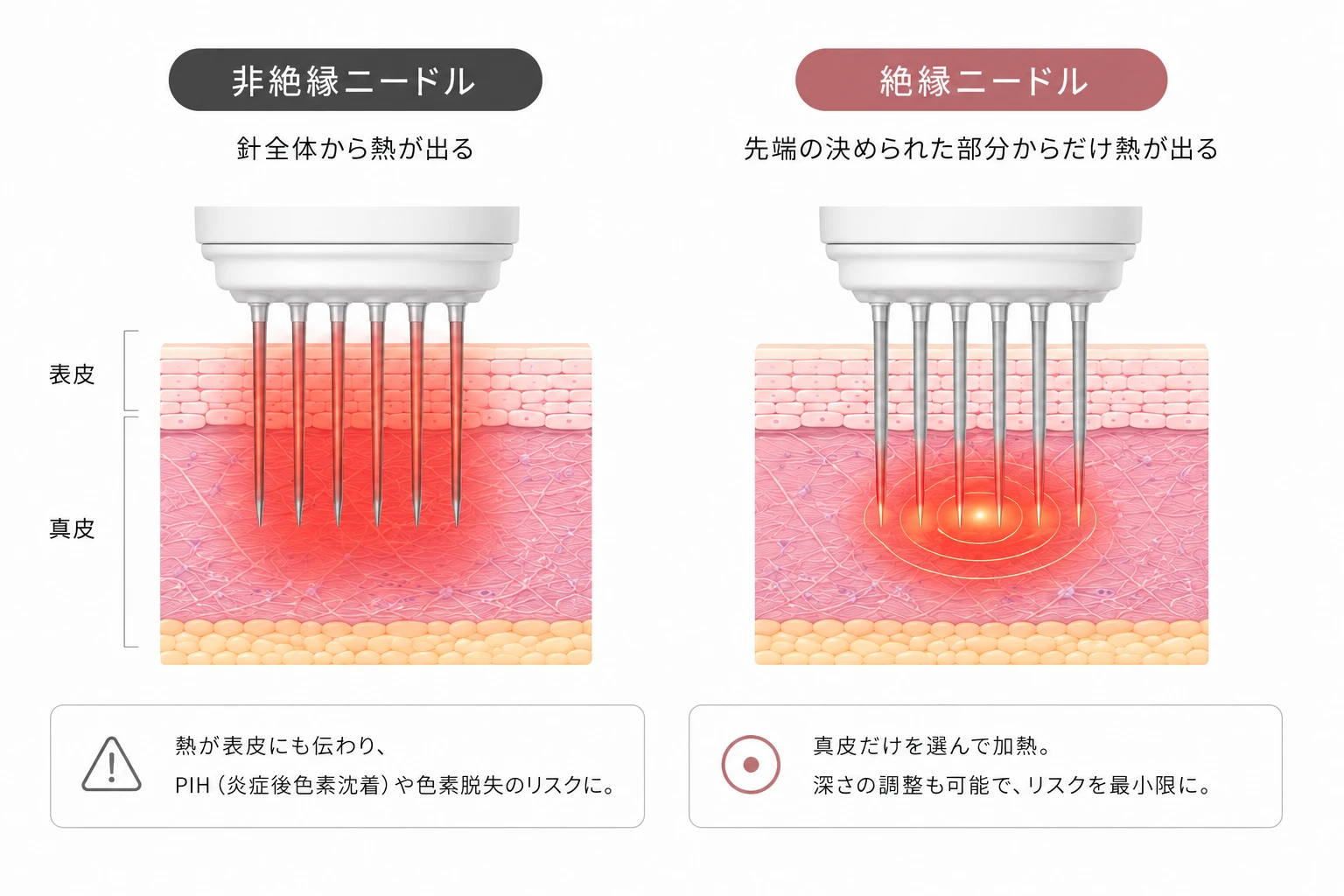
ポテンツァはこの絶縁ニードルにも種類があり、真皮の一部だけを温めたいとき、真皮全体を温めたいときというように、肌の状態や症状に応じて針そのものを使い分けられます。この使い分けの幅広さが、当院がポテンツァを選んでいる理由のひとつです。
3. 二つめの理由──「熱の入れ方」を切り替えられること
RF(高周波)にも種類があり、大きくモノポーラーとバイポーラーに分かれます。この二つは、熱の広がり方がまったく違います。
マイクロニードルRFの場合、モノポーラーでは、熱が浅いところから深いところへ、縦方向に与えられます。対してバイポーラーでは、隣り合う針と針のあいだに熱が生まれるため、ある一定の深さが横方向に温められます。
薄い層を狙いたいときは、バイポーラーでその層だけを選んで温めるのが理にかなっています。逆に、真皮全体のようにある程度の厚みがある組織を温めたいときは、モノポーラーで浅い部分から深い部分までを縦にカバーするほうが適しています。
ポテンツァは、同じ針を使ったままモノポーラーとバイポーラーを切り替えられます。狙う層やポイントを、その場で細かく設定し直せるということです。
同じ頬でも、設定は一つではない
たとえば頬の毛穴が気になる場合。頬の中央と側面とでは毛穴の開き方が違いますから、顔じゅうを同じ設定で照射しても、望む結果にはなりません。部位に応じてモノポーラーとバイポーラーを切り替える、あるいは同じ部位に両方を使う。こうした使い分けによって、より少ない回数で、狙った変化に近づけていくことができます。
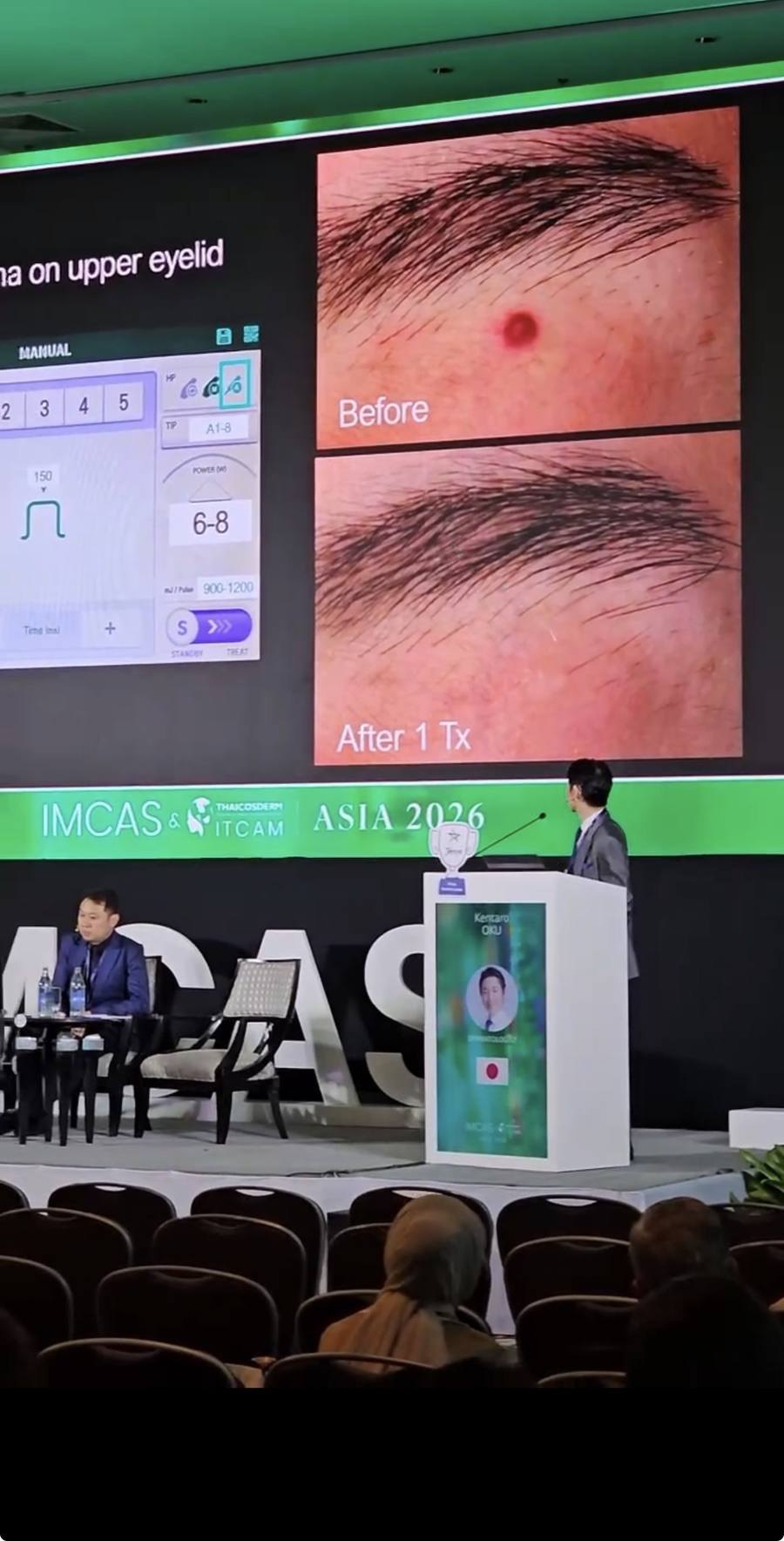
針とRF、この二つの調整を細かく組み合わせられることが、当院がポテンツァを使い続けている理由です。
一方で、こうした特性を理解して使いこなすには相応の経験が必要で、そのことが「同じ機器なのに、受ける施設によって結果が変わる」という状況を生んでいるのも事実です。ここは、機器を扱う私たち医師の側の課題だと考えています。
4. 講演を終えて
今回のイベントでは、この「針」と「熱の入れ方」という二点について理解を深めていただくための講演を行いました。機器の持つ特性、エネルギーの持つ特性を理解し、結果を予測しながら使う。そのための考え方をお伝えしたつもりです。
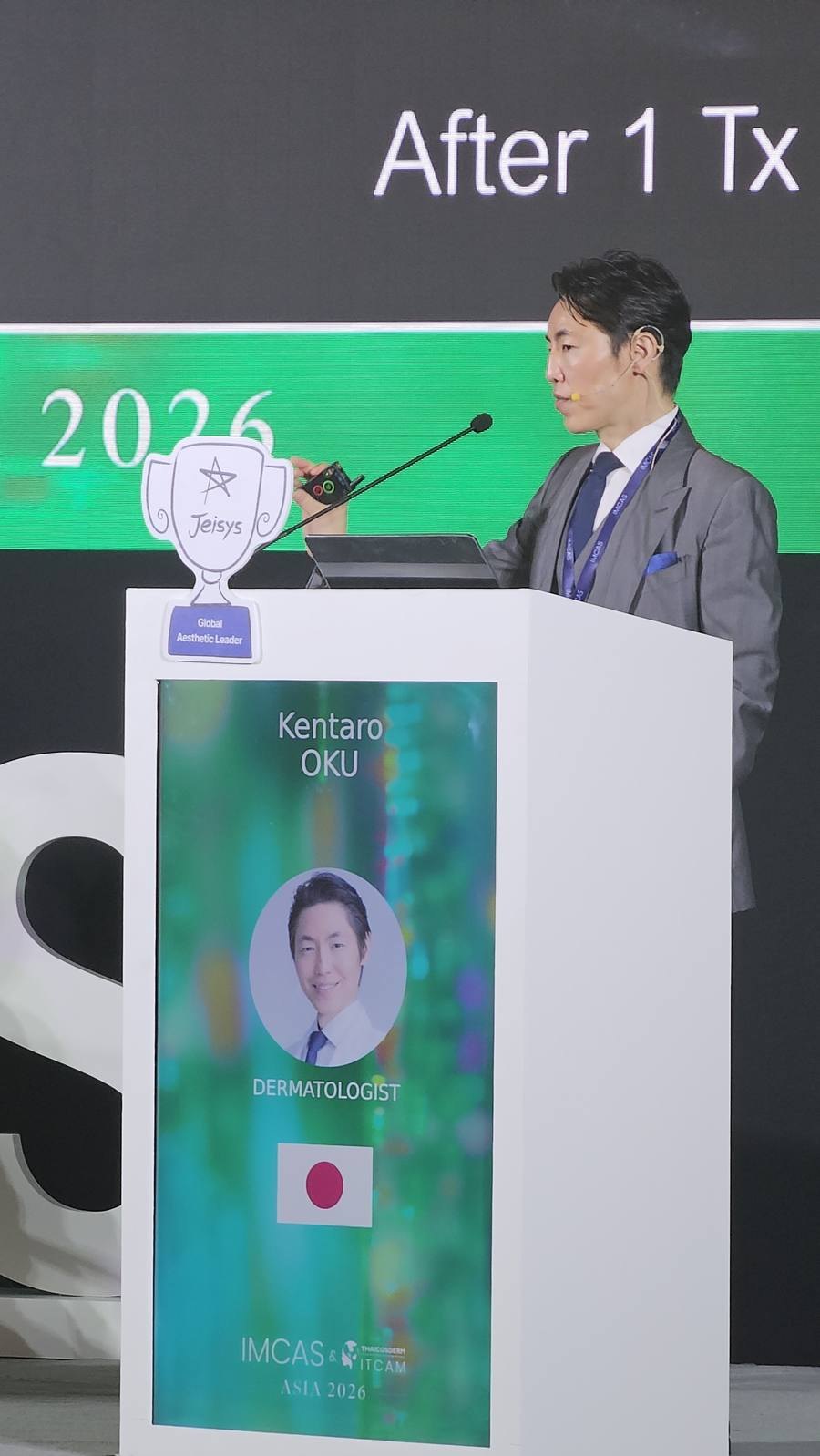
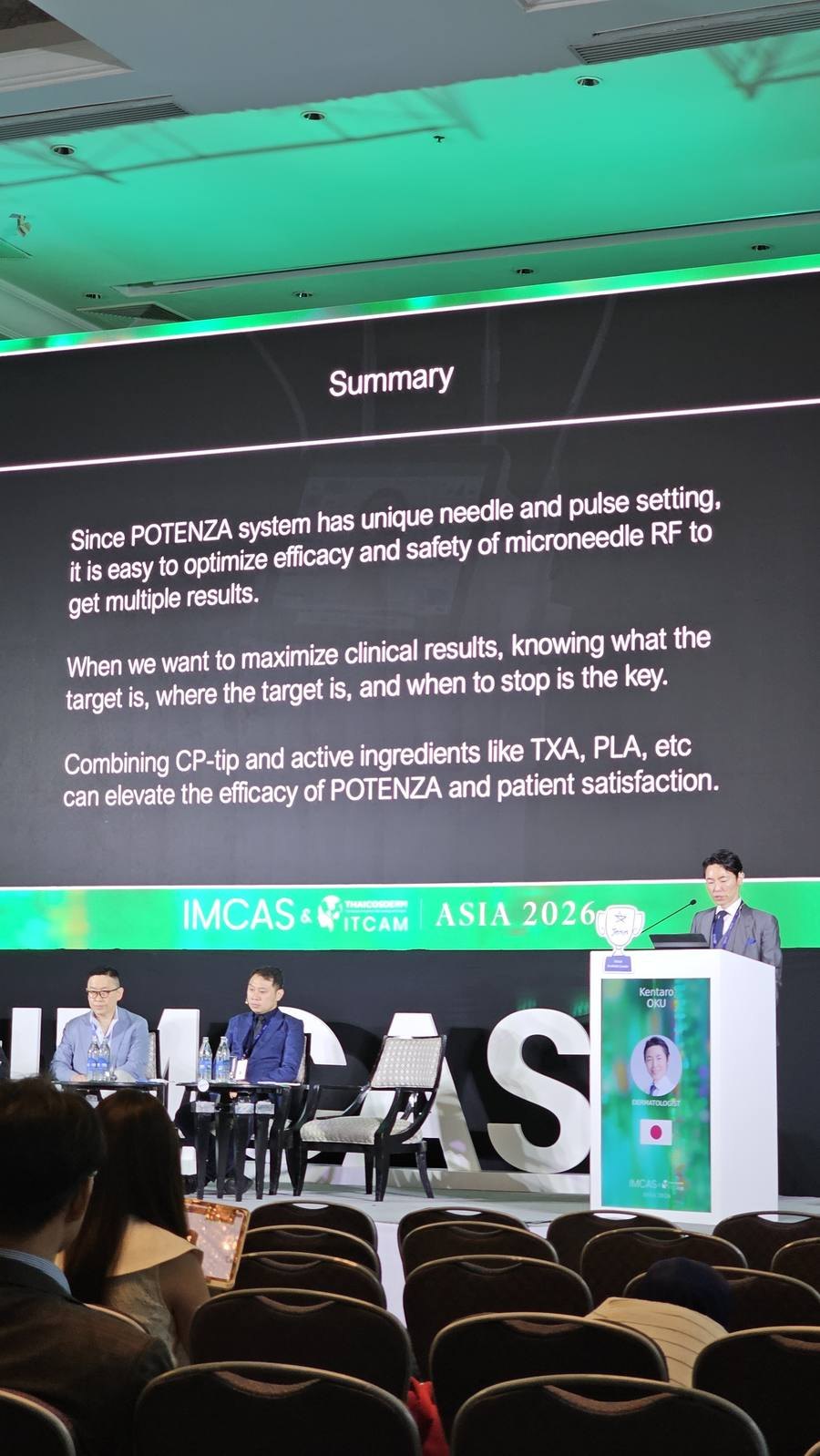
マイクロニードルRFという技術がさらに洗練され、より多くの施設でよい結果が得られるようになるよう、これからも国内外での発信を続けていきたいと思います。
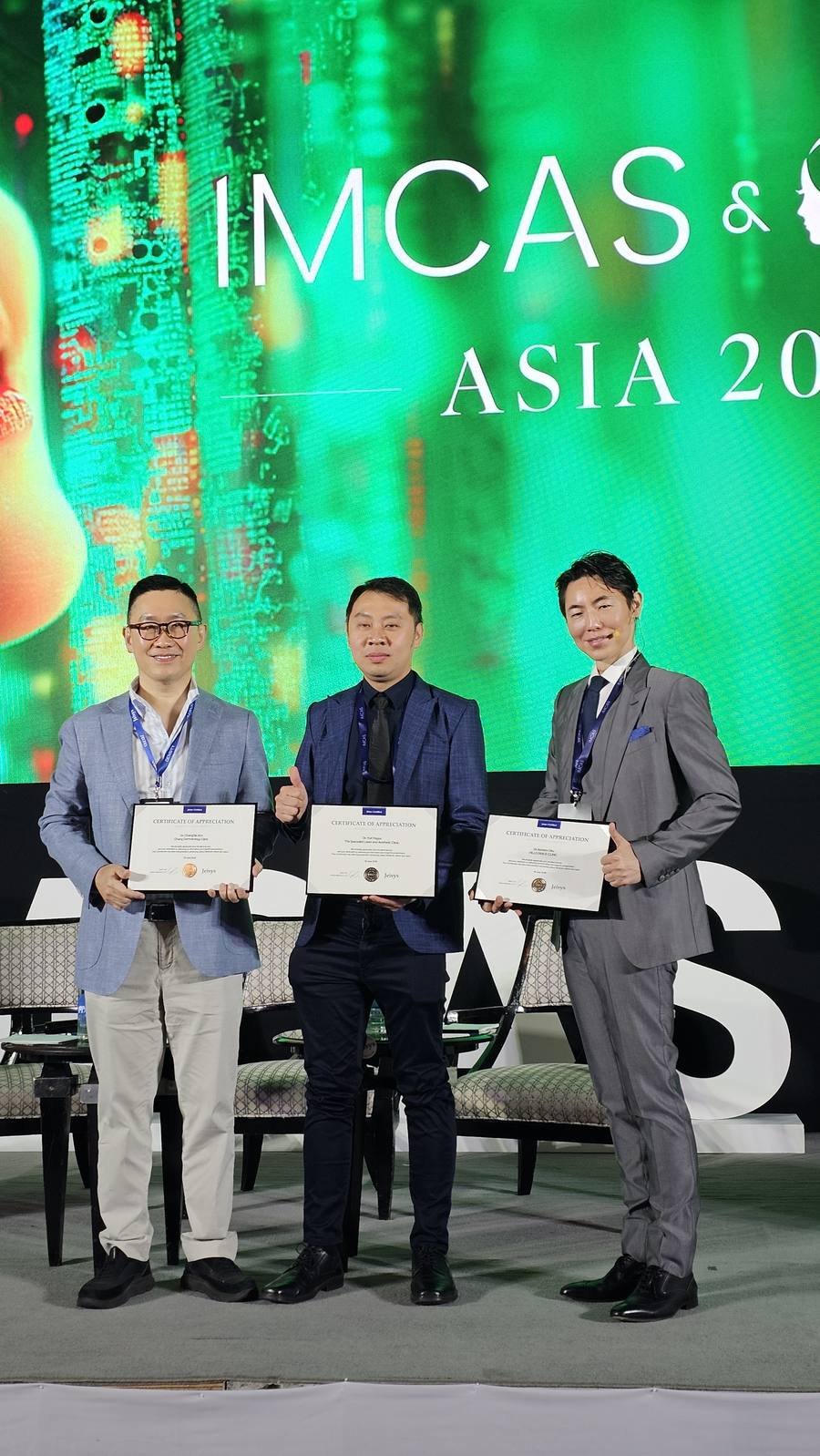
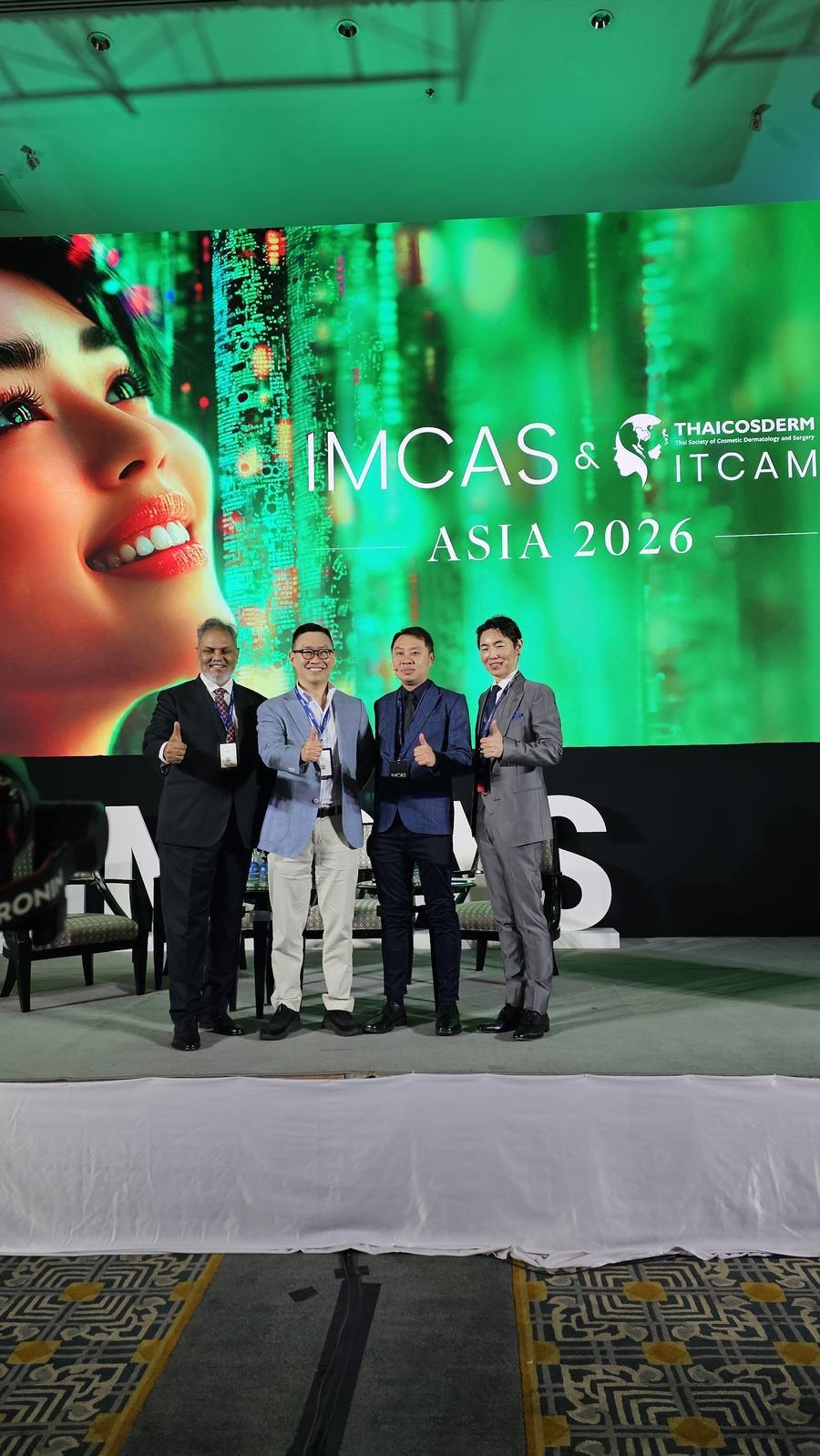
そして、この治療をご検討中の方に一つだけお伝えするとすれば、「どの機器か」と同じくらい、「その機器をどう使うか」が結果を左右するということです。カウンセリングの際は、どの深さに、どんな設定で照射するのかを遠慮なく尋ねてみてください。
関連する記事
よくある質問
マイクロニードルRFは、どんな悩みに向いている治療ですか?
毛穴の開き、ニキビ痕の凹凸、肌のハリのゆるみなどに用いられることが多い治療です。ただし、肌の状態によって適する治療は異なりますので、まずは診察のうえでご提案しています。
痛みやダウンタイムはありますか?
針を用いる治療のため、照射時に痛みを感じることがあります。当院では麻酔クリームを使用しています。治療後は一時的な赤み・むくみ・かさぶた・内出血が生じることがあり、程度や続く期間には個人差があります。診察時に目安をお伝えします。
何回くらい受ける必要がありますか?
お悩みの内容と肌の状態によって異なります。複数回に分けて行うことが多いですが、回数や間隔は診察のうえで個別にご相談しています。
色素沈着が心配です。受けても大丈夫でしょうか?
色素沈着のリスクは、照射する深さや熱量の設定と関わります。当院では針の種類やRFの設定を調整して対応していますが、リスクがゼロになるわけではありません。日焼け直後の方や、過去に色素沈着を起こしたことがある方は、必ず診察時にお申し出ください。
費用はどのくらいかかりますか?
自由診療(健康保険が適用されない治療)です。照射範囲や使用する針の種類によって異なりますので、カウンセリングの際にご案内しています。
治療をご検討の方へ
- 効果の程度や持続期間には個人差があります。すべての方に同じ結果が得られることを保証するものではありません。
- 治療後、一時的な赤み・腫れ・むくみ・かさぶた・内出血・痛みが生じることがあります。まれに炎症後色素沈着や色素脱失、瘢痕(はんこん)が生じる可能性があります。
- 日焼け直後の方、妊娠中・授乳中の方、金の糸など体内に金属が入っている方、ペースメーカーを使用されている方など、治療を受けられない場合があります。診察時に必ずご申告ください。
- 本記事で紹介した治療は自由診療(健康保険が適用されない治療)です。費用はカウンセリング時にご案内しています。
- ポテンツァBASIC(医療機器承認番号 30500BZI00042000)/【使用目的又は効果】審美性の改善のための皮膚のフラクショナルリサーフェシングを目的とした軟組織の凝固及び蒸散に使用する。
- 記事中の写真は学会・セミナーでの講演風景です。医療者向けの講演内容を、患者さんに向けて分かりやすく再構成しています。
お一人おひとりの肌の状態を診たうえで、どの深さに、どんな設定で治療するのが適しているかをご説明します。
カウンセリングのご相談はこちら →
シミ・肝斑・毛穴など、肌に現れた悩みに向き合うとき、私が大切にしているのは、症状だけでなく、その症状が生じた肌の状態まで見極めることです。
レーザー・高周波・超音波などの機器は、同じ設定で照射しても、結果は一人ひとり異なります。その差を生むのは、肌が熱を受け止め、治療に応えられる状態にあるかどうか。だからこそ、必要に応じて肌が応えられる状態を整えながら、適切な治療を、適切な順序でご提案します。
この考えを治療設計の起点に据え、「Thermal Thread Technique®」として体系化し、2024年に『Lasers in Surgery and Medicine』誌へ発表しました。同論文は同誌のTop Viewed・Top Cited Articleに選出されています。高周波照射法「Mono-Bi CrossLIFT Technique」および、注入治療と医療機器を組み合わせる「CrossTALK® protocol」も『Journal of Cosmetic Dermatology』誌に発表しています。
米国レーザー医学会(ASLMS)専門医、医療法人社団光悠会理事長。Cynosure社のアドバイザリーボードには日本から唯一参加し、PicoSure Proの開発段階から携わり、第1号機による症例報告も行ってきました。世界最大のレーザー医学会ASLMSやIMCAS ASIA、KOREA DERMAなどの国際学会で招待講演を行い、国際的な医師教育プログラム「GMI」を主宰。海外の医師の指導・育成にも取り組んでいます。
これまでの治療で思うような手応えを得られなかった方にも、なぜその肌にその症状が起きているのかを見極め、必要な治療の順序からご提案します。肌を診て、治療を設計し、経過に合わせて組み立てを更新する。そこまでを含めて、肌治療だと考えています。詳しいプロフィール →
CLINIC INFORMATION
ヒルズグレイスクリニック
アクセスの詳細を見る →
肌を整える時間を、診察の外にも。

GRACE JOURNAL
TEA Bangkok with Jeisys / IMCAS ASIA 2026 Jeisys Symposium: lecture report
Key points
In June 2026, I gave lectures at “TEA Bangkok with Jeisys” and at the Jeisys Symposium of “IMCAS ASIA 2026”, both held in Bangkok, Thailand.
The theme was how to make full use of microneedle RF (a skin treatment that combines very fine needles with radiofrequency energy). There are two main reasons why our clinic chooses Potenza (POTENZA) from among the many devices available. One is the ability to choose between different “needles”, and the other is the ability to switch “how heat is delivered”. In this article, I introduce what I discussed in the lecture.
Introduction
In June 2026, I spoke at “TEA Bangkok with Jeisys”, held in Bangkok, Thailand, and at the Jeisys Symposium of “IMCAS ASIA 2026”, one of the largest aesthetic dermatology congresses in the world. The theme was microneedle RF treatment, and in particular Potenza (POTENZA), the device our clinic uses.
Microneedle RF has now come into wide use in aesthetic medicine around the world, including Japan. However, there are many devices, and even under the same name, “microneedle RF”, they cannot all do the same things. In this article, I will explain step by step the question at the heart of the lecture: “Why Potenza?”
1. The concept behind microneedle RF treatment
First, let me outline what this treatment is.
Microneedle RF is a treatment in which needles as fine as a hair are inserted into the skin and RF (radiofrequency: energy that warms tissue from within) is passed from their tips, delivering heat inside the skin. The skin receives this heat as “a change that needs repairing”, which stimulates its work of rebuilding collagen. The treatment is used for a wide range of concerns, including pores, acne scars, and sagging and firmness of the skin.
There are two key points: “using needles” and “delivering heat”. Put the other way round, how finely these two can be controlled is what differs from one device to another.
2. The first reason: being able to choose between “needles”
The place we want to deliver heat to is the dermis, deep in the skin. The skin is broadly divided into two layers: the outer epidermis and the dermis beneath it. The collagen that underlies firmness and elasticity is in the dermis, and this is also the layer that microneedle RF targets.
There is a layer that must be protected
However, the deepest part of the epidermis is lined with melanocytes (cells that act as factories for the pigment that gives skin its colour). If excessive heat reaches them, pigment production can rise sharply, which may lead to post-inflammatory hyperpigmentation (PIH)—a condition in which brown, spot-like marks remain after treatment. If even stronger heat is applied, the cells themselves can be damaged, and depigmentation, in which colour is instead lost, can also occur.
In other words, this treatment must satisfy two opposing requirements at the same time: delivering sufficient heat to the dermis while not letting heat reach the deepest part of the epidermis.
Insulated and non-insulated needles
This is where the structure of the needle comes into play. There are needles of a type that emits heat along the whole needle (non-insulated needles) and a type that emits heat only from a defined section (insulated needles).
With the type that emits heat along the whole needle, trying to deliver heat to the dermis also transmits heat to the epidermis along its path. This means asking patients to bear a risk they would otherwise not have needed to take on. With insulated needles, on the other hand, it is possible to warm only the dermis selectively, and to fine-tune the depth as well.
Potenza offers several types of insulated needle, so the needle itself can be chosen according to the condition of the skin and the symptoms—for example, depending on whether we want to warm only part of the dermis or the whole dermis. This breadth of choice is one of the reasons our clinic chooses Potenza.
3. The second reason: being able to switch “how heat is delivered”
RF (radiofrequency) also comes in different types, broadly divided into monopolar and bipolar. The two spread heat in completely different ways.
In microneedle RF, with monopolar, heat is delivered vertically, from shallow to deep. In contrast, with bipolar, heat is generated between adjacent needles, so a certain depth is warmed horizontally.
When targeting a thin layer, it makes sense to use bipolar to warm just that layer selectively. Conversely, when warming tissue with a certain thickness, such as the dermis as a whole, monopolar is better suited, covering it vertically from the shallow to the deep parts.
Potenza can switch between monopolar and bipolar while using the same needles. This means the target layer and points can be finely reset on the spot.
Even on the same cheek, there is more than one setting
Take, for example, concern about pores on the cheeks. The way pores open differs between the centre and the sides of the cheek, so treating the whole face with the same setting will not give the desired result. Switching between monopolar and bipolar according to the area, or using both on the same area: through this kind of tailoring, it is possible to move closer to the targeted change in fewer sessions.
Being able to combine fine adjustments of these two elements, the needles and the RF, is why our clinic continues to use Potenza.
At the same time, understanding and mastering these characteristics requires considerable experience, and it is also true that this creates a situation in which “results vary depending on the clinic, even with the same device”. I see this as a challenge for us, the doctors who operate the devices.
4. After the lecture
At this event, I gave a lecture aimed at deepening understanding of these two points: “needles” and “how heat is delivered”. Understanding the characteristics of the device and of the energy, and using them while predicting the results: I hope I conveyed the way of thinking needed for that.
I intend to keep sharing this work in Japan and abroad, so that microneedle RF technology becomes further refined and more clinics are able to achieve good results.
And if there is one thing I would like to tell anyone considering this treatment, it is that “how the device is used” affects the results as much as “which device it is”. During your consultation, please feel free to ask at what depth and with what settings the treatment will be performed.
Related articles
Frequently asked questions
What kinds of concerns is microneedle RF suited to?
It is a treatment often used for enlarged pores, uneven acne scars, loss of skin firmness and similar concerns. However, the suitable treatment varies depending on the condition of the skin, so we make our recommendations after an examination.
Is there pain or downtime?
Because the treatment uses needles, you may feel pain during the treatment. Our clinic uses an anaesthetic cream. After treatment, temporary redness, oedema, scabbing and bruising may occur; their degree and duration vary between individuals. We will give you a guide at your consultation.
How many sessions will I need?
This depends on your concerns and the condition of your skin. The treatment is often performed over several sessions, but the number of sessions and the intervals between them are discussed individually after an examination.
I am worried about pigmentation. Is it all right for me to have the treatment?
The risk of pigmentation is related to the settings for treatment depth and amount of heat. Our clinic addresses this by adjusting the type of needle and the RF settings, but this does not reduce the risk to zero. If you have just been sunburned or tanned, or have developed pigmentation in the past, please be sure to tell us at your consultation.
How much does it cost?
This is private, self-funded care (treatment not covered by health insurance). The cost varies depending on the treatment area and the type of needle used, so we will explain it at your consultation.
For those considering treatment
- The degree and duration of effects vary between individuals. The same results are not guaranteed for everyone.
- After treatment, temporary redness, swelling, oedema, scabbing, bruising and pain may occur. In rare cases, post-inflammatory hyperpigmentation, depigmentation or scarring may occur.
- Treatment may not be possible for some people, including those who have just been sunburned, those who are pregnant or breastfeeding, those with metal in the body such as gold threads, and those who use a pacemaker. Please be sure to tell us at your consultation.
- The treatment introduced in this article is private, self-funded care (treatment not covered by health insurance). Fees are explained at the consultation.
- Potenza BASIC (medical device approval number 30500BZI00042000) / [Intended use or effect] Used for coagulation and vaporisation of soft tissue for the purpose of fractional resurfacing of the skin to improve aesthetic appearance.
- The photographs in this article show lectures at congresses and seminars. The content of lectures intended for healthcare professionals has been reorganised to be easy for patients to understand.
After examining the condition of each person’s skin, we will explain what depth and settings are appropriate for treatment.
Enquire about a consultation →
When addressing concerns that appear on the skin, such as pigmentation, melasma and pores, what I value is assessing not only the symptoms but also the condition of the skin in which those symptoms arose.
With devices such as lasers, radiofrequency and ultrasound, results differ from person to person even when the same settings are used. What creates that difference is whether the skin is in a state to receive heat and respond to treatment. That is why, where necessary, I prepare the skin so that it can respond, while recommending the appropriate treatments in the appropriate order.
Placing this idea at the starting point of treatment design, I systematised it as the “Thermal Thread Technique®” and published it in “Lasers in Surgery and Medicine” in 2024. The paper was selected as a Top Viewed and Top Cited Article in that journal. I have also published the radiofrequency technique “Mono-Bi CrossLIFT Technique” and the “CrossTALK® protocol”, which combines injectable treatments with medical devices, in the “Journal of Cosmetic Dermatology”.
Specialist of the American Society for Laser Medicine and Surgery (ASLMS) and Chair of the Board, Koyukai Medical Corporation. As the only member from Japan on Cynosure’s advisory board, I have been involved with PicoSure Pro since its development stage and have also reported cases treated with the first unit. I have given invited lectures at international congresses including ASLMS, the world’s largest laser medicine society, IMCAS ASIA and KOREA DERMA, and I lead the international physician education programme “GMI”. I am also engaged in teaching and training doctors from overseas.
Even for those who have not felt the results they hoped for from previous treatments, I assess why those symptoms are occurring in that particular skin and recommend treatments starting from the order in which they are needed. Examining the skin, designing the treatment, and updating the plan as it progresses: I consider all of this to be part of skin treatment.Full profile →
CLINIC INFORMATION
Hills Grace Clinic
Access details →
Caring for your skin beyond the consultation room
HOME CARE
Online shop
Doctor-selected skincare and supplements, delivered to your home. For some products, a free online consultation is available before purchase.
CONSULTATION
Consult us at the clinic
Every person's skin is different. We look into what lies behind pigmentation and melasma, and suggest the care and the order of treatment your skin needs now.