この記事の要点
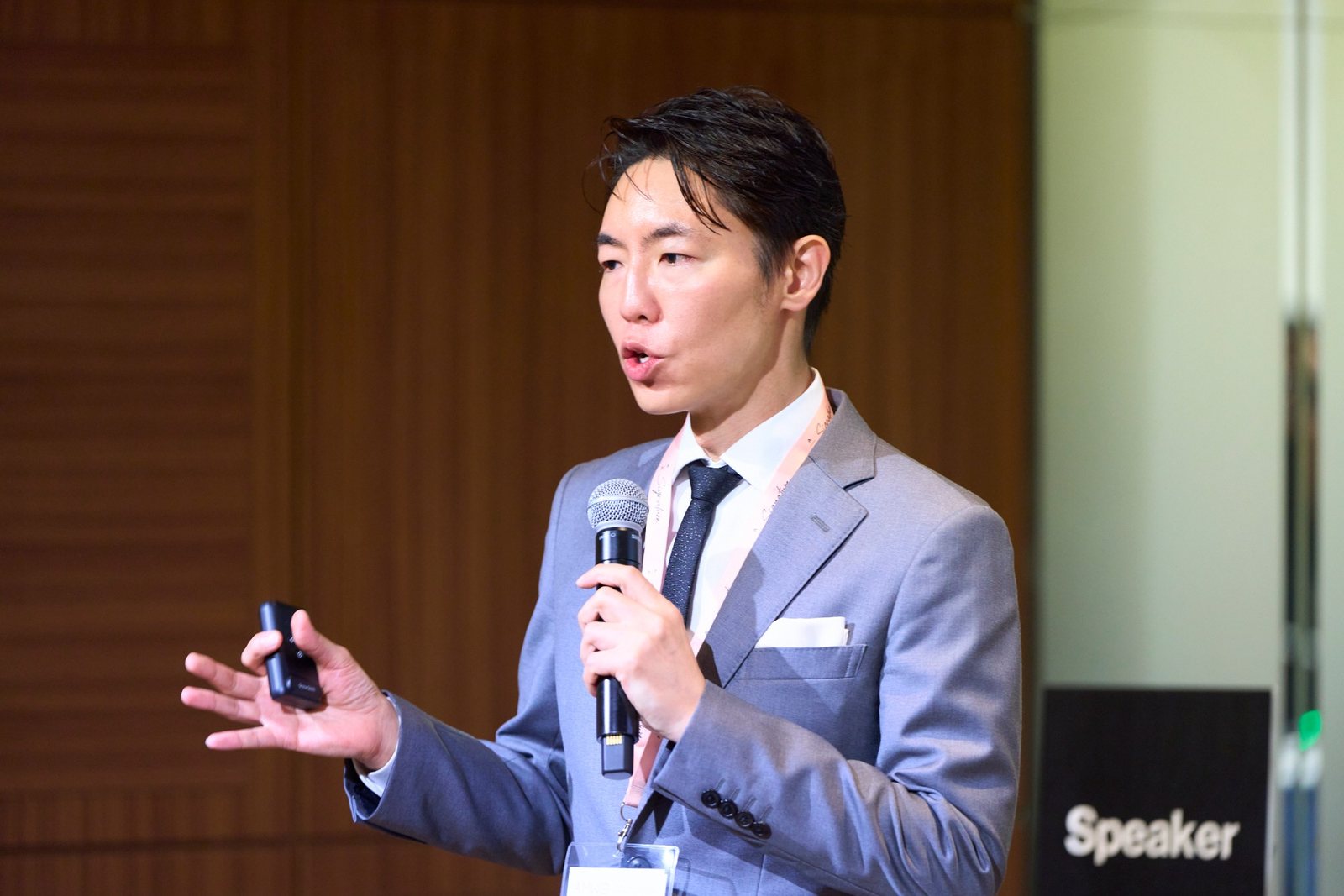
機器・出力・回数を追加する前に、エネルギーを受け取る肌の状態を考える。私が「The Gate Principle」として紹介した考え方です。2026年9月13日、AMWC JAPAN 2026(ザ・プリンス パークタワー東京)のコンビネーション治療のセッションで、横浜あざみ野のヒルズグレイスクリニック院長として「単独治療では届かない領域へ ― 線維芽細胞賦活によるコンビネーションの実践」と題して講演しました。同じ設定でエネルギーを与えても、受け取る皮膚の条件まで同じとは限らないため、講演では、超音波と架橋ヒアルロン酸を組み合わせる CrossTALK® でまず線維芽細胞の働きを促すことを目指し、その後に必要な治療を選ぶという順序を、二つの症例とともに紹介しました。ただし、複数の治療を行った症例の前後写真だけでは準備の段階の寄与を切り分けられず、この順序による有効性や安全性は引き続き検証していく必要があります(併用治療の有効性・安全性は確立されていません)。
はじめに
同じ機器を使い、同じ設定で治療をする。
それなら、皮膚の中でも同じことが起きているのでしょうか。
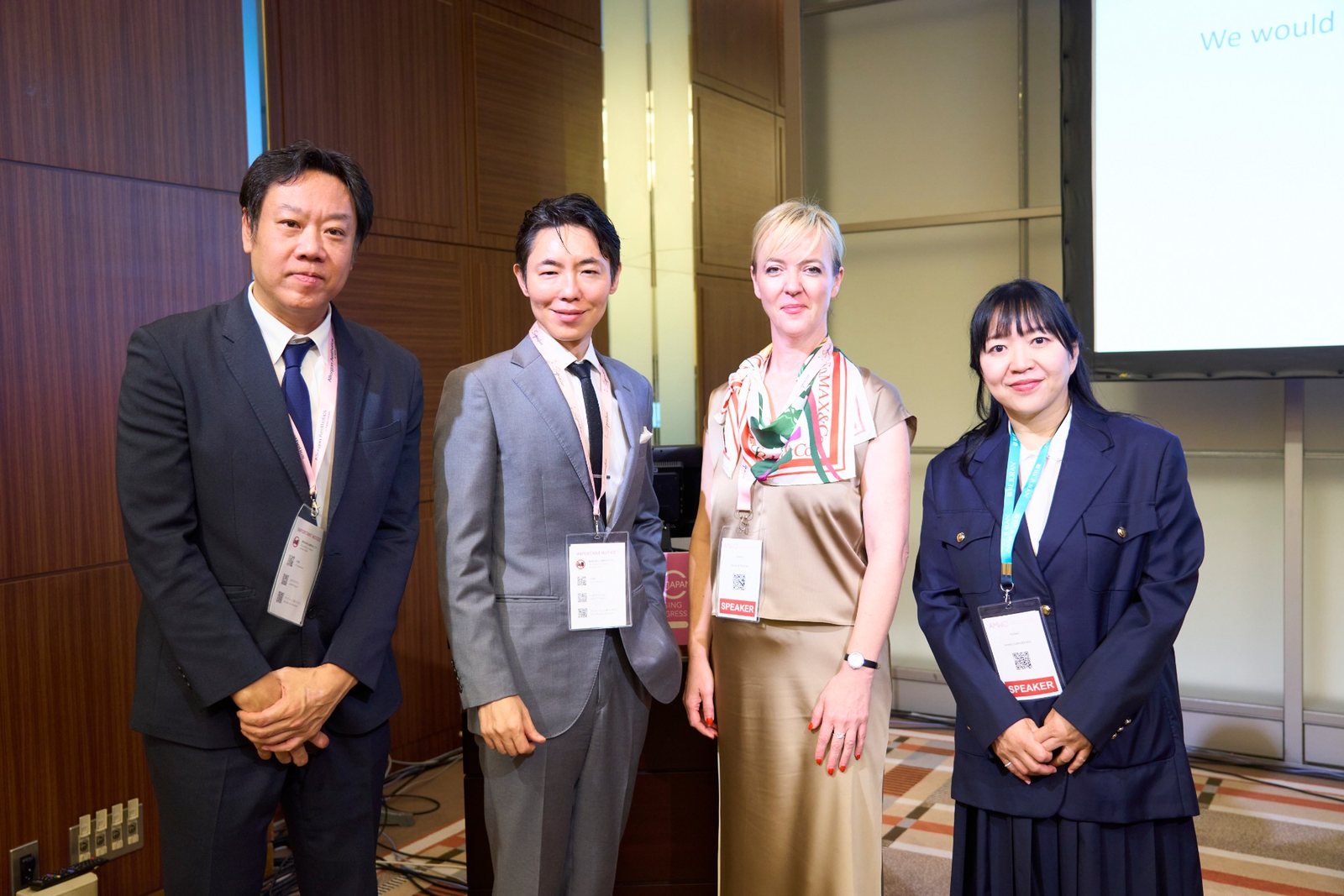
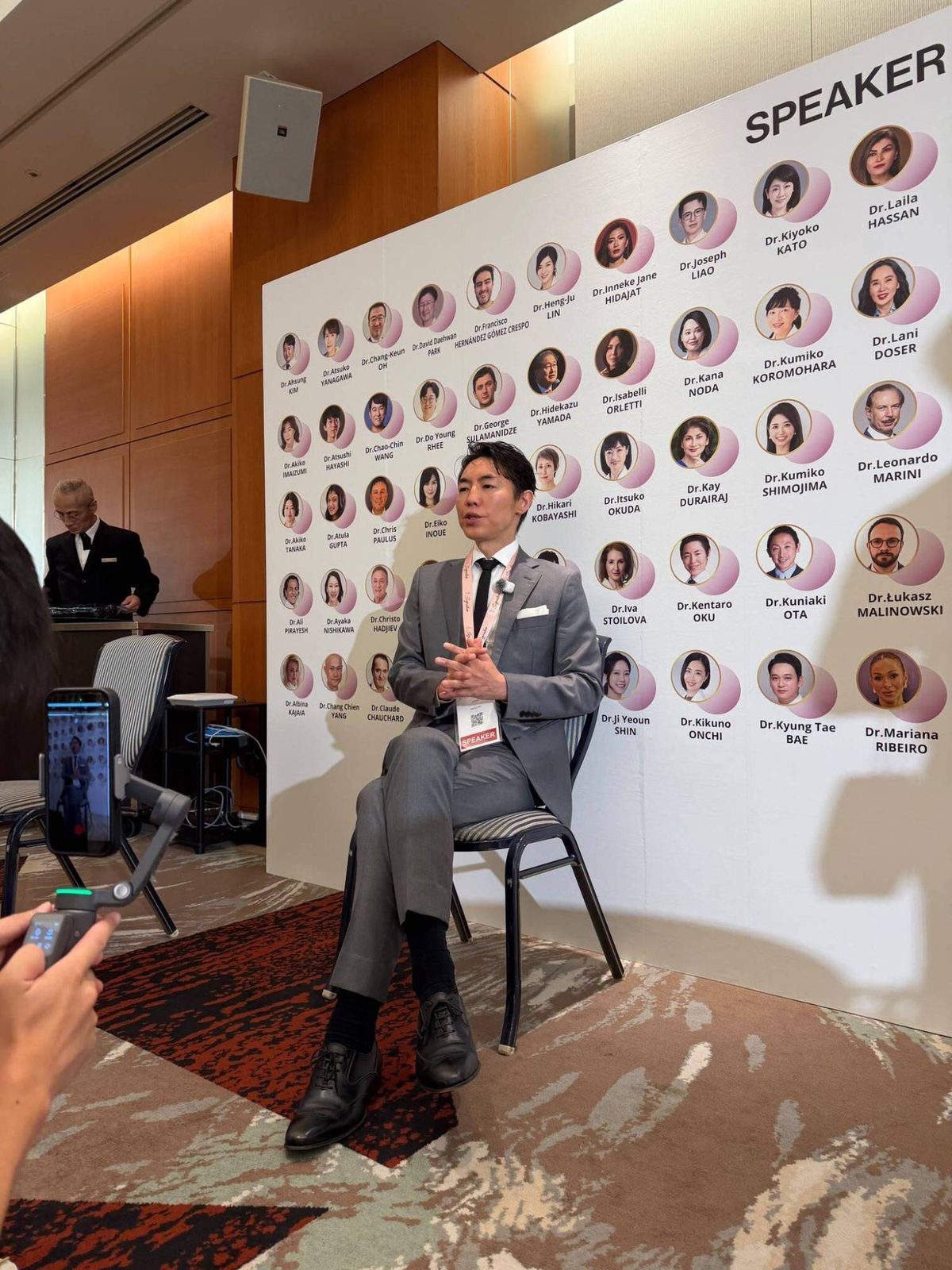
9月13日のAMWC JAPANで、私が会場の先生方と考えたかったのは、この問いでした。
演題は「単独治療では届かない領域へ ― 線維芽細胞賦活によるコンビネーションの実践」。
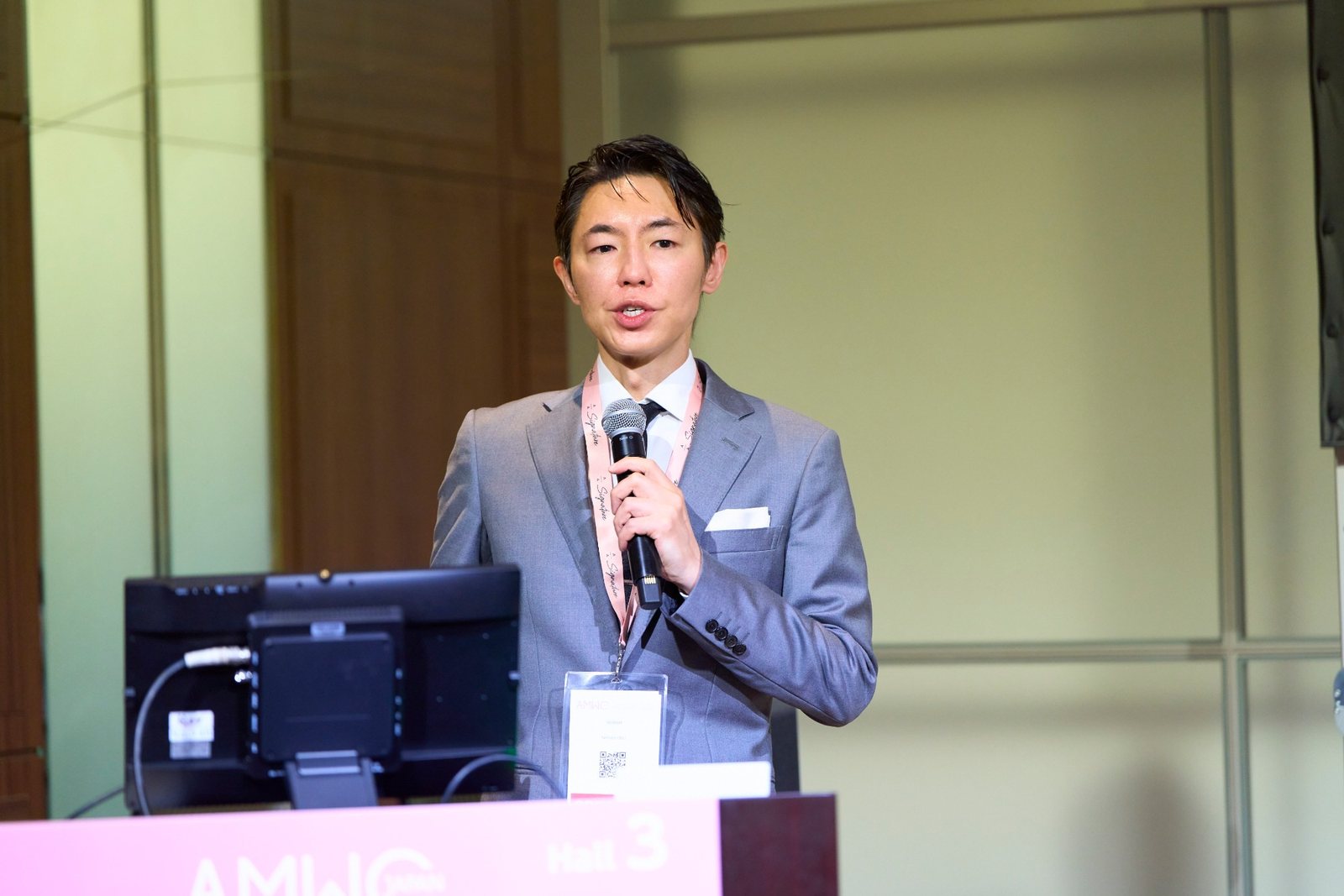
複数の治療をどう組み合わせるかというセッションですが、私は、組み合わせる機器の説明から話を始めませんでした。
最初にお見せしたのは、二つの症例の前後写真です。
ひとつは、顔全体の若返りを目指した症例。もうひとつは、色素や血管への治療を含め、肌全体の質を整えることを目指した症例でした。
この時点では、何を使い、どの順序で治療したかは説明していません。
まず経過を見ていただき、その背景にある治療の考え方をたどってから、最後に同じ写真へ戻る。そんな順序で講演を進めました。
1. 「次は何を足すか」と考える、その前に
ひとつの治療で十分な変化が得られなかったとき、私たちは次の方法を考えます。
別の機器を組み合わせる。出力を上げる。治療回数を増やす。
目的に応じて、こうした選択が必要になることはあります。ただ、その選択を重ねる前に、確かめたいことがあります。
なぜ、その治療では十分に届かなかったのでしょうか。
機器の力が足りなかったのか。それとも、治療を受ける皮膚にも、考えるべき条件があったのか。
講演では、この問いをRF、つまり高周波を使う治療から考えました。
2. 図に描かれたとおりに、熱は届いているのか
RFの説明では、皮膚の断面図がよく使われます。
皮膚の内部に熱が生じ、真皮や、脂肪組織を支える線維性の構造に働きかける。図を見ると、どこに作用させたい治療なのかがわかります。
けれど、その図を見ながら、私はもう一つの問いを置きました。
「エネルギーは、私たちが意図したとおりに届いているのでしょうか」
図に描かれた作用は、治療で目指しているものです。それがどの肌でも同じように起きているかは、別に考える必要があります。
そこで講演では、水分を含んだ皮膚と、水分が少ない皮膚で、加熱の分布が異なる模式図を示しました。
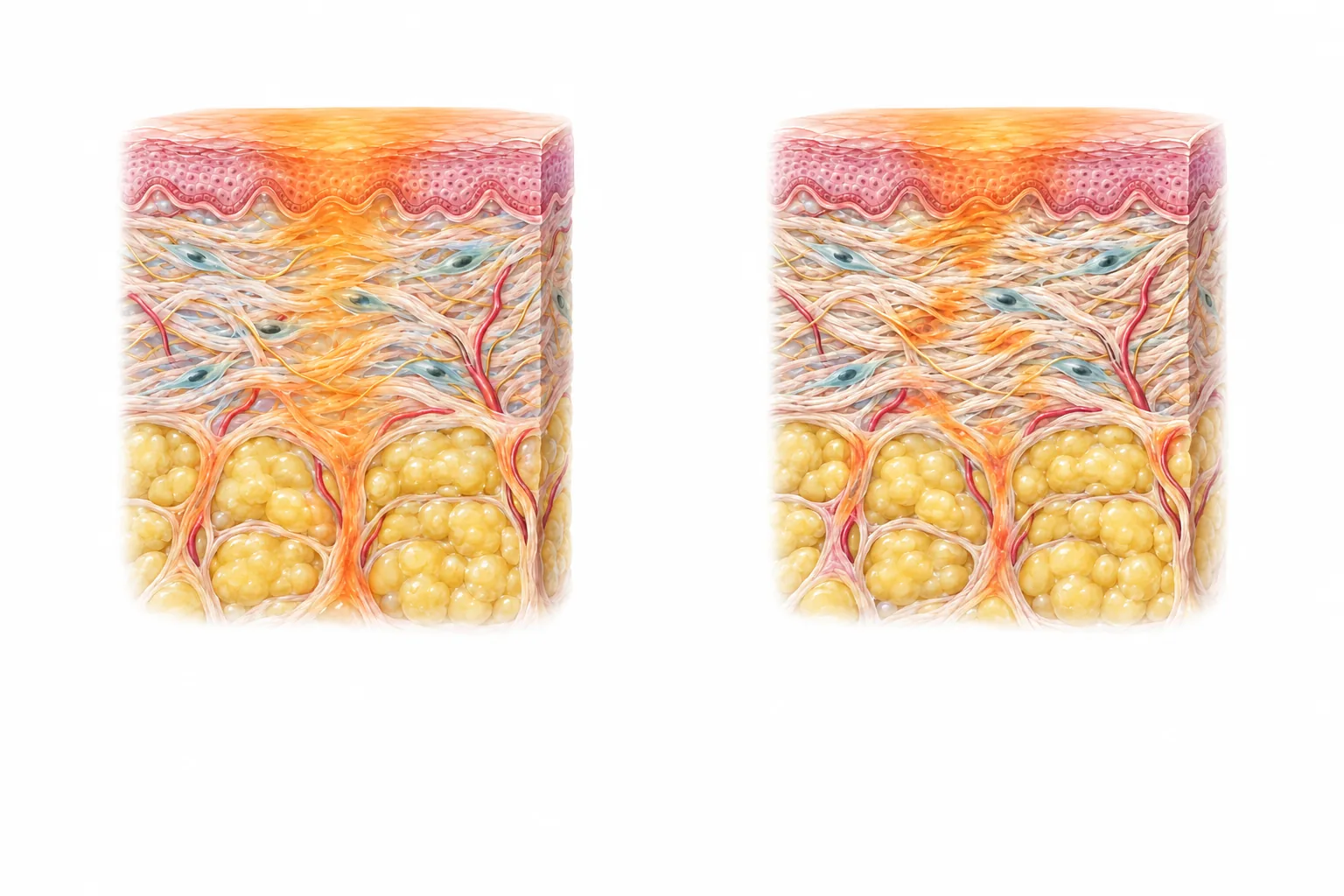
- 水分を含んだ皮膚
- 水分が少ない皮膚
伝えたかったのは、水分だけで治療の結果が決まるということではありません。
同じ設定でエネルギーを与えても、それを受け取る側の条件まで同じとは限らない。
機器の設定を見直すこととともに、受け取る皮膚にも目を向けたい。そこから、今回の中心となる考え方につながります。
3. 皮膚は、治療を受ける「入口」でもある ― The Gate Principle
私はこの考え方を、「The Gate Principle」として紹介しました。
Gateは、入口や関門という意味です。
皮膚は治療の対象であると同時に、エネルギーが通過する入口でもあります。目的の場所に働きかけたいのであれば、その入口となる皮膚の状態を、先に考えておく必要があるのではないか。
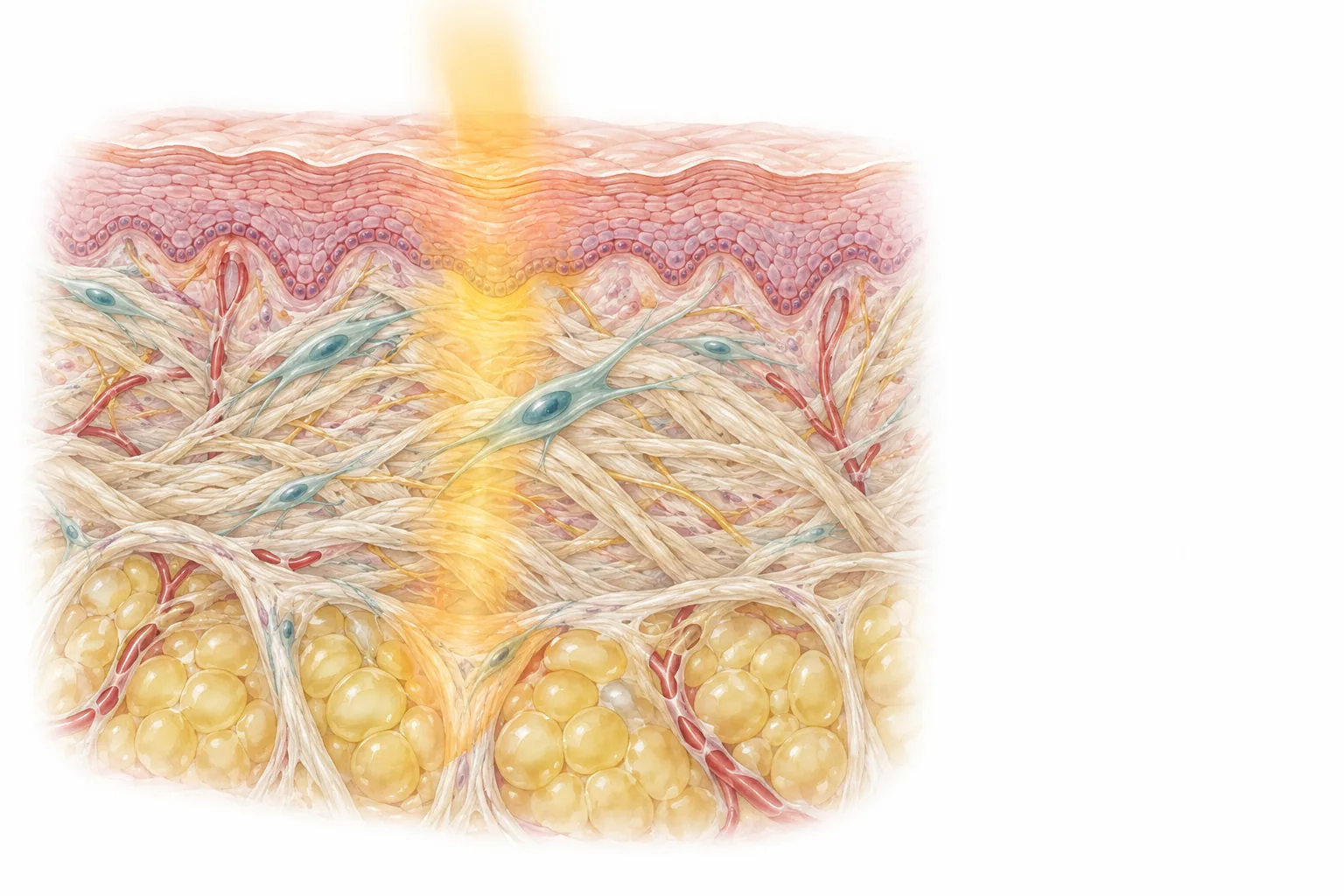
- 入口となる皮膚エネルギーが通過する
- 線維芽細胞コラーゲンなど、皮膚を支える成分をつくる細胞
- 働きかけたい場所
ここで注目したのが、真皮と、その環境をつくる線維芽細胞でした。
線維芽細胞は、コラーゲンなど、皮膚を支える成分をつくる細胞です。講演では、この細胞への働きかけを通じて、治療を受ける皮膚の環境を整えるという戦略を提示しました。
その方法として紹介したのが、超音波と架橋ヒアルロン酸を組み合わせるCrossTALK®です。
熱による刺激と、組織の伸展による刺激を組み合わせ、線維芽細胞の働きを促すことを目指す。そして、その後に必要な治療を選ぶ。
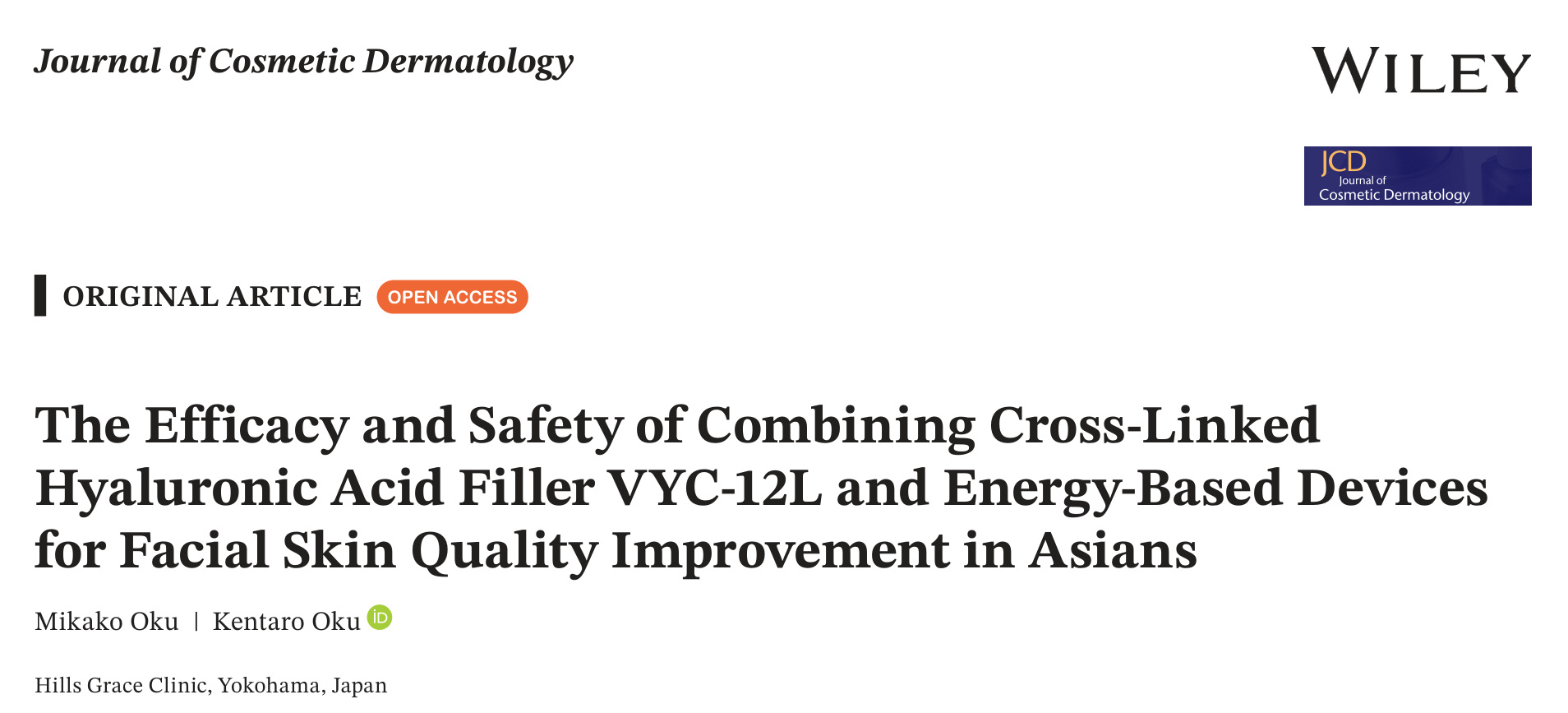
この順序を、冒頭の二つの症例で説明しました。
4. 最初にお見せした二つの症例へ
顔全体の若返りを目指した症例では、CrossTALK®を行った後に、RFとヒアルロン酸注入を組み合わせました。
もうひとつの症例では、CrossTALK®の後に、色素を狙うレーザーと、拡張した血管を狙うレーザーを使い分けました。
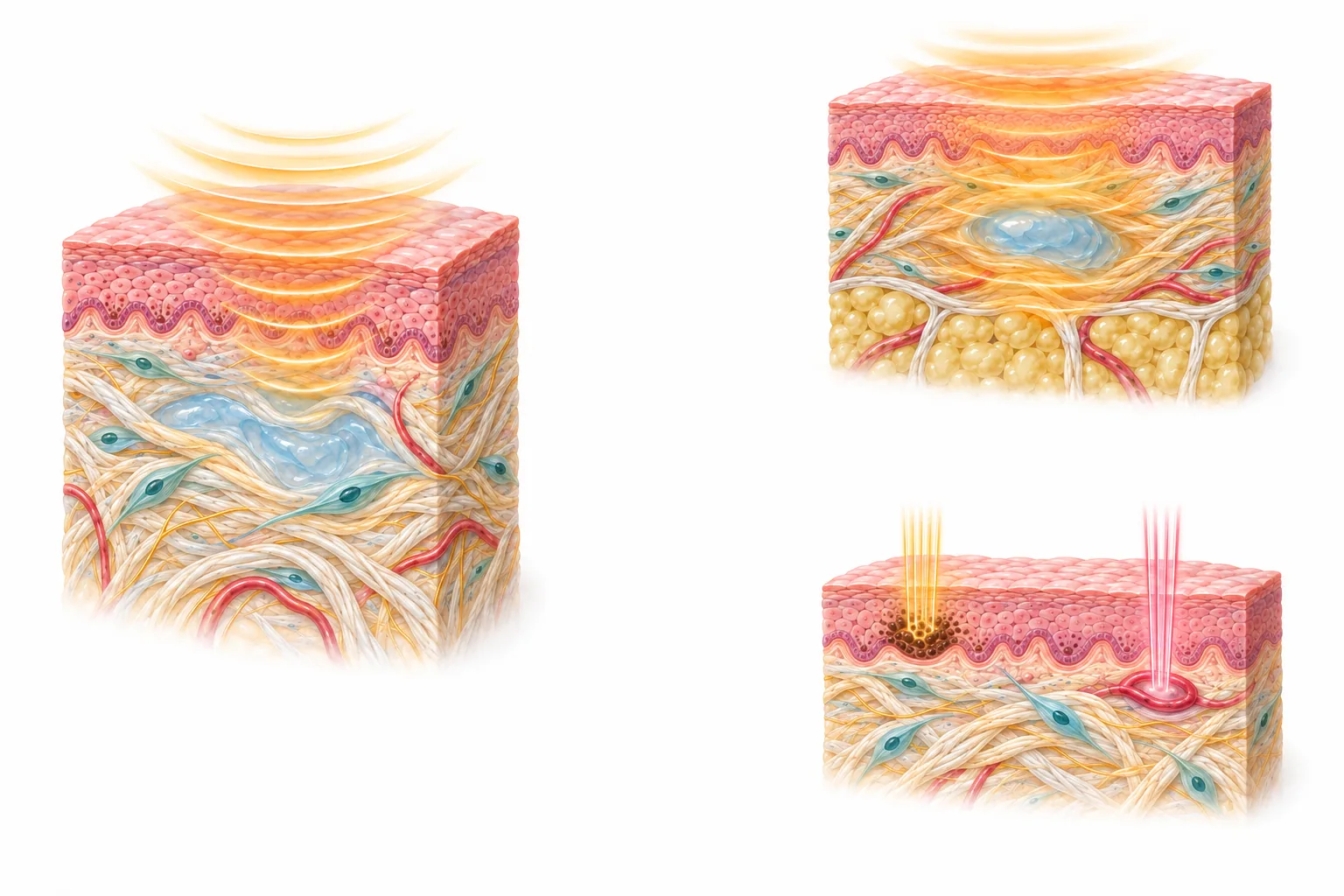
- まず、皮膚の状態へ働きかけるCrossTALK®
- 顔全体の若返りを目指した症例RF+ヒアルロン酸注入
- 肌全体の質を整えることを目指した症例色素を狙うレーザー+血管を狙うレーザー
この二つは、同じ治療のセットではありません。
最初に皮膚の状態へ働きかけるという考え方は共通しています。その先は、それぞれの肌で何を狙う必要があるかによって変わります。
とくに後者では、色素と血管という異なる対象に、それぞれの目的に合った治療を選びました。
肌全体の状態を考える段階と、個々の課題を狙う段階。その二つをつないだところに、今回のコンビネーション治療の意味があります。
ただし、複数の治療を行った症例の前後写真だけでは、準備の段階がどれだけ結果に寄与したかを切り分けることはできません。この順序による有効性や安全性は、引き続き検証していく必要があります。
5. 治療の数より、選ぶ理由を共有したい
美容医療を調べていると、さまざまな機器や施術の名前が出てきます。
選択肢が増えるほど、「自分には、どれが必要なのだろう」と迷うこともあると思います。
診察では、治療の名前に加えて、なぜ今、その治療を選ぶのかをお伝えしたいと思っています。
今の肌をどう捉えているのか。何に働きかけたいのか。なぜ、その順序なのか。
よくある質問
The Gate Principle(ゲート・プリンシプル)とは何ですか?
皮膚は治療の対象であると同時に、エネルギーが通過する入口(Gate)でもある、という考え方です。目的の場所に働きかけたいのであれば、その入口となる皮膚の状態を先に考えておく必要があります。機器・出力・回数を追加する前に、治療を受け取る皮膚へ視線を戻すための考え方として、AMWC JAPAN 2026の講演で紹介しました。
同じ機器・同じ設定なら、誰でも同じように熱が届きますか?
同じとは限りません。同じ設定でエネルギーを与えても、それを受け取る皮膚の条件まで同じとは限らないためです。講演では、水分を含んだ皮膚と、水分が少ない皮膚で、加熱の分布が異なる模式図を示しました。ただし、水分だけで治療の結果が決まるわけではありません。効果には個人差があります。
コンビネーション治療は、決まった組み合わせで行うのですか?
決まったセットではありません。講演で示した二つの症例も、最初に皮膚の状態へ働きかけるという考え方は共通していましたが、その先は、それぞれの肌で何を狙う必要があるかによって変わりました。顔全体の若返りを目指した症例ではRFとヒアルロン酸注入を、肌全体の質を整えることを目指した症例では色素を狙うレーザーと拡張した血管を狙うレーザーを組み合わせています。
治療で十分な変化がなかったときは、出力や回数を増やせばよいのですか?
目的に応じて、別の機器を組み合わせる、出力を上げる、治療回数を増やすといった選択が必要になることはあります。ただ、その選択を重ねる前に、なぜその治療では十分に届かなかったのか、治療を受ける皮膚にも考えるべき条件がなかったかを確かめたいと考えています。
TREATMENT INFORMATION
治療について
- 施術名
- CrossTALK® protocol(スキンバイブ by ジュビダームビスタ®の注入+超音波照射〈ソフウェーブ〉)で皮膚の状態へ働きかけたあとに、症例に応じて、高周波(RF)治療(DENSITY/XERF)とスキンバイブ注入、または色素を狙うピコ秒アレキサンドライトレーザー(PicoSure Pro)と拡張した血管を狙う長パルスレーザー(DermaV)を組み合わせる治療
- 診療区分
- 自由診療(保険適用外)
- 使用量・部位
- 講演で示した二つの症例でも、CrossTALK®の後に行った治療はそれぞれ異なります。注入量・照射の範囲と設定、組み合わせる治療は、診察で肌の状態を確認したうえで個別に決めます。
- 公式料金の目安
-
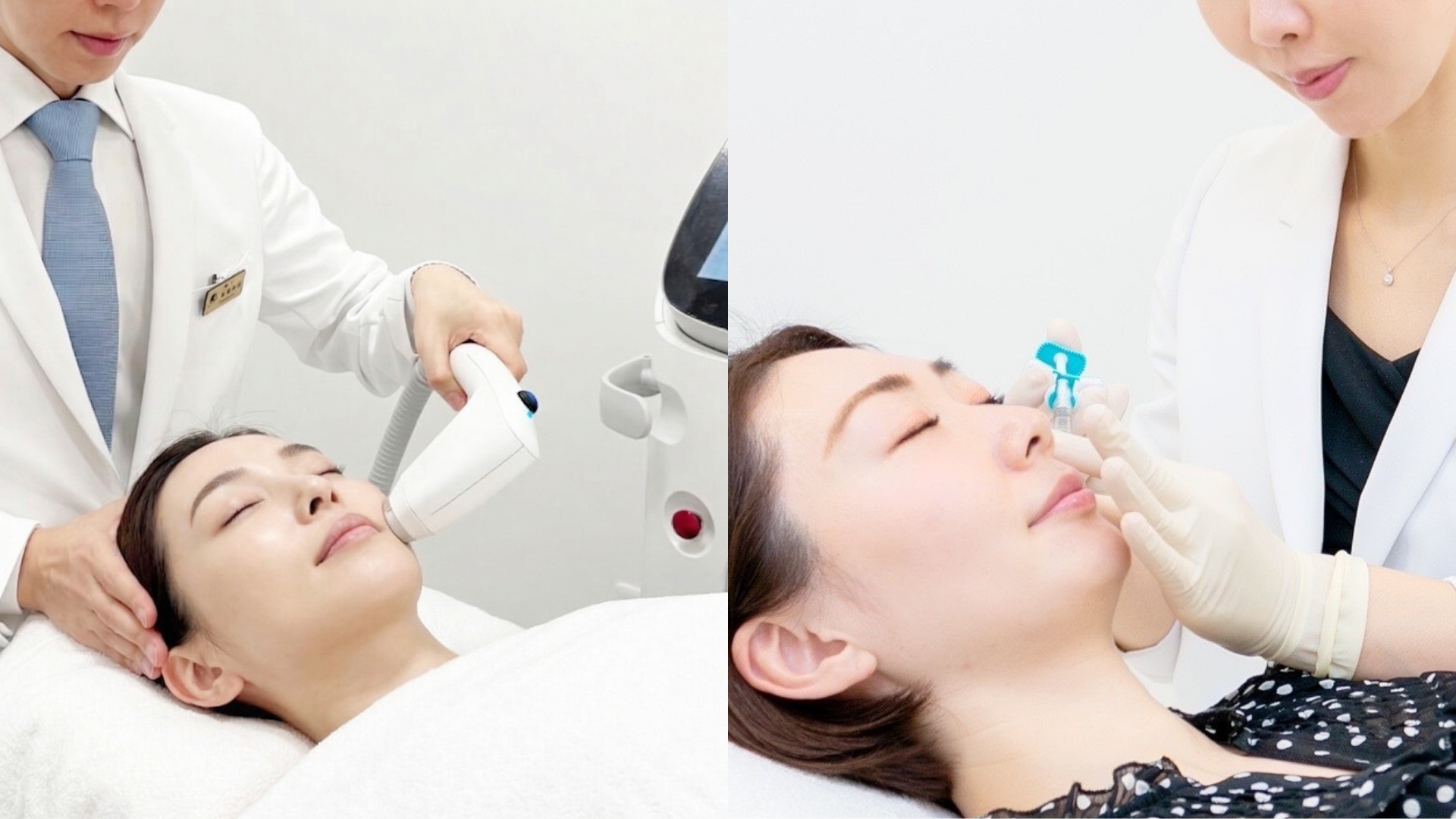
CrossTALK® protocol
全顔 1回 500,000円
中顔面 1回 270,000円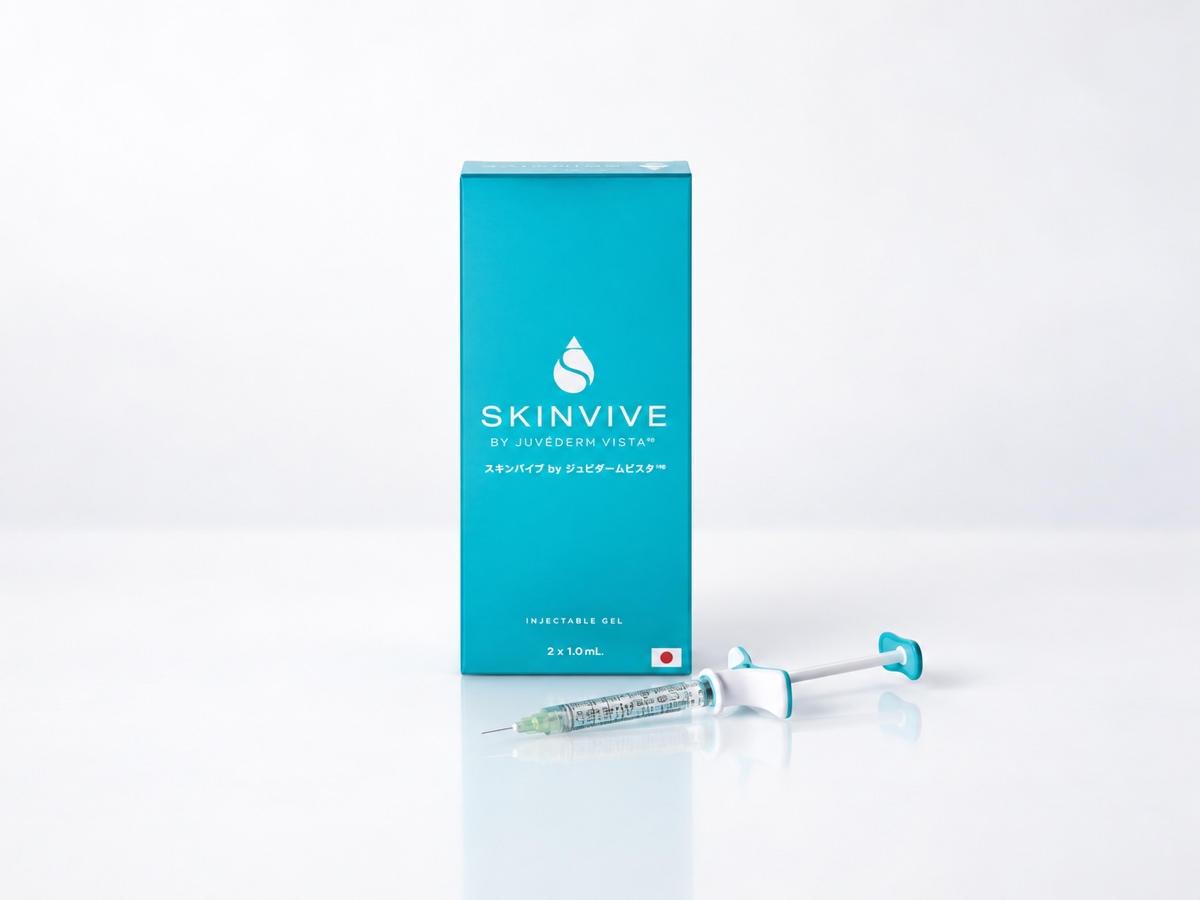
スキンバイブ by ジュビダームビスタ®
1.0cc 66,000円
両頬 2.0cc 132,000円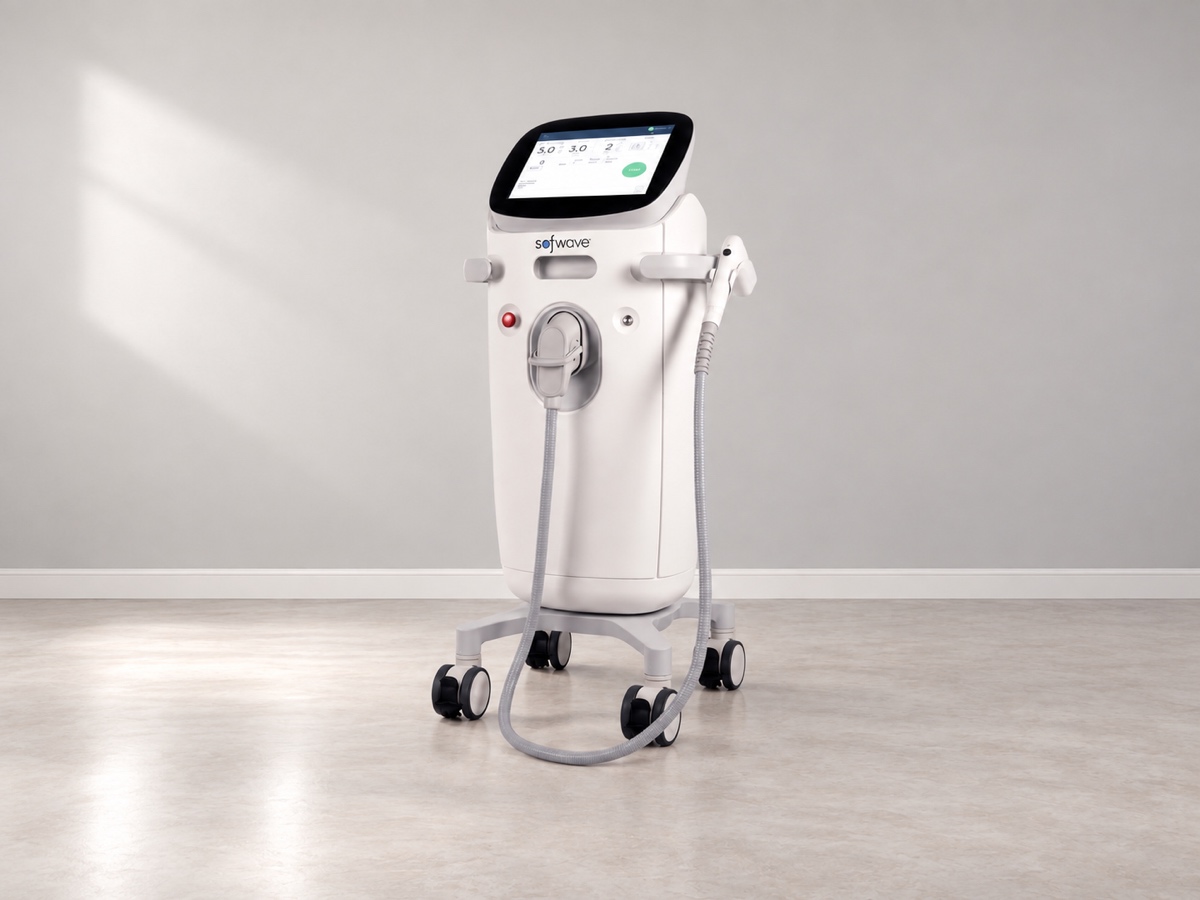
ソフウェーブ
上顔面・中顔面・下顔面 各1回 110,000円
全顔+あご下 1回 330,000円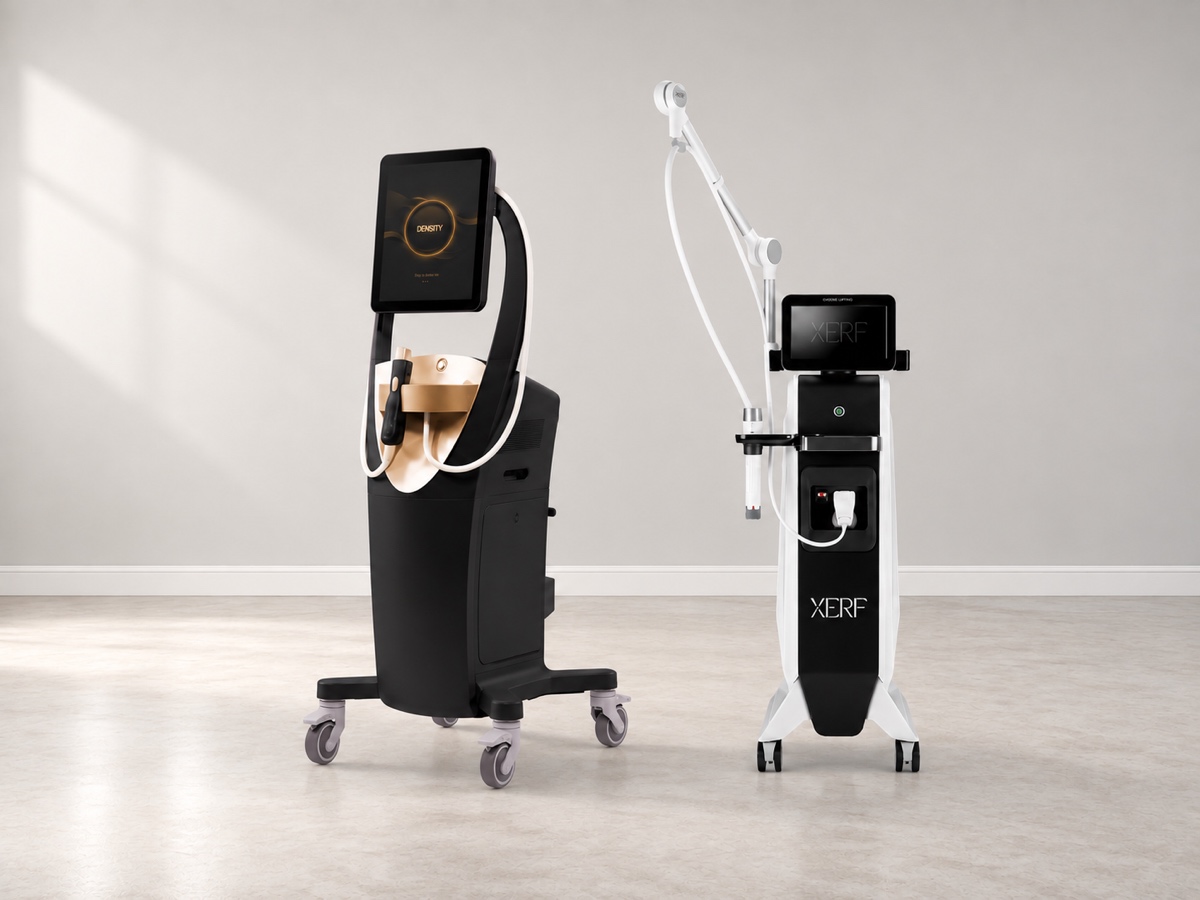
ヒルズシェイプ®(DENSITY+XERF)
1回 165,000円
注入治療と併用 110,000円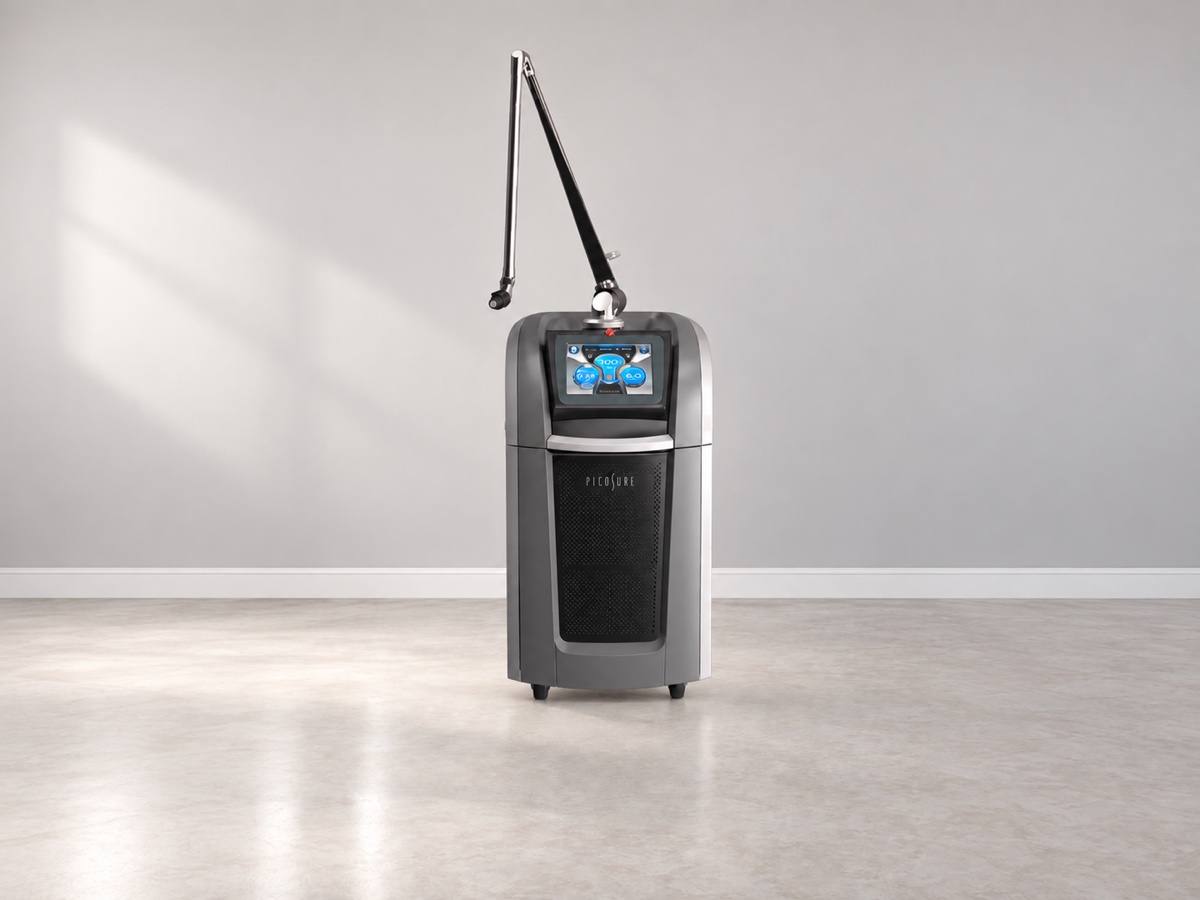
PICOSURE pro
全顔 1回 82,500円
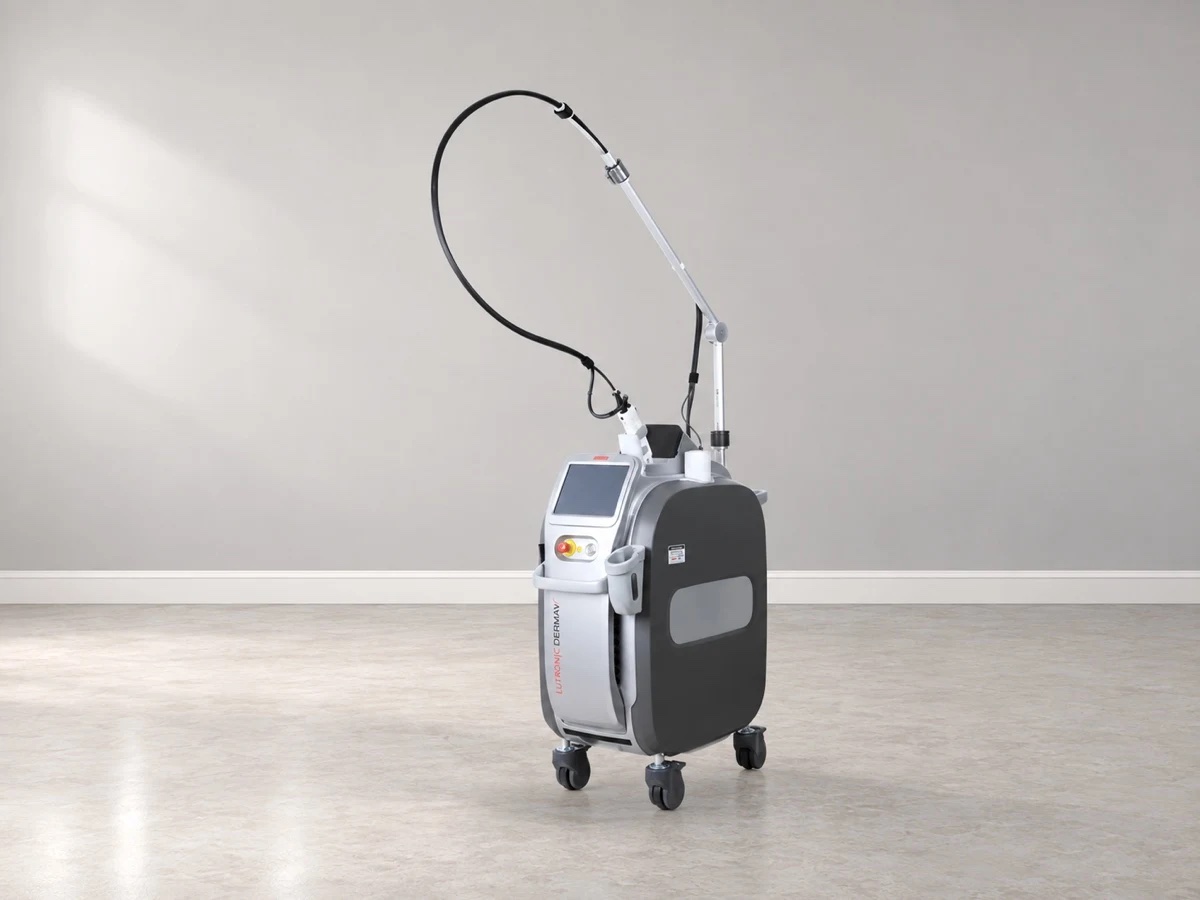
DermaV(ダーマV)
全顔 1回 82,500円
上記はクリニック公式案内の料金の目安です(税込・2026年10月12日時点)。CrossTALK® protocolの価格には、必要な前処置・麻酔代・内服代・針代を含みます。スキンバイブ・ソフウェーブ・ヒルズシェイプ®を単独で受ける場合やPicoSure Pro・DermaVで麻酔を行う場合は、麻酔代が別途かかります。診察・診断料は施術費用とは別に発生します(初めてご来院の方11,000円、前回のご来院から24か月以内の方1,100円、25か月以上の方11,000円)。料金や内容は変更される場合があります。DENSITY・XERFの料金は、両機器を組み合わせるヒルズシェイプ®(HS)の料金です。
- 主な副作用・リスク
- スキンバイブなどのヒアルロン酸注入では、赤み、腫れ、痛み、内出血、感染、アレルギー反応、凹凸などが起こることがあります。まれに血管閉塞・塞栓などの重い合併症が生じる可能性があります。注入後に、強い痛み、皮膚の色が白っぽくなる・紫色になる、目の見え方の異常などがあれば、すぐに当院または医療機関へご連絡ください。ソフウェーブでは、照射中の熱感や痛み、照射後の赤み・紅斑、腫れ・浮腫、皮膚の張り感、乾燥などが起こることがあり、まれにやけど、痺れ、内出血、神経損傷が生じる可能性があります。DENSITY・XERFでは、照射部の赤み、むくみ(線状のむくみを含む)、熱感、痛み、張り感や違和感、乾燥のほか、まれにやけど、水ぶくれ、しびれ、内出血などが起こることがあります。PicoSure Proでは、皮膚の不快感、赤み、腫れ、点状出血、内出血、水疱、かさぶた、膿疱、色素沈着、色素脱失、熱傷、瘢痕、感染、アレルギー反応などが起こることがあり、シミの部分が一時的に濃く見えることがあります。DermaVでは、照射部の赤み、腫れ、熱感、紫斑(内出血のようなあざ)、かさぶた、水疱、色素沈着、色素脱失、まれに瘢痕・熱傷などが起こることがあります。妊娠中・授乳中の方、ペースメーカー等の医療機器を体内に埋め込んでいる方、過去に「金の糸」の施術を受けた方は照射治療を受けられません。注入と照射を組み合わせた治療、その後に別の治療を行う順序の有効性・安全性、あけるべき期間は十分に検証されていません。適応、回数、ダウンタイムには個人差があります。
- 未承認医療機器に関する事項
- スキンバイブ by ジュビダームビスタ®は国内承認医療機器です(医療機器承認番号 30200BZX00389A01/使用目的:成人において、顔面及び頸部における小じわ等の表面のへこみ修正及び皮膚状態(保水性、弾力性等)の改善を目的に皮内に注入して使用される。眼瞼、口唇、及び隆鼻術における使用は適応に含まれない)。ソフウェーブは国内承認医療機器です(承認番号 30700BZX00082000/一般的名称:皮膚引締め用超音波照射器/承認された使用目的:中等度又は重度の顔面及び頚部のしわの改善。引き上げ(たるみ)、毛穴、肌質、ニキビ痕、肝斑などを目的とする使用は、承認された使用目的の範囲外の適応外使用です。医師が必要性とリスク、ほかの選択肢をご説明し、同意をいただいたうえで行います)。【DENSITY(デンシティ)/Jeisys Medical Inc.(韓国)】本治療に使用するデンシティは、日本国内において医薬品医療機器等法上の承認を得ていない未承認医療機器です。国内販売元であるJeisys Medical Japan株式会社を通じて入手しています。デンシティと同じ仕組みで国内で承認されている医療機器があるかどうかは、現在確認中です。米国FDAより510(k)クリアランスを取得しています(K230663:2023年、K250065:2025年)。FDAに示された使用目的は「皮膚科および一般外科の処置における電気凝固および止血」で、しわやたるみの改善を対象とした表示ではありません。主なリスクとして、紅斑、浮腫、まれにやけど等が報告されています。【XERF(ザーフ)/Cynosure Lutronic社】本治療に使用するザーフは、日本国内において医薬品医療機器等法上の承認を得ていない未承認医療機器です。国内販売元であるサイノシュアー・ルートロニック株式会社より入手しています。同一の性能を有する国内承認医療機器はありません。韓国で2024年に発売されています(メーカー発表では2024年5月)。カナダでは、カナダ保健省(Health Canada)の医療機器ライセンス(番号113060、2025年4月7日)を取得しており、メーカーは対象を、顔の輪郭形成・しわの軽減、眉のリフト、顔と首の皮膚のたるみの治療と発表しています。米国FDAでは、皮膚科・一般外科領域での電気凝固・止血を適応とする電気手術器として510(k)クリアランスを取得しています(K251327、2025年8月11日)。米国の4施設で行われた研究(39名、メーカーが支援、2026年公表)では、一時的な赤み(紅斑)とむくみ(浮腫)が報告されています。【DermaV(ダーマV)/Cynosure Lutronic社】本治療に使用するダーマVは、日本国内において医薬品医療機器等法上の承認を得ていない未承認医療機器です。製造元からの依頼にもとづき、当院で評価を目的として使用しています。同じ532nm・1064nmの長パルスレーザーとして国内承認を受けた機器は確認できていません。皮膚の血管病変を対象に国内承認を受けているレーザーには、595nmの色素レーザー(一般的名称:色素レーザ、承認番号 22800BZX00358000、使用目的:皮膚良性血管病変〈単純性血管腫、苺状血管腫、毛細血管拡張症〉の治療)があります。当院で使用しているダーマVは、この承認品ではありません。米国FDAより、血管病変(血管腫、毛細血管拡張、酒さ、静脈湖、下肢の血管など)、良性の色素性病変、いぼ等の凝固・止血を適応として510(k)クリアランスを取得しています(K203788:2021年3月)。海外の臨床研究では、照射後の赤み・腫れが報告され、重篤な有害事象は報告されていません。紫斑、かさぶた、色素変化、まれに瘢痕・熱傷が血管・色素レーザー一般のリスクとして知られています。【PicoSure Pro】国内承認医療機器です(承認番号 30500BZX00079000/一般的名称:アレキサンドライトレーザ/使用目的又は効果:体表面の表在性及び深在性良性色素性病変の治療、又は外傷性並びに入墨による刺青の蒸散及び除去。ニキビ痕・毛穴・小ジワ・肌質を目的とする照射は適応外使用です)。注入とエネルギーデバイスの併用は各製品の承認範囲を超える組み合わせであり、併用治療の有効性・安全性は確立されていません。治療内容は診察時に説明します。
CrossTALK®(クロストーク)の公式案内 スキンバイブの公式案内 ソフウェーブの公式案内 デンシティの公式案内 ザーフの公式案内 PicoSure Proの公式案内 ダーマVの公式案内
治療をご検討の方へ
- 効果の程度や持続期間には個人差があります。すべての方に同じ結果が得られることを保証するものではありません。
- 本記事で紹介した治療は自由診療(健康保険が適用されない治療)です。
- 注入と機器を組み合わせた治療は、各製品の承認範囲を超える組み合わせです。その後に別の治療を行う順序を含め、有効性・安全性や、あけるべき期間は十分に検証されていません。
- ソフウェーブは国内承認の医療機器ですが、肌質や肝斑などを目的とした使用は、承認された使用目的の範囲外(適応外使用)です。
- 症例で用いた高周波治療の機器(DENSITY・XERF)と、血管を狙うレーザー(DermaV)は、国内未承認の医療機器です。承認状況・入手経路・国内の承認医療機器の有無・諸外国における安全性等は、「治療について」に記載しています。
- PicoSure Proは、良性色素性病変の治療などを使用目的とする国内承認の医療機器です。
- 妊娠中・授乳中の方など、治療を受けられない場合があります。既往歴・内服中のお薬を含め、診察時に必ずご申告ください。
- 本記事は、AMWC JAPAN 2026での講演内容をもとにしています。
関連文献
- Oku M, Oku K. The Efficacy and Safety of Combining Cross-Linked Hyaluronic Acid Filler VYC-12L and Energy-Based Devices for Facial Skin Quality Improvement in Asians. J Cosmet Dermatol. 2025;24(10):e70485. doi:10.1111/jocd.70485
臨床研究:当院の奥 美香子・奥 謙太郎による前向き研究です。18名を対象に、スキンバイブ(VYC-12L)の注入から約1か月後にエネルギーデバイス治療を行いました(同日の施術ではありません)。比較対照群は設けていません。 - Quan T, Wang F, Marella S, et al. Collapsed Fibroblasts in Aged Human Skin in vivo: A Critical Driver of Dermal Aging. J Invest Dermatol. 2026. Online ahead of print. doi:10.1016/j.jid.2026.07.028
背景研究:加齢したヒトの皮膚で、線維芽細胞の形態・機能とコラーゲンの恒常性との関係を調べた研究です。スキンバイブやCrossTALK®の臨床効果を直接示したものではありません。
いくつもの治療を重ねても思うような変化が得られなかった方は、横浜あざみ野のヒルズグレイスクリニックまでご相談ください。今の肌をどう捉え、何に働きかけたいのか、なぜその順序なのかからご説明します。カウンセリングのご予約はこちら →
シミ・肝斑・毛穴など、肌に現れた悩みに向き合うとき、私が大切にしているのは、症状だけでなく、その症状が生じた肌の状態まで見極めることです。
レーザー・高周波・超音波などの機器は、同じ設定で照射しても、結果は一人ひとり異なります。その差を生むのは、肌が熱を受け止め、治療に応えられる状態にあるかどうか。だからこそ、必要に応じて肌が応えられる状態を整えながら、適切な治療を、適切な順序でご提案します。
この考えを治療設計の起点に据え、「Thermal Thread Technique®」として体系化し、2024年に『Lasers in Surgery and Medicine』誌へ発表しました。同論文は同誌のTop Viewed・Top Cited Articleに選出されています。高周波照射法「Mono-Bi CrossLIFT Technique」および、注入治療と医療機器を組み合わせる「CrossTALK® protocol」も『Journal of Cosmetic Dermatology』誌に発表しています。
米国レーザー医学会(ASLMS)専門医、医療法人社団光悠会理事長。Cynosure社のアドバイザリーボードには日本から唯一参加し、PicoSure Proの開発段階から携わり、第1号機による症例報告も行ってきました。世界最大のレーザー医学会ASLMSやIMCAS ASIA、KOREA DERMAなどの国際学会で招待講演を行い、国際的な医師教育プログラム「GMI」を主宰。海外の医師の指導・育成にも取り組んでいます。
これまでの治療で思うような手応えを得られなかった方にも、なぜその肌にその症状が起きているのかを見極め、必要な治療の順序からご提案します。肌を診て、治療を設計し、経過に合わせて組み立てを更新する。そこまでを含めて、肌治療だと考えています。詳しいプロフィール →
CLINIC INFORMATION
ヒルズグレイスクリニック
アクセスの詳細を見る →
肌を整える時間を、診察の外にも。

Key points
Before adding devices, output or sessions, consider the condition of the skin that receives the energy. This is the idea I presented as “The Gate Principle”. On 13 September 2026, in the combination-treatment session of AMWC JAPAN 2026 (The Prince Park Tower Tokyo), I gave a lecture as Director of Hills Grace Clinic in Azamino, Yokohama, titled “Into territory single treatments cannot reach — Combination treatment in practice through fibroblast activation”. Because delivering energy at the same settings does not necessarily mean that the conditions of the receiving skin are also the same, in the lecture I presented, together with two cases, a sequence in which we first aim to stimulate fibroblast activity with CrossTALK®, which combines ultrasound with cross-linked hyaluronic acid, and then select the treatments needed. However, before-and-after photographs of cases treated with multiple treatments cannot on their own isolate the contribution of the preparatory stage, and the efficacy and safety of this sequence still need to be examined further (the efficacy and safety of combination treatment have not been established).
Introduction
Using the same device and treating at the same settings.
In that case, is the same thing happening inside the skin?
At AMWC JAPAN on 13 September, this was the question I wanted to think through with the physicians in the audience.
The title was “Into territory single treatments cannot reach — Combination treatment in practice through fibroblast activation”.
The session was about how to combine multiple treatments, but I did not begin by explaining the devices to be combined.
What I showed first were before-and-after photographs of two cases.
One was a case aimed at rejuvenating the whole face. The other was a case aimed at improving overall skin quality, including treatment of pigmentation and blood vessels.
At that point, I did not explain what was used or in what order the treatments were given.
First the audience looked at the progress, then we traced the treatment thinking behind it, and finally we returned to the same photographs. That was the order in which I gave the lecture.
1. Before asking “What should I add next?”
When a single treatment does not produce enough change, we think about the next approach.
Combining another device. Raising the output. Increasing the number of sessions.
Depending on the goal, such choices can be necessary. But before piling up those choices, there is something I want to confirm.
Why did that treatment not reach far enough?
Was the device not powerful enough? Or were there also conditions to consider in the skin receiving the treatment?
In the lecture, I approached this question starting from RF, that is, treatments using radiofrequency.
2. Is heat reaching where the diagram shows it?
Cross-sectional diagrams of the skin are often used to explain RF.
Heat is generated inside the skin and acts on the dermis and on the fibrous structures that support the fatty tissue. Looking at the diagram, you can see where the treatment is meant to act.
Yet while looking at that diagram, I posed one more question.
“Is the energy reaching where we intended?”
The action drawn in the diagram is what the treatment aims for. Whether it occurs in the same way in every skin needs to be considered separately.
So in the lecture I showed a schematic in which the distribution of heating differs between skin that holds water and skin with little water.
- Skin that holds water
- Skin with little water
What I wanted to convey is not that water alone determines treatment results.
Even when energy is delivered at the same settings, the conditions on the receiving side are not necessarily the same.
Along with reviewing the device settings, I want to look at the receiving skin as well. This leads to the central idea of this lecture.
3. The skin is also the “gate” through which treatment is received — The Gate Principle
I presented this way of thinking as “The Gate Principle”.
A gate means an entrance or a checkpoint.
The skin is the target of treatment, and at the same time the entrance through which energy passes. If we want to act on the target site, should we not first consider the condition of the skin that serves as that entrance?
- The skin as the entranceEnergy passes through
- FibroblastsCells that make collagen and other components that support the skin
- Target site
What I focused on here were the dermis and the fibroblasts that create its environment.
Fibroblasts are cells that make collagen and other components that support the skin. In the lecture, I proposed a strategy of conditioning the environment of the skin receiving treatment by acting on these cells.
As the method for this, I introduced CrossTALK®, which combines ultrasound with cross-linked hyaluronic acid.
It aims to stimulate fibroblast activity by combining thermal stimulation with stimulation from tissue stretching. Then the treatments needed afterwards are selected.
Read the full paper (external site) →
I explained this sequence using the two cases from the beginning.
4. Back to the two cases I showed first
In the case aimed at rejuvenating the whole face, CrossTALK® was followed by a combination of RF and hyaluronic acid injection.
In the other case, CrossTALK® was followed by a laser targeting pigmentation and a laser targeting dilated blood vessels, each used for its own purpose.
- First, act on the condition of the skinCrossTALK®
- Case aimed at whole-face rejuvenationRF + hyaluronic acid injection
- Case aimed at improving overall skin qualityLaser targeting pigmentation + laser targeting blood vessels
These two are not the same set of treatments.
They share the idea of first acting on the condition of the skin. What follows depends on what needs to be targeted in each person’s skin.
In the latter case in particular, treatments suited to each purpose were chosen for two different targets: pigmentation and blood vessels.
A stage of considering the condition of the skin as a whole, and a stage of targeting individual concerns. The meaning of this combination treatment lies in connecting the two.
However, before-and-after photographs of cases treated with multiple treatments cannot on their own isolate how much the preparatory stage contributed to the results. The efficacy and safety of this sequence still need to be examined further.
5. More than the number of treatments, I want to share the reasons for choosing them
When you research aesthetic medicine, you come across the names of many devices and treatments.
The more options there are, the more you may find yourself wondering, “Which one do I actually need?”
In consultations, along with the name of the treatment, I want to explain why we are choosing that treatment now.
How I see your skin now. What we want to act on. Why in that order.
Frequently asked questions
What is The Gate Principle?
It is the idea that the skin is the target of treatment and, at the same time, the entrance (gate) through which energy passes. If we want to act on the target site, we need to first consider the condition of the skin that serves as that entrance. I introduced it in my lecture at AMWC JAPAN 2026 as a way of bringing our attention back to the skin receiving treatment before adding devices, output or sessions.
With the same device and the same settings, does heat reach everyone in the same way?
Not necessarily. Even when energy is delivered at the same settings, the conditions of the skin receiving it are not necessarily the same. In the lecture, I showed a schematic in which the distribution of heating differs between skin that holds water and skin with little water. However, water alone does not determine treatment results. Results vary between individuals.
Is combination treatment performed with a fixed combination?
It is not a fixed set. The two cases shown in the lecture shared the idea of first acting on the condition of the skin, but what followed depended on what needed to be targeted in each person’s skin. In the case aimed at rejuvenating the whole face, RF and hyaluronic acid injection were combined; in the case aimed at improving overall skin quality, a laser targeting pigmentation and a laser targeting dilated blood vessels were combined.
If a treatment did not produce enough change, should the output or number of sessions be increased?
Depending on the goal, choices such as combining another device, raising the output or increasing the number of sessions can be necessary. But before piling up those choices, I want to confirm why that treatment did not reach far enough, and whether there were also conditions to consider in the skin receiving the treatment.
TREATMENT INFORMATION
About the treatment
- Treatment
- Treatment in which the condition of the skin is first addressed with the CrossTALK® protocol (injection of SKINVIVE by JUVÉDERM VISTA® + ultrasound treatment [Sofwave]), followed, depending on the case, by a combination of radiofrequency (RF) treatment (DENSITY/XERF) and SKINVIVE injection, or of a picosecond alexandrite laser targeting pigmentation (PicoSure Pro) and a long-pulse laser targeting dilated blood vessels (DermaV)
- Type of care
- Private, self-funded care (not covered by health insurance)
- Amount and area
- Even in the two cases shown in the lecture, the treatments performed after CrossTALK® differed. The injection volume, the treatment area and settings, and the treatments to be combined are decided individually after checking the condition of the skin at a consultation.
- Standard fees
-
CrossTALK® protocol
Full face, 1 session ¥500,000
Mid-face, 1 session ¥270,000
SKINVIVE by JUVÉDERM VISTA®
1.0cc ¥66,000
Both cheeks 2.0cc ¥132,000
Sofwave
Upper, mid or lower face, 1 session each ¥110,000
Full face + under the chin, 1 session ¥330,000
Hills Shape® (DENSITY + XERF)
1 session ¥165,000
Combined with injection treatment ¥110,000
PICOSURE pro
Full face, 1 session ¥82,500
DermaV
Full face, 1 session ¥82,500
The above are standard fees as given in the clinic’s official information (tax included, as of 12 October 2026). The price of the CrossTALK® protocol includes the necessary pre-treatment, anaesthesia, oral medication and needles. When SKINVIVE, Sofwave or Hills Shape® is received on its own, or when anaesthesia is used with PicoSure Pro or DermaV, an anaesthesia fee is charged separately. Consultation and diagnosis fees are charged separately from treatment fees (first visit ¥11,000; within 24 months of your previous visit ¥1,100; 25 months or more since your previous visit ¥11,000). Fees and details are subject to change. The fees for DENSITY and XERF are those for Hills Shape® (HS), which combines both devices.
- Main side effects and risks
- With hyaluronic acid injections such as SKINVIVE, redness, swelling, pain, bruising, infection, allergic reactions, unevenness and similar effects may occur. In rare cases, serious complications such as vascular occlusion or embolism may occur. If, after the injection, you experience severe pain, the skin turning whitish or purple, or any abnormality in your vision, contact our clinic or a medical facility immediately. With Sofwave, a sensation of heat or pain during treatment, and redness or erythema, swelling or oedema, a feeling of tightness in the skin, dryness and similar effects after treatment may occur; in rare cases, burns, numbness, bruising or nerve damage may occur. With DENSITY and XERF, redness, oedema (including linear oedema), a sensation of heat, pain, a feeling of tightness or discomfort, and dryness may occur at the treated area, as well as, in rare cases, burns, blisters, numbness, bruising and similar effects. With PicoSure Pro, skin discomfort, redness, swelling, petechiae, bruising, blisters, scabbing, pustules, hyperpigmentation, hypopigmentation, burns, scarring, infection, allergic reactions and similar effects may occur, and pigmented spots may temporarily look darker. With DermaV, redness, swelling, a sensation of heat, purpura (bruise-like marks), scabbing, blisters, hyperpigmentation, hypopigmentation and, in rare cases, scarring or burns may occur at the treated area. People who are pregnant or breastfeeding, who have a pacemaker or other medical device implanted in the body, or who have previously had “gold thread” treatment cannot receive device-based treatments. The efficacy and safety of treatment combining injection with device-based treatment, and of the order in which a separate treatment is performed afterwards, as well as the interval that should be left, have not been sufficiently verified. Suitability, the number of sessions and downtime vary between individuals.
- Unapproved medical devices
- SKINVIVE by JUVÉDERM VISTA® is a medical device approved in Japan (medical device approval number 30200BZX00389A01; intended use: injected into the dermis in adults for the correction of superficial depressions such as fine wrinkles on the face and neck and the improvement of skin condition (hydration, elasticity, etc.). Use in the eyelids, the lips and rhinoplasty is not included in the indications). Sofwave is a medical device approved in Japan (approval number 30700BZX00082000; generic name: ultrasound device for skin tightening; approved intended use: improvement of moderate or severe wrinkles of the face and neck. Use aimed at lifting (sagging), pores, skin quality, acne scars, melasma and similar concerns is off-label use outside the scope of the approved intended use. It is performed after the doctor has explained the need, the risks and other options and obtained your consent). [DENSITY / Jeisys Medical Inc. (South Korea)] The DENSITY device used in this treatment is an unapproved medical device that has not received approval in Japan under the PMD Act. It is obtained through Jeisys Medical Japan Co., Ltd., the domestic distributor. Whether there is a medical device approved in Japan that works on the same mechanism as DENSITY is currently being confirmed. It has received 510(k) clearance from the US FDA (K230663: 2023; K250065: 2025). The intended use stated to the FDA is “electrocoagulation and haemostasis in dermatologic and general surgical procedures”, and it is not labelled for the improvement of wrinkles or sagging. The main risks reported include erythema, oedema and, in rare cases, burns. [XERF / Cynosure Lutronic] The XERF device used in this treatment is an unapproved medical device that has not received approval in Japan under the PMD Act. It is obtained from Cynosure Lutronic K.K., the domestic distributor. There is no medical device approved in Japan with the same performance. It was launched in South Korea in 2024 (May 2024 according to the manufacturer’s announcement). In Canada, it has obtained a medical device licence from Health Canada (number 113060, 7 April 2025), and the manufacturer has announced its intended applications as facial contouring and wrinkle reduction, brow lift, and treatment of skin laxity of the face and neck. In the US, it has received 510(k) clearance from the FDA as an electrosurgical device indicated for electrocoagulation and haemostasis in dermatology and general surgery (K251327, 11 August 2025). A study conducted at four sites in the US (39 participants, supported by the manufacturer, published in 2026) reported temporary redness (erythema) and swelling (oedema). [DermaV / Cynosure Lutronic] The DermaV device used in this treatment is an unapproved medical device that has not received approval in Japan under the PMD Act. At the manufacturer’s request, our clinic uses it for evaluation purposes. We have not been able to identify any device approved in Japan as a long-pulse laser at the same 532 nm and 1064 nm wavelengths. Lasers approved in Japan for vascular lesions of the skin include a 595 nm dye laser (generic name: dye laser; approval number 22800BZX00358000; intended use: treatment of benign cutaneous vascular lesions [simple haemangioma, strawberry haemangioma, telangiectasia]). The DermaV used at our clinic is not this approved product. It has received 510(k) clearance from the US FDA for coagulation and haemostasis of vascular lesions (haemangiomas, telangiectasia, rosacea, venous lakes, leg veins, etc.), benign pigmented lesions, warts and others (K203788: March 2021). Overseas clinical studies have reported redness and swelling after treatment, and no serious adverse events have been reported. Purpura, scabbing, pigment changes and, in rare cases, scarring or burns are known as general risks of vascular and pigment lasers. [PicoSure Pro] PicoSure Pro is a medical device approved in Japan (approval number 30500BZX00079000; generic name: alexandrite laser; intended use or effect: treatment of superficial and deep benign pigmented lesions on the body surface, or vaporisation and removal of traumatic and decorative tattoos. Treatment aimed at acne scars, pores, fine wrinkles or skin quality is off-label use). Combining injection with energy-based devices goes beyond the approved scope of each product, and the efficacy and safety of the combined treatment have not been established. The details of treatment will be explained at your consultation.
Official information on CrossTALK® Official information on SKINVIVE Official information on Sofwave Official information on DENSITY Official information on XERF Official information on PicoSure Pro Official information on DermaV
For those considering treatment
- The degree and duration of effects vary between individuals. There is no guarantee that everyone will obtain the same results.
- The treatments introduced in this article are private, self-funded care (treatment not covered by health insurance).
- Treatment combining injection with devices is a combination that goes beyond the approved scope of each product. Its efficacy and safety, including the order in which a separate treatment is performed afterwards, and the interval that should be left, have not been sufficiently verified.
- Sofwave is a medical device approved in Japan, but use aimed at skin quality, melasma and similar concerns is outside the scope of its approved intended use (off-label use).
- The radiofrequency devices used in the cases (DENSITY, XERF) and the laser targeting blood vessels (DermaV) are medical devices not approved in Japan. Their approval status, how they are obtained, approved alternatives in Japan and safety information from other countries are given under “About the treatment”.
- PicoSure Pro is a medical device approved in Japan whose intended uses include the treatment of benign pigmented lesions.
- Some people, such as those who are pregnant or breastfeeding, may not be able to receive treatment. Please be sure to tell us at your consultation about your medical history, including any medicines you are taking.
- This article is based on the content of a lecture given at AMWC JAPAN 2026.
Related literature
- Oku M, Oku K. The Efficacy and Safety of Combining Cross-Linked Hyaluronic Acid Filler VYC-12L and Energy-Based Devices for Facial Skin Quality Improvement in Asians. J Cosmet Dermatol. 2025;24(10):e70485. doi:10.1111/jocd.70485
Clinical study: a prospective study by Mikako Oku and Kentaro Oku of our clinic. In 18 participants, energy-based device treatment was performed approximately one month after injection of SKINVIVE (VYC-12L) (not on the same day). No control group was included. - Quan T, Wang F, Marella S, et al. Collapsed Fibroblasts in Aged Human Skin in vivo: A Critical Driver of Dermal Aging. J Invest Dermatol. 2026. Online ahead of print. doi:10.1016/j.jid.2026.07.028
Background study: a study examining the relationship between the morphology and function of fibroblasts and collagen homeostasis in aged human skin. It does not directly demonstrate the clinical effects of SKINVIVE or CrossTALK®.
If you have tried several treatments without achieving the change you hoped for, please consult Hills Grace Clinic in Azamino, Yokohama. We will explain how we view your current skin, what we aim to work on, and why we proceed in that order. Book a consultation →
When addressing concerns that appear on the skin, such as pigmentation, melasma and pores, what I value is assessing not only the symptoms but also the condition of the skin in which those symptoms arose.
With devices such as lasers, radiofrequency and ultrasound, results differ from person to person even when treatment is delivered at the same settings. What creates that difference is whether the skin is in a state to receive the heat and respond to treatment. That is why, while preparing the skin as needed so that it can respond, I propose the appropriate treatment in the appropriate order.
I made this idea the starting point of treatment design, systematised it as “Thermal Thread Technique®”, and published it in “Lasers in Surgery and Medicine” in 2024. The paper was selected as a Top Viewed and Top Cited Article in that journal. I have also published the radiofrequency technique “Mono-Bi CrossLIFT Technique” and the “CrossTALK® protocol”, which combines injection treatments with medical devices, in the “Journal of Cosmetic Dermatology”.
Specialist of the American Society for Laser Medicine and Surgery (ASLMS) and Chair of the Board of Koyukai Medical Corporation. As the only participant from Japan on Cynosure’s advisory board, I have been involved with PicoSure Pro since its development stage and have also reported cases using the first unit. I have given invited lectures at international congresses including ASLMS, the world’s largest laser medicine society, IMCAS ASIA and KOREA DERMA, and I lead the international physician education programme “GMI”. I am also engaged in teaching and training physicians overseas.
Even for those who have not felt the response they hoped for from previous treatments, I assess why those symptoms are occurring in that skin and propose treatment starting from the order in which it is needed. Examining the skin, designing the treatment, and updating the plan as the course progresses: I consider all of that to be skin treatment. Full profile →
CLINIC INFORMATION
Hills Grace Clinic
Access details →
Caring for your skin beyond the consultation room
HOME CARE
Online shop
Doctor-selected skincare and supplements, delivered to your home. For some products, a free online consultation is available before purchase.
CONSULTATION
Consult us at the clinic
Every person's skin is different. We look into what lies behind pigmentation and melasma, and suggest the care and the order of treatment your skin needs now.