この記事の要点
更年期の腸には、静かな変化が起きています。変わるのは、肌だけではありません。964人の女性を10年以上追いかけた2026年の研究で、腸の壁のゆるみを映す血液の数値が、最後の月経のおよそ2年半前から上がり始め、閉経後6年ほどまで上がり続けることが分かりました。腸の壁がゆるむと、細菌のかけらが少しずつ血液に入り、体の中で小さな炎症がくすぶります。その炎症は、肌のハリをつくる細胞のはたらきを鈍らせます。「同じお手入れなのに、前ほど肌が応えてくれない」という感覚の背景に、お腹の変化があるかもしれません。この記事では、その仕組みと、「発酵したものを、毎日ひと口」を続けやすい形にした当院オリジナルの発酵食品についてお伝えします。
幸わいこうそは食品であり、医薬品ではありません。紹介した研究は海外の女性や健康な成人を対象としたもので、本製品を用いた研究ではありません。感じ方には個人差があります。
1|腸の壁は「網戸」のようなもの
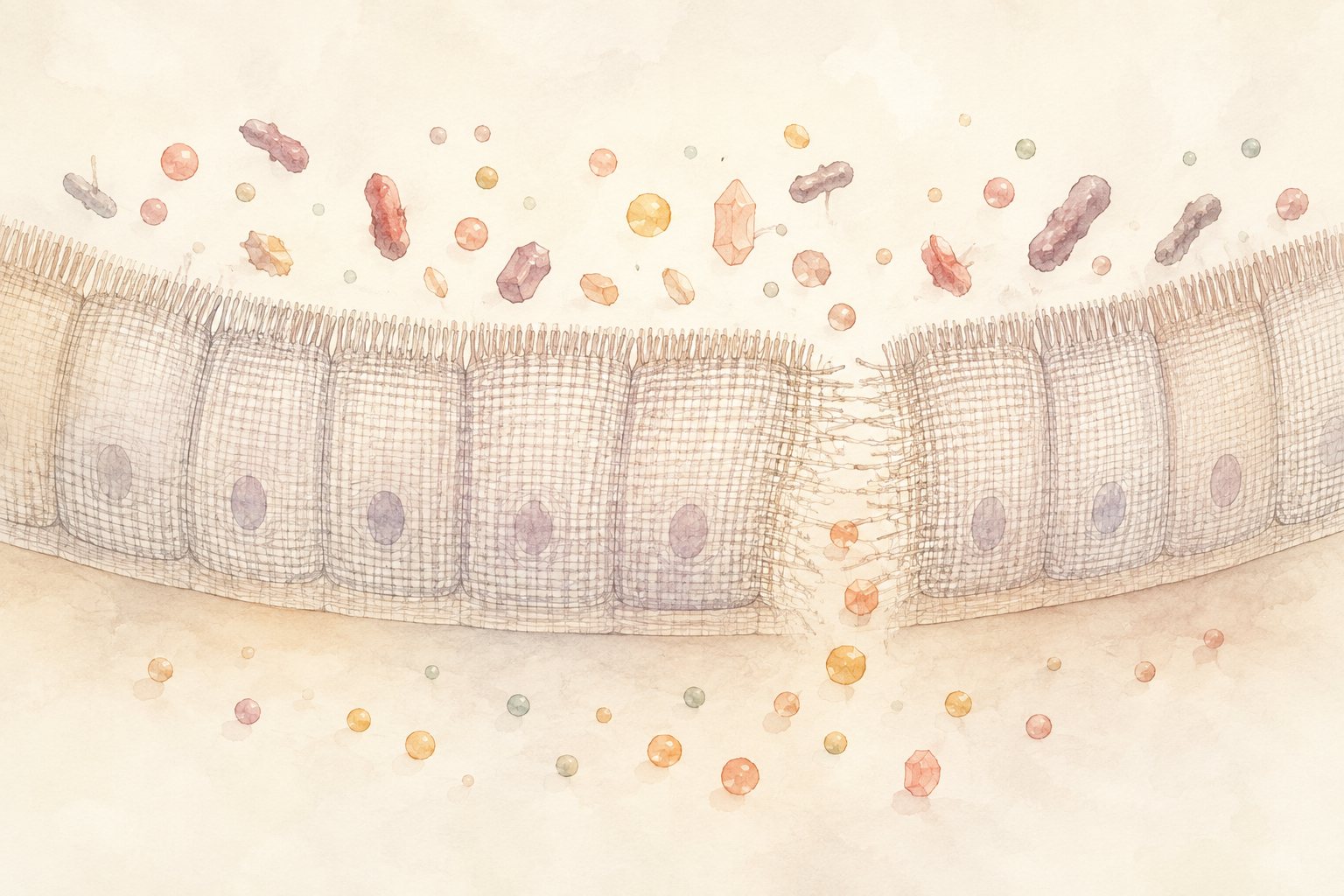
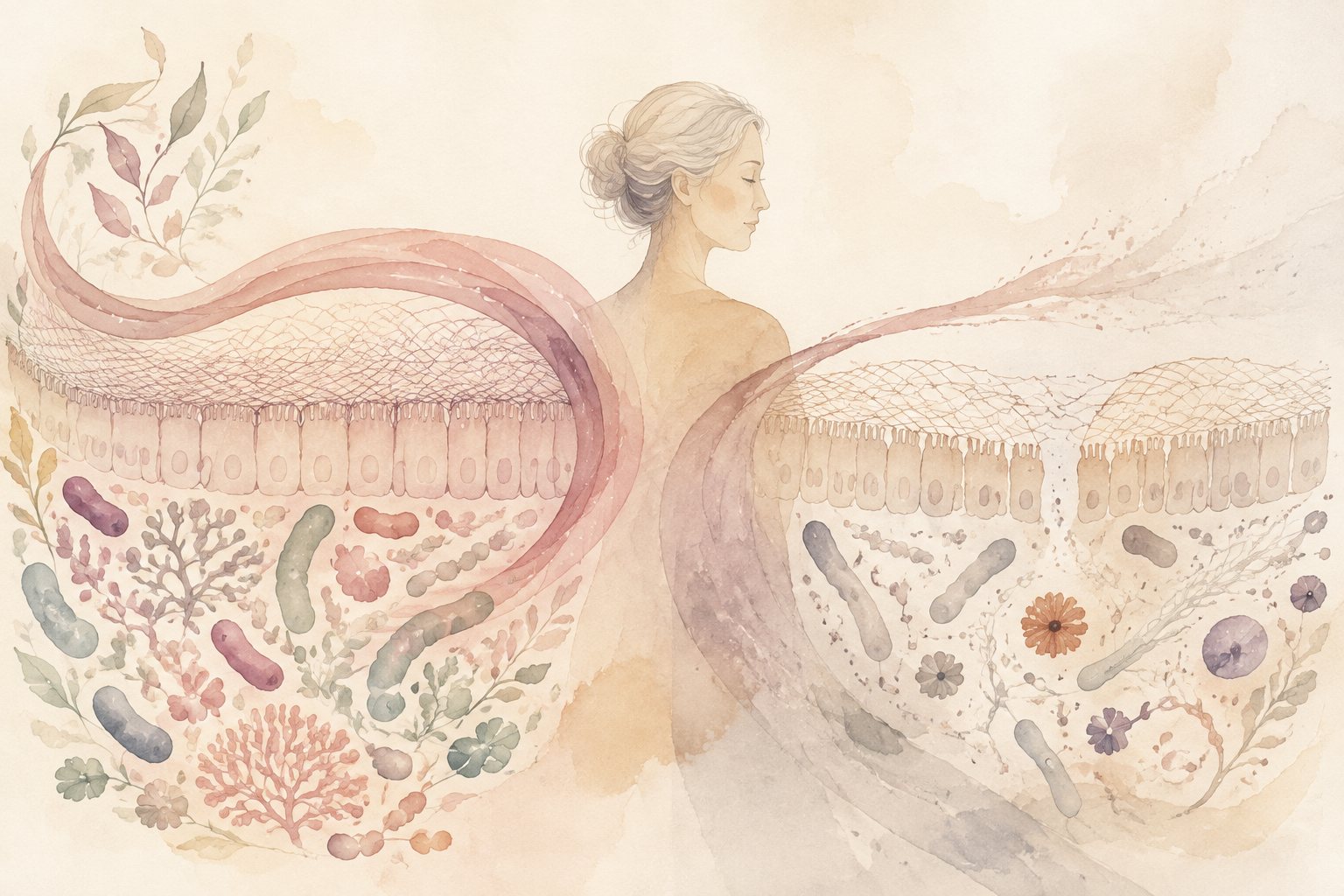
腸の壁は、体の中と外を分ける最前線です。イメージは、網戸に近いかもしれません。
食べものの栄養は通す。けれど、腸の中の細菌や、そのかけらは通さない。目の細かい網戸のような壁が、腸の内側をずっと守っています。
その網戸の目が粗くなり、通してはいけないものまで通してしまう。それが「リーキーガット(漏れる腸)」と呼ばれる状態です。病名ではなく、腸の壁の状態を表す言葉です。
この網戸のゆるみが、更年期という時期と重なって進む。それを示したのが、次の研究です。
2|964人の女性を追いかけて分かったこと
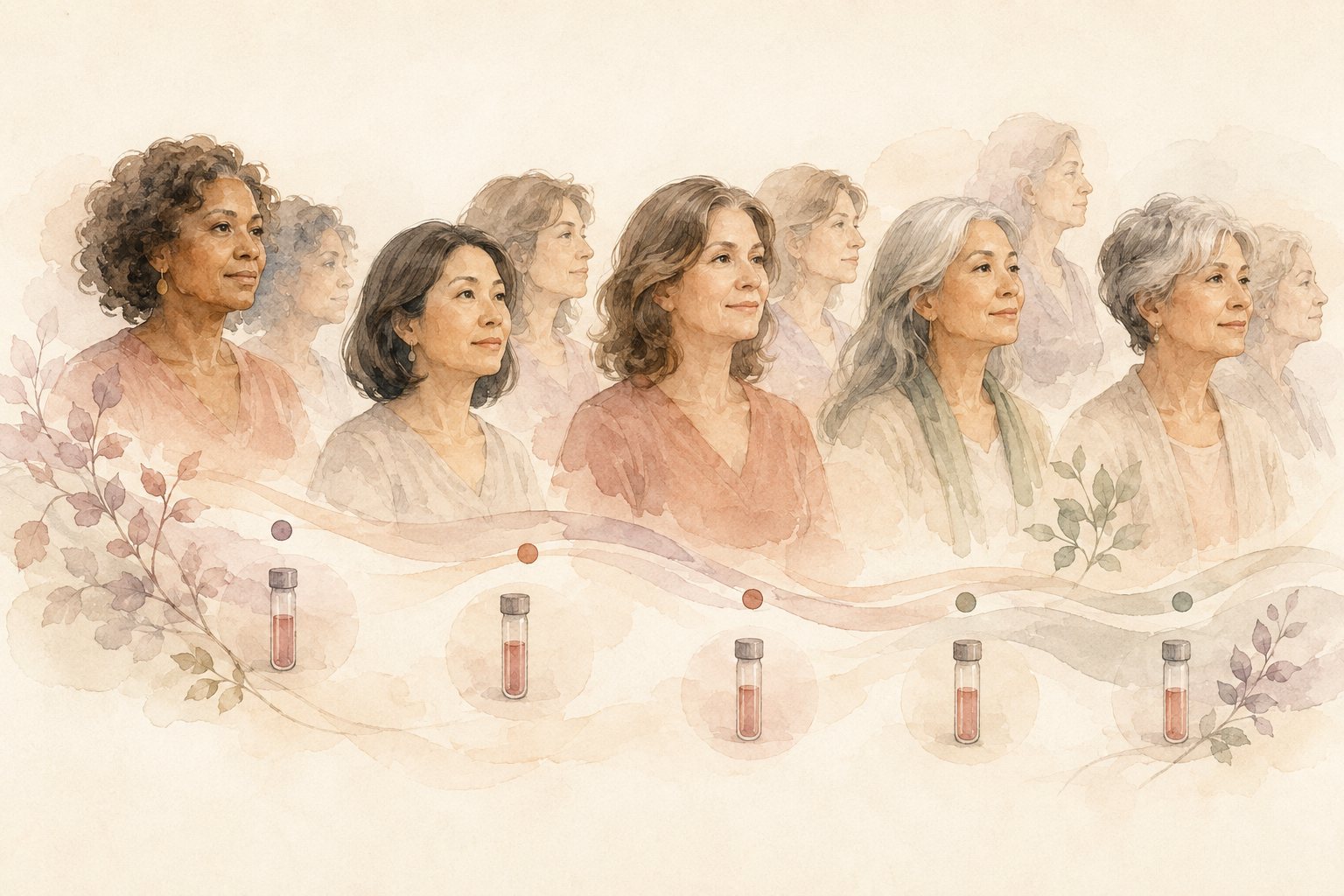
2026年9月、アメリカの医学誌に発表された研究です。964人の女性から、閉経の前から後まで、くり返し採血をしました。その回数、のべ3,546回。
調べたのは、2つの数値です。腸の壁が傷ついているときに増える数値。そして、細菌のかけらが体に入り込んだときに、免疫が反応して増える数値。どちらも「網戸がゆるんでいるか」を映す数値だと思ってください。
結果は、はっきりしていました。
閉経が近づく前、2つの数値は安定しています。ところが最後の月経のおよそ2年半前から上がり始め、閉経後6年から6年半ほどまで上がり続けたのです。1年あたりの上昇はわずかでも、8年以上にわたって積み重なります。
Shieh A, et al. J Clin Invest. 2026;136(17):e205059。米国の女性を何年も追いかけた研究で、日本人女性のデータではありません。数値の上昇は統計的な傾向で、個々の方に症状があることを意味するものではありません。
3|なぜ、更年期に網戸がゆるむのか
鍵を握るのは、女性ホルモン(エストロゲン)です。
エストロゲンは、肌のうるおいやハリを支えるホルモンとして知られています。でも、はたらく場所は肌だけではありません。腸の壁にもエストロゲンの受け皿があり、壁を守る側にはたらいていると考えられています。
閉経に向かってエストロゲンが減ると、この守りが薄くなります。さらに、腸の中の細菌の顔ぶれも変わっていく。守りが薄くなり、菌の顔ぶれも変わる。網戸がゆるみやすい条件が、同じ時期に重なるのです。Baker JM, et al. Maturitas. 2017;103:45-53
4|漏れたものは、肌までたどり着く
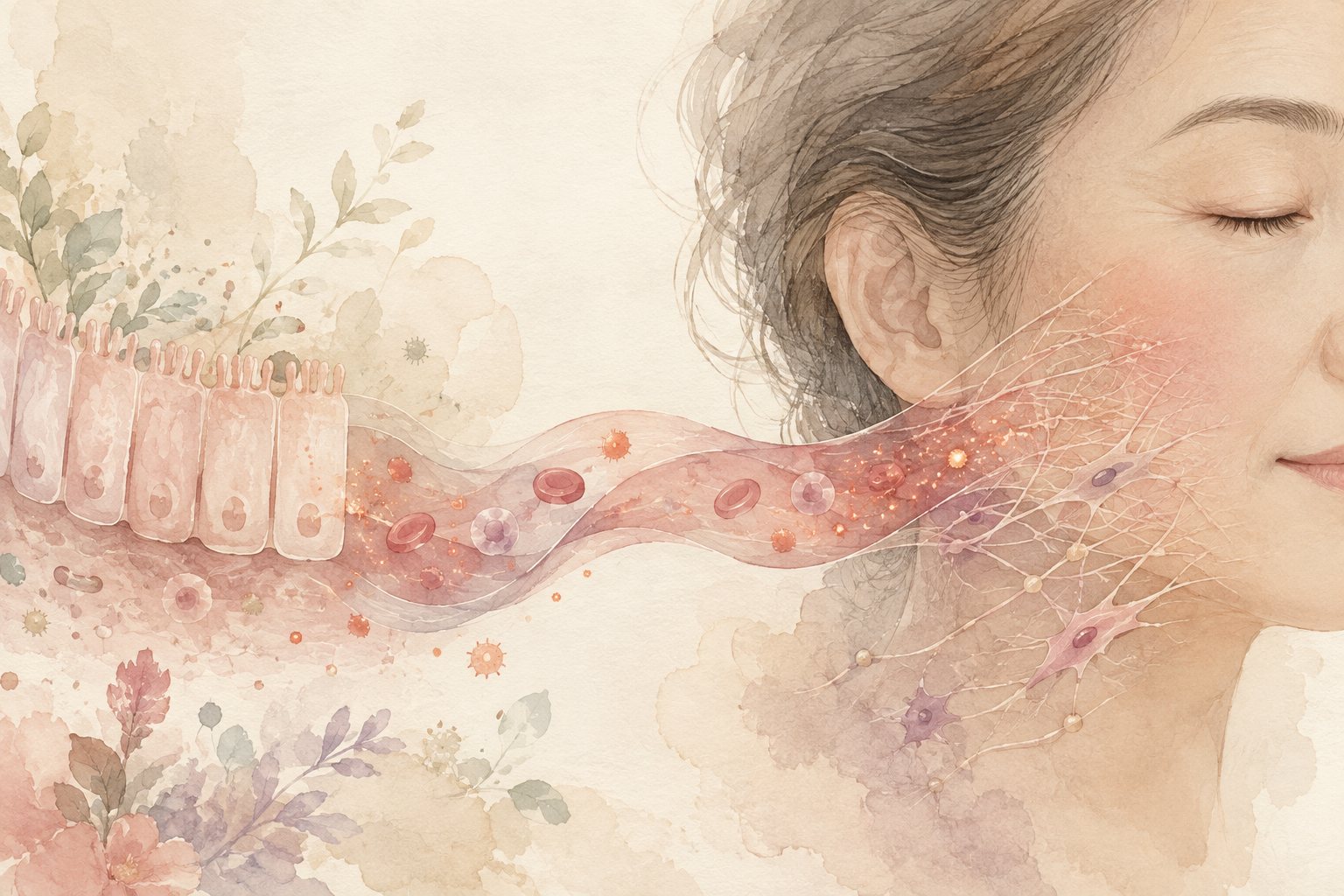
網戸がゆるむと、細菌のかけらが少しずつ血液に入り込みます。体はこれを見逃しません。免疫が反応し、炎症が起きます。
熱が出るような激しい炎症ではありません。自覚のない、くすぶるような小さな炎症です。少しずつの侵入が毎日続けば、炎症も毎日続きます。
ここからが、肌の話です。
肌のハリをつくっているのは、肌の土台にいる細胞(線維芽細胞)です。エストロゲンは、この細胞を後押ししています。閉経後に肌が乾き、薄くなり、傷の治りが遅くなるのは、その後押しを失うため。閉経後の最初の5年間で、肌のコラーゲンはおよそ30%減るという報告もあります。Affinito P, et al. Maturitas. 1999;33:239-247/Thornton MJ. Dermatoendocrinol. 2013;5:264-270
そこに、くすぶる炎症が加わります。炎症は、この細胞に「つくる」より「壊す」方向の合図を送ります。後押しを失った細胞に、さらにブレーキがかかる。
「同じお手入れなのに、前ほど肌が応えてくれない」。その言葉の裏に、私はこの二重の負荷を見ています。
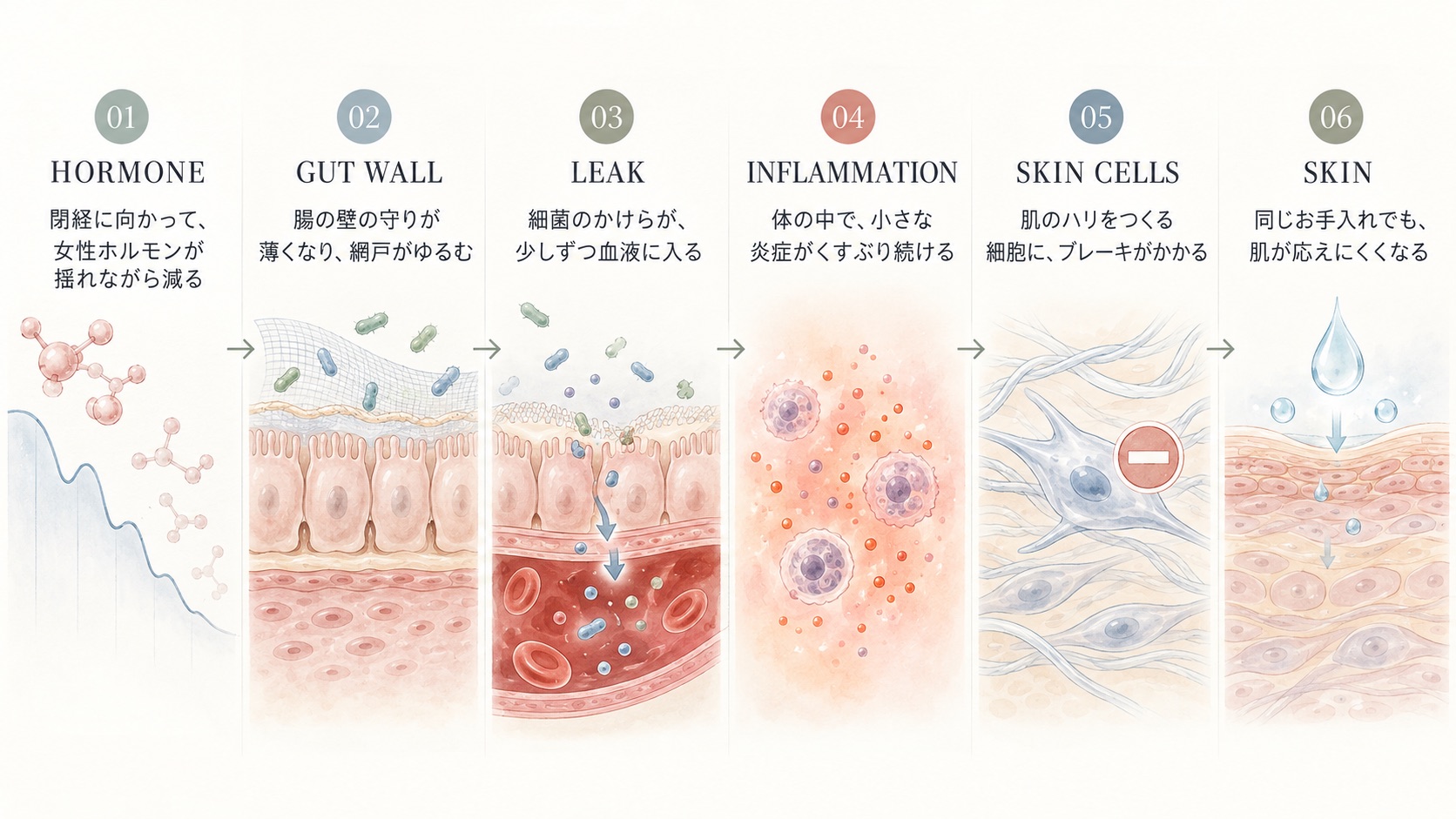
お腹から肌へ。いま考えられている流れ
- 01
HORMONE
閉経に向かって、女性ホルモンが揺れながら減る
- 02
GUT WALL
腸の壁の守りが薄くなり、網戸がゆるむ
- 03
LEAK
細菌のかけらが、少しずつ血液に入る
- 04
INFLAMMATION
体の中で、小さな炎症がくすぶり続ける
- 05
SKIN CELLS
肌のハリをつくる細胞に、ブレーキがかかる
- 06
SKIN
同じお手入れでも、肌が応えにくくなる
5|「何を、どのくらい食べればいいですか」
なぜ、発酵食品なのか
腸の中の細菌は、食物繊維を分解して「短鎖脂肪酸」という成分をつくります。この短鎖脂肪酸は、腸の壁の細胞の主なエネルギー源で、壁を保つはたらきに関わることが分かっています。Koh A, et al. Cell. 2016;165:1332-1345
発酵食品そのものを調べた研究もあります。スタンフォード大学の研究で、健康な大人が10週間、発酵食品(ヨーグルト、キムチ、発酵野菜など)を毎日食べたところ、腸の細菌の種類が増え、体の炎症を映す血液の数値が下がりました。同じ期間、食物繊維を増やしただけの人たちでは、この変化は見られませんでした。Wastyk HC, et al. Cell. 2021;184:4137-4153。対象は健康な成人36名の小規模な研究で、更年期の女性や肌を調べたものではありません。
だから私は、顔の相談でいらした方にもお伝えします。「発酵したものを、毎日ひと口」。
正しいことより、続くこと
そうお伝えすると、ほとんどの方がこう聞き返されます。「何を、どのくらい食べればいいですか」。
納豆、ぬか漬け、味噌、ヨーグルト。答えはいくつもあります。けれど数週間後に伺うと、返ってくるのはこの言葉です。「最初の1週間は続いたんですけど」。
家族の分の食事をつくり、仕事に出て、自分のことは後回しになる年代です。正しいことより、続くこと。この年代には、そのほうが大切だと思うようになりました。
それなら、続けやすい形のものを、自分の目で確かめて用意しよう。そう考えて、発酵の工房とともに仕上げたのが「幸わいこうそ(さきわいこうそ)」です。長く植物発酵を手がけてきた工房のペーストをベースに、私からお願いして原料を足してもらい、当院オリジナルとして仕上げました。88種類の植物原料を、陶製の甕(かめ)で発酵させたペーストです。

幸わいこうそは当院が販売する食品で、医薬品ではありません。特定の症状の治療や予防を目的とした製品でもなく、ここから先は、毎日の習慣を続けやすくするための食品のご案内です。
6|安心して飲めるものを届けたい
つくった理由は、この一心です。毎日口にするものだからこそ、安心して飲めるものであってほしい。そして、ちゃんといいものであってほしい。
診察室で「これを続けてみてください」とお渡しできるように、3つのことを自分の目で確かめました。
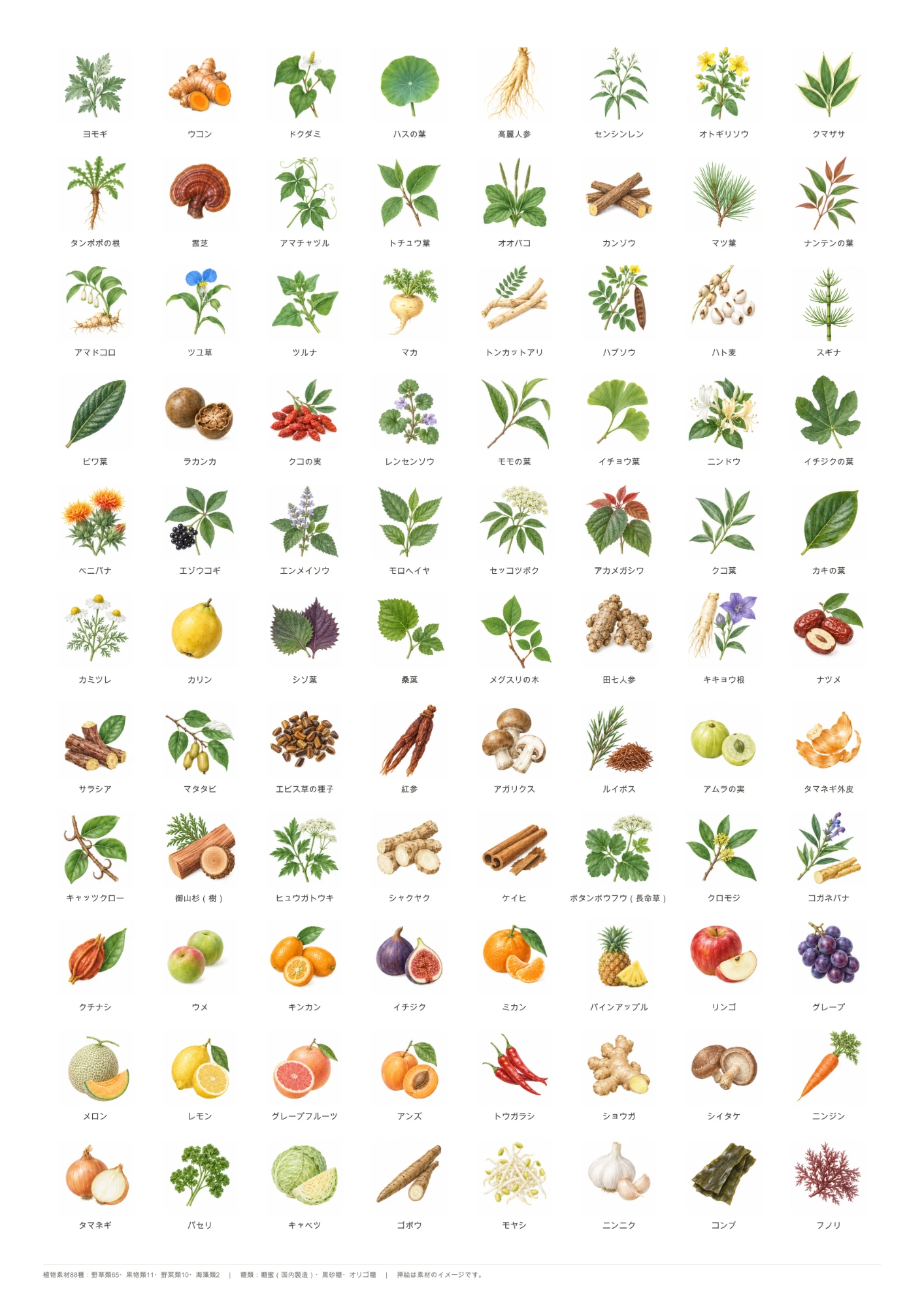
原料の幅。88種類の植物
ヨモギを中心とした野草に、果物、野菜、海藻。ウコン、ドクダミ、高麗人参、クマザサ、タンポポの根、桑葉、ウメ、キンカン、ショウガ、ゴボウ、コンブ——全部で88種類の植物が入っています。
内訳は、野草類65種、果物類11種、野菜類10種、海藻類2種。ひとつの食材を毎日続けるより、多くの種類を少しずつ。それが私の食事の考え方です。だから原料の幅は、最初に確かめました。このうちいくつかは、当院向けに私からお願いして加えてもらった原料です。
なぜ、種類が多いほうがいいのか。腸内細菌は、菌によって好む食物繊維が違います。同じ食材ばかりでは、その餌を使える菌だけが増える。種類が増えるほど、多くの菌に餌が行き渡ります。週に30種類以上の植物を食べる人は、10種類以下の人より腸内細菌の多様性が高いという1万人規模の調査もあります。McDonald D, et al. mSystems. 2018;3(3):e00031-18。自己申告にもとづく観察研究で、因果を示すものではありません。
発酵の深さ。陶製の甕と、3種類の菌
植物は、発酵を経ると成分が細かく分解され、発酵の過程で新しい成分も生まれます。
この製品は、植物の発酵を専門とする工房で、昔ながらの陶製の甕を使い、3種類の発酵菌でじっくり発酵と熟成を重ねてつくられています。時間も手間もかかるところです。近道をしていない製法であることを、自分の目で確認しました。
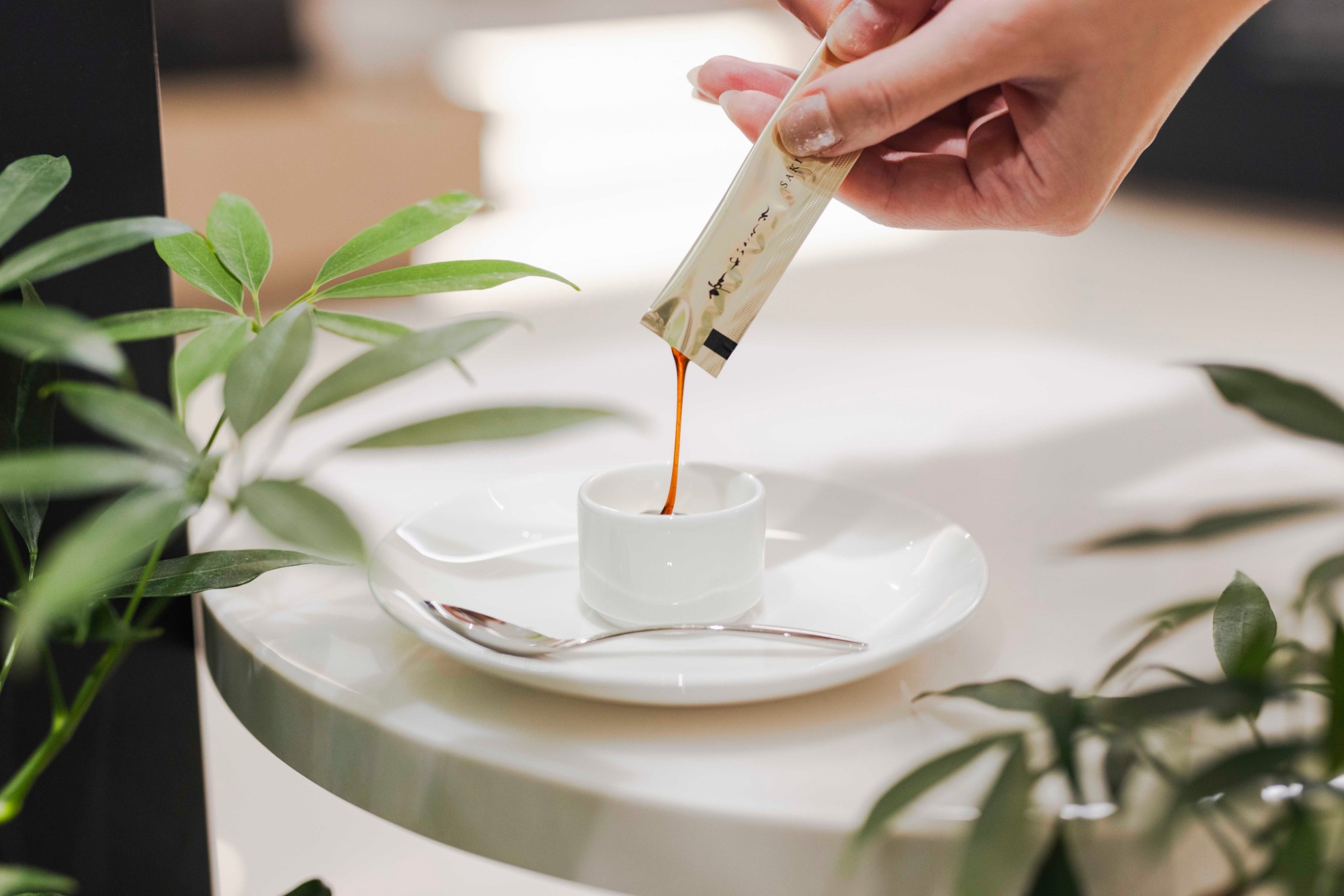
続けやすさ。1日1包のペースト
1回分ずつの個包装なので、瓶から量る手間がありません。バッグに入れて持ち歩けます。
ペーストは水分が少ないので、コップ1杯の水と一緒に。朝でも、食後でも、ご自身が忘れない時間で構いません。続けることが目的なのですから。
7|成分分析で分かったこと
中身は、分析機関の成分分析(メタボローム解析)で確かめました。糖、アミノ酸、有機酸、ポリフェノールなど、含まれている成分をまとめて調べる方法です。
確認された成分は、合わせて599種類。内訳は次のとおりです。
確認された599種類の成分の内訳
- 52
POLYPHENOLS
ポリフェノール類。キナ酸、ケルセチン、クロロゲン酸など
- 82
AMINO ACIDS
アミノ酸類。体をつくる基本の成分
- 15
SHORT-CHAIN FATTY ACIDS
短鎖脂肪酸。酪酸、プロピオン酸など。前の節で紹介した研究は「腸の中で細菌がつくる短鎖脂肪酸」の話で、ペーストに含まれる成分と同じはたらきをするかは分かっていません
- 10
VITAMINS
ビタミン類。ビタミンB群、ビタミンCなど
- 165
PEPTIDES
ペプチド類。発酵の過程で生まれた、アミノ酸がつながった成分
- 275
OTHERS
有機酸、糖類、核酸関連成分、脂質成分など
8|飲み方と、価格と、注意点
1箱30包入り、税込16,500円。1日1包が目安です。ペーストは水分が少ないので、コップ1杯の水と一緒にお召し上がりください。
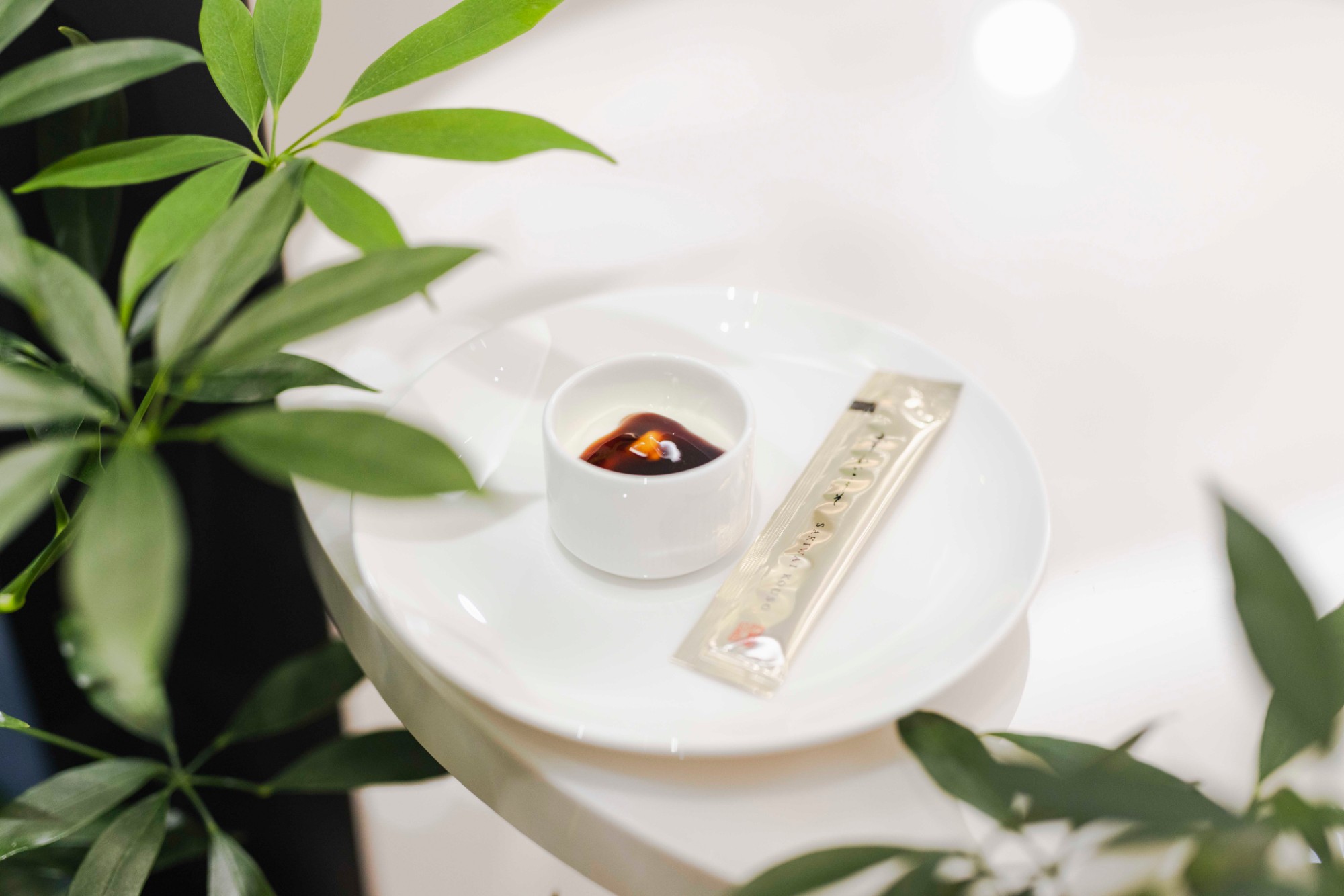
院内の受付と、当院のオンラインショップで扱っています。
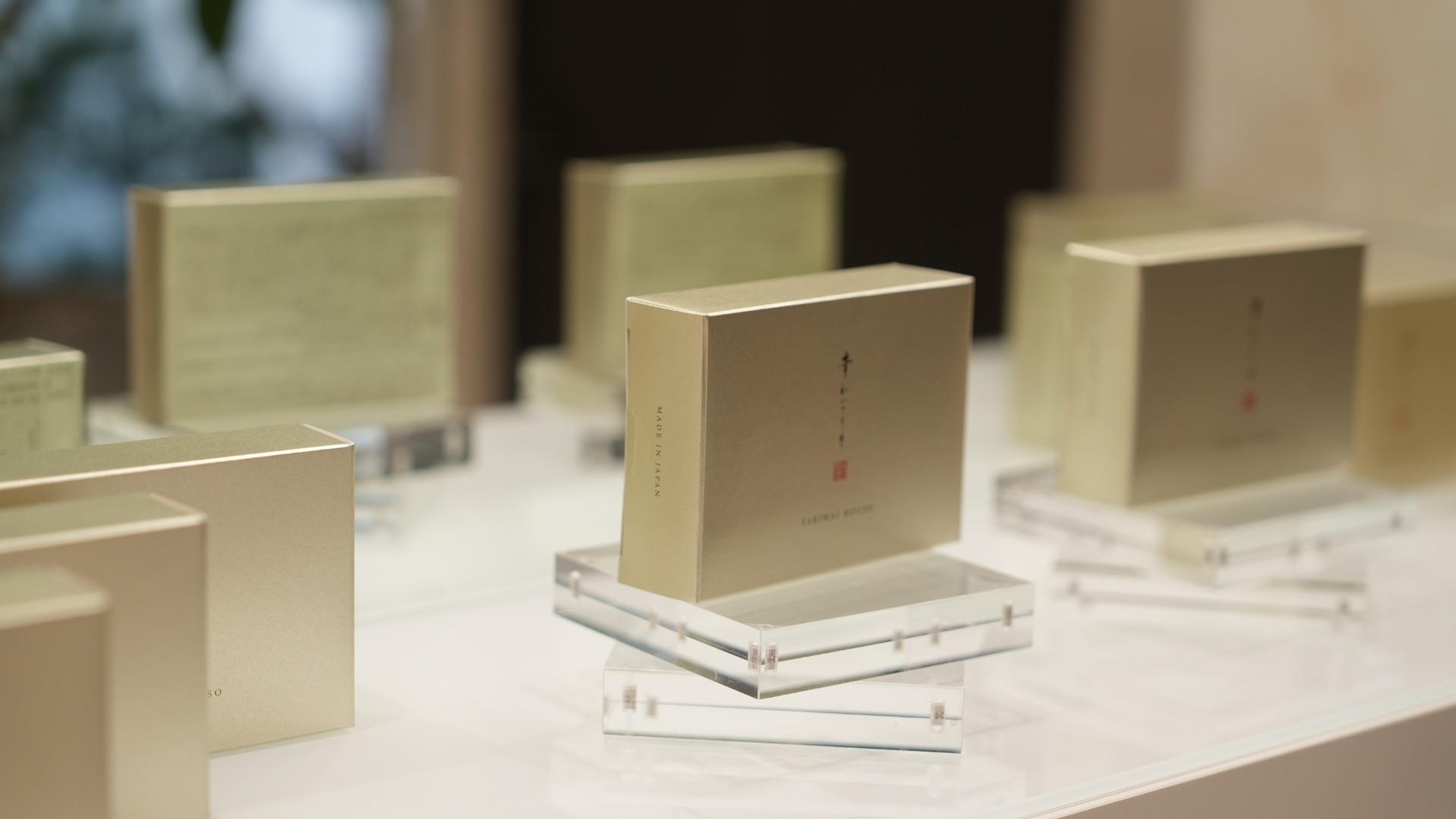
幸わいこうそは食品であり、特定保健用食品・機能性表示食品ではなく、国の許可や届出を受けたものではありません。症状の改善を保証するものではなく、体質により合わない場合があります。原材料にアレルギーのある方、妊娠中・授乳中の方、持病で通院中の方は、事前に医師や薬剤師にご相談ください。腸の症状が続く場合は、消化器内科での診察をお勧めします。
よくある質問
「リーキーガット」は病名ですか?検査で分かりますか?
正式な病名ではなく、腸の壁が通常より通しやすくなった状態を指す通称です。研究では血液の数値で評価しますが、一般の診療で行う検査ではなく、当院でも測定していません。お腹の症状が続く場合は消化器内科での診察をお勧めします。
腸を整えるサプリメントを飲めば、肌の治療の効果は上がりますか?
更年期の腸を整えることで肌の治療効果が上がると示した研究は、現時点ではありません。発酵食品を毎日の食事に取り入れることは勧めていますが、サプリメントの自己判断での併用は勧めていません。
幸わいこうそを飲めば、肌や更年期の症状はよくなりますか?
そのような効果を約束する製品ではありません。医薬品ではなく食品で、腸内環境を整える毎日の習慣のひとつとしてご案内しています。更年期の症状が強い場合は婦人科へ、肌の相談は診察でお受けします。
ヨーグルトや納豆などの発酵食品と一緒にとってもよいですか?
はい、日々の食事の発酵食品と合わせてお召し上がりいただけます。幸わいこうそは、毎日の発酵食品の習慣を続けやすくするための形としてご用意しています。
いつ飲むのがよいですか?飲み合わせの注意はありますか?
1日1包を目安に、ご自身が忘れない時間で構いません。水分が少ないペーストなので、コップ1杯の水と一緒にお召し上がりください。持病で服薬中の方、妊娠中・授乳中の方、原材料にアレルギーのある方は、事前に医師や薬剤師にご相談ください。
成分が599種類あるということは、それだけ体によいのですか?
成分の種類の多さは、発酵が進んだことを示す目安であって、体への効果を示すものではありません。含有量や体内でのはたらきは、この分析では分かりません。
参考文献
- Shieh A, Epeldegui M, Karlamangla AS, Jones R, Pacifici R, Greendale GA. Markers of compromised gut epithelial barrier integrity increase during the menopause transition. J Clin Invest. 2026;136(17):e205059. doi:10.1172/JCI205059
- Peters BA. Menopause and “leaky gut”: implications for midlife women’s health. J Clin Invest. 2026;136(17):e209807. doi:10.1172/JCI209807
- Baker JM, Al-Nakkash L, Herbst-Kralovetz MM. Estrogen–gut microbiome axis: Physiological and clinical implications. Maturitas. 2017;103:45-53. doi:10.1016/j.maturitas.2017.06.025
- Thornton MJ. Estrogens and aging skin. Dermatoendocrinol. 2013;5(2):264-270. doi:10.4161/derm.23872
- Affinito P, Palomba S, Sorrentino C, et al. Effects of postmenopausal hypoestrogenism on skin collagen. Maturitas. 1999;33(3):239-247. doi:10.1016/s0378-5122(99)00077-8
- Salem I, Ramser A, Isham N, Ghannoum MA. The gut microbiome as a major regulator of the gut-skin axis. Front Microbiol. 2018;9:1459. doi:10.3389/fmicb.2018.01459
- Koh A, De Vadder F, Kovatcheva-Datchary P, Bäckhed F. From dietary fiber to host physiology: short-chain fatty acids as key bacterial metabolites. Cell. 2016;165(6):1332-1345. doi:10.1016/j.cell.2016.05.041
- Wastyk HC, Fragiadakis GK, Perelman D, et al. Gut-microbiota-targeted diets modulate human immune status. Cell. 2021;184(16):4137-4153. doi:10.1016/j.cell.2021.06.019
- McDonald D, Hyde E, Debelius JW, et al. American Gut: an open platform for citizen science microbiome research. mSystems. 2018;3(3):e00031-18. doi:10.1128/mSystems.00031-18
本記事は、閉経前後に起こりうる体と肌の変化を査読済みの医学文献にもとづいて整理したうえで、当院が自ら販売する食品「幸わいこうそ」をご紹介するものです。紹介した研究は海外の女性や健康な成人を対象とした研究であり、本製品を用いた研究ではありません。本製品は医薬品ではなく、疾病の診断・治療・予防を目的とするものではありません。効果を保証するものではなく、感じ方には個人差があります。症状には個人差があり、他の病気が隠れている場合もあります。お腹の症状が続く場合は消化器内科、月経やほてりの症状は婦人科へご相談ください。
年齢とともに起こる変化を、顔面解剖を基盤に、皮膚・脂肪・筋肉・骨格に起こる加齢変化として読み解き、顔全体のバランスから、その方に必要な治療を設計しています。目指すのは、見た目の変化をきっかけに気持ちが前を向き、日々の行動まで軽やかになるような、自然で調和のとれた変化です。診療では、顔の悩みだけを切り取らず、更年期前後に起こる女性ホルモンの変化や、肌・心・体の揺らぎにも目を向けます。40代以降は、肌をつくり支える細胞の働きが変化し、これまでと同じ治療でも十分な反応が得られないことがあります。だからこそ、まず肌が治療に応えられる状態を整える。この考え方を「CrossTALK® protocol」として体系化し、筆頭著者として2025年にJournal of Cosmetic Dermatologyに発表しました。2016年より、ボトックスビスタやジュビダームを展開するアラガン・エステティックス ジャパンファカルティーの一員として、また注入指導医として、医師への教育・指導にも携わっています。「美容医療は患者を幸せにするのか」という問いについては、大学との共同研究を通じて探究を続けています。必要な治療を、必要な順番で、必要な分だけ。年齢とともに変化する顔と人生に寄り添い、長く信頼して相談できる「美容のかかりつけ医」でありたいと考えています。詳しいプロフィール →
CLINIC INFORMATION
ヒルズグレイスクリニック
アクセスの詳細を見る →
肌を整える時間を、診察の外にも。


Key points
The gut in the menopausal years is undergoing quiet change. It is not only the skin that changes. A 2026 study that followed 964 women for more than ten years found that blood markers reflecting a loosening of the gut wall begin to rise about two and a half years before the final menstrual period and continue rising until around six years after menopause. When the gut wall loosens, fragments of bacteria gradually enter the bloodstream, and low-grade inflammation smoulders in the body. That inflammation dulls the activity of the cells that create the skin’s firmness. Behind the feeling that “I’m doing the same skincare, but my skin doesn’t respond the way it used to”, there may be changes in the gut. In this article I explain how this works, and introduce our clinic’s original fermented food, which puts “a mouthful of something fermented, every day” into a form that is easier to keep up.
Sakiwai Koso is a food, not a medicine. The studies introduced here were conducted in women outside Japan and in healthy adults, not with this product. How it feels varies between individuals.
1 | The gut wall is like a “window screen”
The gut wall is the front line separating the inside of the body from the outside. Perhaps the closest image is a window screen.
It lets nutrients from food through. But it does not let through the bacteria in the gut, or fragments of them. Like a fine-meshed window screen, the wall constantly stands guard on the inner surface of the gut.
When the mesh of that screen becomes coarser, it starts letting through things it should not. This is the state called “leaky gut”. It is not the name of a disease but a term describing the condition of the gut wall.
This loosening of the screen progresses in step with the menopausal years. The following study showed this.
2 | What following 964 women revealed
This study was published in an American medical journal in September 2026. Blood samples were taken repeatedly from 964 women, from before to after menopause: 3,546 times in total.
Two markers were examined. One rises when the gut wall is damaged. The other rises when the immune system reacts to bacterial fragments that have entered the body. Think of both as markers reflecting “whether the screen has loosened”.
The results were clear.
Before menopause approached, both markers were stable. However, they began to rise about two and a half years before the final menstrual period and continued rising until about six to six and a half years after menopause. Even if the rise each year is small, it accumulates over more than eight years.
Shieh A, et al. J Clin Invest. 2026;136(17):e205059. A study that followed women in the United States for many years; these are not data on Japanese women. The rise in the markers is a statistical trend and does not mean that any individual has symptoms.
3 | Why does the screen loosen in the menopausal years?
The key lies with female hormones (oestrogen).
Oestrogen is known as a hormone that supports the skin’s moisture and firmness. But the skin is not the only place it acts. The gut wall also has receptors for oestrogen, and oestrogen is thought to work on the side of protecting the wall.
As oestrogen decreases towards menopause, this protection thins. On top of that, the line-up of bacteria in the gut also changes. Protection thins, and the bacterial line-up shifts. Conditions that make the screen prone to loosening overlap in the same period.Baker JM, et al. Maturitas. 2017;103:45-53
4 | What leaks through reaches the skin
When the screen loosens, bacterial fragments gradually enter the bloodstream. The body does not overlook this. The immune system reacts, and inflammation occurs.
It is not intense inflammation of the kind that causes a fever. It is low-grade, smouldering inflammation that you are not aware of. If small intrusions continue every day, the inflammation continues every day too.
This is where the skin comes in.
The skin’s firmness is created by cells in the foundation of the skin (fibroblasts). Oestrogen supports these cells. After menopause, the skin becomes drier and thinner and wounds heal more slowly because that support is lost. There is also a report that skin collagen decreases by about 30% in the first five years after menopause.Affinito P, et al. Maturitas. 1999;33:239-247 / Thornton MJ. Dermatoendocrinol. 2013;5:264-270
On top of this comes smouldering inflammation. Inflammation sends these cells signals that lean towards “breaking down” rather than “building”. Cells that have already lost their support have a further brake applied.
“I’m doing the same skincare, but my skin doesn’t respond the way it used to.” Behind those words, I see this double burden.
From the gut to the skin: the pathway as currently understood
- 01
HORMONE
Towards menopause, female hormones decline while fluctuating
- 02
GUT WALL
The gut wall’s protection thins and the screen loosens
- 03
LEAK
Bacterial fragments gradually enter the bloodstream
- 04
INFLAMMATION
Low-grade inflammation keeps smouldering in the body
- 05
SKIN CELLS
A brake is applied to the cells that create the skin’s firmness
- 06
SKIN
Even with the same skincare, the skin responds less readily
5 | “What should I eat, and how much?”
Why fermented foods?
Bacteria in the gut break down dietary fibre to produce substances called “short-chain fatty acids”. These short-chain fatty acids are the main energy source for the cells of the gut wall, and are known to be involved in maintaining the wall.Koh A, et al. Cell. 2016;165:1332-1345
There is also research on fermented foods themselves. In a Stanford University study, when healthy adults ate fermented foods (yoghurt, kimchi, fermented vegetables and so on) every day for 10 weeks, the variety of gut bacteria increased and blood markers reflecting inflammation in the body decreased. In those who only increased dietary fibre over the same period, this change was not seen.Wastyk HC, et al. Cell. 2021;184:4137-4153. A small study of 36 healthy adults; it did not examine menopausal women or the skin.
That is why I tell even patients who come to consult me about their face: “A mouthful of something fermented, every day.”
Keeping it up matters more than getting it right
When I say this, almost everyone asks me in return: “What should I eat, and how much?”
Natto, nukazuke pickles, miso, yoghurt. There are many answers. But when I ask a few weeks later, this is what I hear: “I kept it up for the first week, but…”
This is the age when you cook for the family, go out to work and put yourself last. Keeping it up matters more than getting it right. I have come to think that, at this age, this is what matters more.
In that case, I thought, I would prepare something in a form that is easy to keep up, and check it with my own eyes. With that in mind, I worked with a fermentation workshop to create “Sakiwai Koso” (幸わいこうそ). Based on a paste from a workshop with long experience in plant fermentation, I asked them to add further ingredients, and we finished it as our clinic’s original product. It is a paste of 88 plant ingredients fermented in ceramic jars.
Sakiwai Koso is a food sold by our clinic, not a medicine. Nor is it a product intended to treat or prevent any particular symptom; what follows is information about a food designed to make a daily habit easier to keep up.
6 | I wanted to offer something you can take with peace of mind
I made it with this single wish. Precisely because it is something you take every day, I wanted it to be something you can take with peace of mind. And I wanted it to be genuinely good.
So that I could hand it over in the consultation room and say “Please try keeping this up”, I checked three things with my own eyes.
Breadth of ingredients: 88 plants
Wild herbs centred on mugwort, along with fruits, vegetables and seaweeds. Turmeric, houttuynia, Korean ginseng, bamboo grass, dandelion root, mulberry leaf, Japanese apricot, kumquat, ginger, burdock, kombu: 88 plants in all.
The breakdown is 65 wild herbs, 11 fruits, 10 vegetables and 2 seaweeds. Rather than continuing with one food every day, a little of many different kinds. That is my approach to eating. So breadth of ingredients was the first thing I checked. Some of these are ingredients I asked to have added specifically for our clinic.
Why are more kinds better? Different gut bacteria prefer different dietary fibres. If you always eat the same foods, only the bacteria that can use that food multiply. The more kinds you eat, the more bacteria get fed. A survey of around 10,000 people also found that those who eat 30 or more kinds of plants a week have greater gut bacterial diversity than those who eat 10 or fewer.McDonald D, et al. mSystems. 2018;3(3):e00031-18. An observational study based on self-report; it does not show causation.
Depth of fermentation: ceramic jars and three types of microbes
Through fermentation, the components of plants are broken down into finer pieces, and new components are also produced during the process.
This product is made at a workshop specialising in plant fermentation, using traditional ceramic jars and three types of fermenting microbes, through repeated slow fermentation and maturation. This is the part that takes time and effort. I confirmed with my own eyes that the method takes no shortcuts.
Ease of continuing: one sachet of paste a day
Each serving is individually packaged, so there is no need to measure it out from a jar. You can carry it in your bag.
The paste contains little water, so take it with a glass of water. Morning or after a meal, any time you will not forget is fine. After all, the aim is to keep it up.
7 | What the component analysis showed
I checked the contents through a component analysis (metabolome analysis) by an analytical laboratory. This is a method that examines the components contained, such as sugars, amino acids, organic acids and polyphenols, all at once.
In total, 599 kinds of components were identified. The breakdown is as follows.
Breakdown of the 599 components identified
- 52
POLYPHENOLS
Polyphenols. Quinic acid, quercetin, chlorogenic acid and others
- 82
AMINO ACIDS
Amino acids. Basic components that build the body
- 15
SHORT-CHAIN FATTY ACIDS
Short-chain fatty acids. Butyric acid, propionic acid and others. The research introduced in the previous section concerns “short-chain fatty acids produced by bacteria in the gut”; it is not known whether the components contained in the paste act in the same way
- 10
VITAMINS
Vitamins. B vitamins, vitamin C and others
- 165
PEPTIDES
Peptides. Components made of linked amino acids, produced during fermentation
- 275
OTHERS
Organic acids, sugars, nucleic acid-related components, lipid components and others
8 | How to take it, price and precautions
30 sachets per box, ¥16,500 (tax included). One sachet a day is the guideline. The paste contains little water, so please take it with a glass of water.
It is available at the clinic reception and from our clinic’s online shop.
Sakiwai Koso is a food. It is not a Food for Specified Health Uses or a Food with Function Claims, and it has not received government approval or been notified to the government. It does not guarantee any improvement in symptoms, and it may not suit everyone, depending on their constitution. If you are allergic to any of the ingredients, are pregnant or breastfeeding, or are receiving treatment for a chronic condition, please consult a doctor or pharmacist beforehand. If gut symptoms persist, we recommend seeing a gastroenterologist.
Frequently asked questions
Is “leaky gut” a diagnosis? Can it be detected by testing?
It is not an official diagnosis but a common term for a state in which the gut wall lets things through more easily than usual. In research it is assessed using blood markers, but this is not a test performed in routine practice, and our clinic does not measure it either. If abdominal symptoms persist, we recommend seeing a gastroenterologist.
If I take supplements to improve my gut, will my skin treatments work better?
At present, there is no research showing that improving the gut in the menopausal years increases the effect of skin treatments. We recommend including fermented foods in your daily diet, but we do not recommend combining supplements at your own discretion.
Will taking Sakiwai Koso improve my skin or menopausal symptoms?
It is not a product that promises such effects. It is a food, not a medicine, and we offer it as one part of a daily habit for keeping the gut environment in good order. If your menopausal symptoms are severe, please see a gynaecologist; for skin concerns, we can see you for a consultation.
Can I take it together with fermented foods such as yoghurt or natto?
Yes, you can take it alongside the fermented foods in your daily diet. Sakiwai Koso is offered as a form that makes a daily habit of fermented foods easier to keep up.
When is the best time to take it? Are there any precautions about combining it with other things?
One sachet a day is the guideline, at any time you will not forget. As the paste contains little water, please take it with a glass of water. If you are taking medication for a chronic condition, are pregnant or breastfeeding, or are allergic to any of the ingredients, please consult a doctor or pharmacist beforehand.
Does having 599 kinds of components mean it is that much better for the body?
The number of kinds of components is an indication that fermentation has progressed, not an indication of any effect on the body. This analysis cannot tell us the amounts or how the components act in the body.
References
- Shieh A, Epeldegui M, Karlamangla AS, Jones R, Pacifici R, Greendale GA. Markers of compromised gut epithelial barrier integrity increase during the menopause transition. J Clin Invest. 2026;136(17):e205059. doi:10.1172/JCI205059
- Peters BA. Menopause and “leaky gut”: implications for midlife women’s health. J Clin Invest. 2026;136(17):e209807. doi:10.1172/JCI209807
- Baker JM, Al-Nakkash L, Herbst-Kralovetz MM. Estrogen–gut microbiome axis: Physiological and clinical implications. Maturitas. 2017;103:45-53. doi:10.1016/j.maturitas.2017.06.025
- Thornton MJ. Estrogens and aging skin. Dermatoendocrinol. 2013;5(2):264-270. doi:10.4161/derm.23872
- Affinito P, Palomba S, Sorrentino C, et al. Effects of postmenopausal hypoestrogenism on skin collagen. Maturitas. 1999;33(3):239-247. doi:10.1016/s0378-5122(99)00077-8
- Salem I, Ramser A, Isham N, Ghannoum MA. The gut microbiome as a major regulator of the gut-skin axis. Front Microbiol. 2018;9:1459. doi:10.3389/fmicb.2018.01459
- Koh A, De Vadder F, Kovatcheva-Datchary P, Bäckhed F. From dietary fiber to host physiology: short-chain fatty acids as key bacterial metabolites. Cell. 2016;165(6):1332-1345. doi:10.1016/j.cell.2016.05.041
- Wastyk HC, Fragiadakis GK, Perelman D, et al. Gut-microbiota-targeted diets modulate human immune status. Cell. 2021;184(16):4137-4153. doi:10.1016/j.cell.2021.06.019
- McDonald D, Hyde E, Debelius JW, et al. American Gut: an open platform for citizen science microbiome research. mSystems. 2018;3(3):e00031-18. doi:10.1128/mSystems.00031-18
This article draws on peer-reviewed medical literature to set out the changes in the body and skin that can occur around menopause, and then introduces “Sakiwai Koso”, a food product sold by our clinic itself. The studies cited were conducted in women overseas or in healthy adults; they are not studies using this product. This product is not a medicine and is not intended to diagnose, treat or prevent any disease. Its effects are not guaranteed, and how it feels varies between individuals. Symptoms vary between individuals, and another condition may be the underlying cause. If abdominal symptoms persist, please consult a gastroenterologist; for menstrual symptoms or hot flushes, please consult a gynaecologist.
Grounded in facial anatomy, I interpret the changes that come with age as age-related changes in the skin, fat, muscle and bone, and design the treatment each person needs from the balance of the face as a whole. What I aim for is natural, harmonious change: change in appearance that helps a person feel more positive and brings a lightness even to their everyday actions. In my practice, I do not look at facial concerns in isolation; I also pay attention to the changes in female hormones around the menopausal years and to fluctuations in the skin, mind and body. From the 40s onwards, the work of the cells that build and support the skin changes, and the same treatments as before may no longer produce a sufficient response. That is why I first prepare the skin so that it can respond to treatment. I systematised this approach as the “CrossTALK® protocol” and, as first author, published it in the Journal of Cosmetic Dermatology in 2025. Since 2016, I have also been involved in educating and training physicians as a member of the Allergan Aesthetics Japan faculty, which offers Botox® Vista and Juvéderm, and as an injection trainer. I continue to explore the question “Does aesthetic medicine make patients happy?” through joint research with a university. The treatment that is needed, in the order it is needed, and only as much as is needed. I want to be a “family doctor for aesthetics” whom patients can trust and consult over the long term, staying alongside faces and lives that change with age.Full profile →
CLINIC INFORMATION
Hills Grace Clinic
Access details →
Caring for your skin beyond the consultation room
HOME CARE
Online shop
Doctor-selected skincare and supplements, delivered to your home. For some products, a free online consultation is available before purchase.
CONSULTATION
Consult us at the clinic
Every person's skin is different. We look into what lies behind pigmentation and melasma, and suggest the care and the order of treatment your skin needs now.