結論|更年期の「なんとなく不調」は、身体全体の変化として見る
40代後半以降の「なんとなく不調」は、ひとつの場所だけに起きている変化ではありません。 更年期の入り口では、エストロゲンが一直線に減るというより、まず大きく揺らぎます。その揺らぎが、自律神経・睡眠・筋肉・脂肪分布・炎症・肌へ連鎖することがあります。検査値に表れる病気だけでなく、健康診断では見つけにくい機能の変化も含め、症状を一つだけ切り取らず、睡眠、月経、ほてり、気分、筋力、体重やお腹まわり、肌の変化をまとめて振り返ることが、相談の手がかりになります。
この記事でわかること
- ホルモンが「減る」前に「揺れる」理由
- 自律神経、睡眠、筋肉、脂肪、炎症、肌がつながる流れ
- 健康診断で異常がなくても不調を感じる理由
- 美容医療だけに偏らず、身体全体を整える視点
更年期と美容医療についての連載記事は、美香子先生のグレイスジャーナル連載一覧からご覧いただけます。
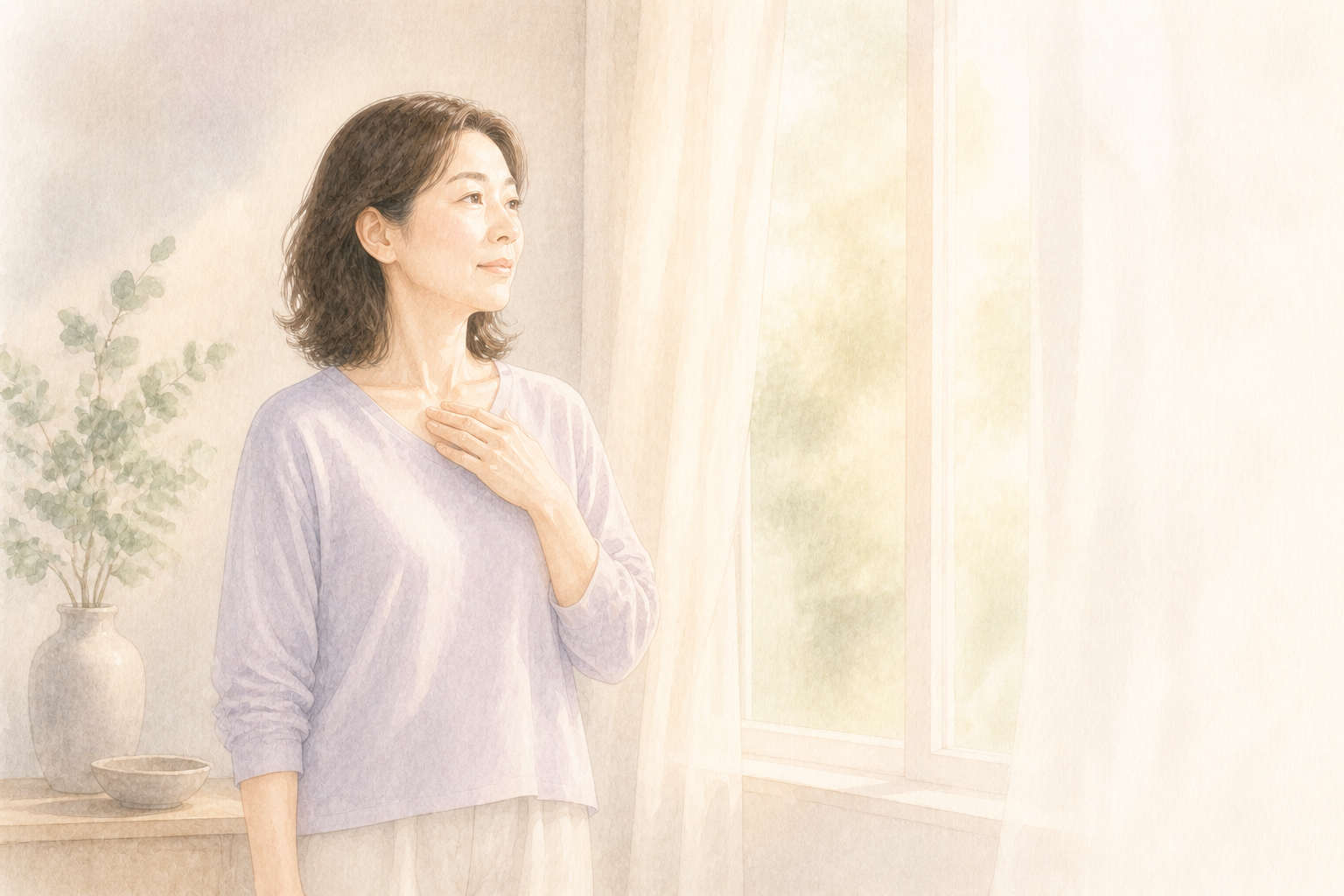
はじめに|以前の自分とは違うと感じるとき
「最近、疲れが抜けない」
「眠っているのに、朝が一番つらい」
「鏡を見ると、自分じゃないみたいに老けて見える」
「特に何があったわけでもないのに、気分が沈む日がある」
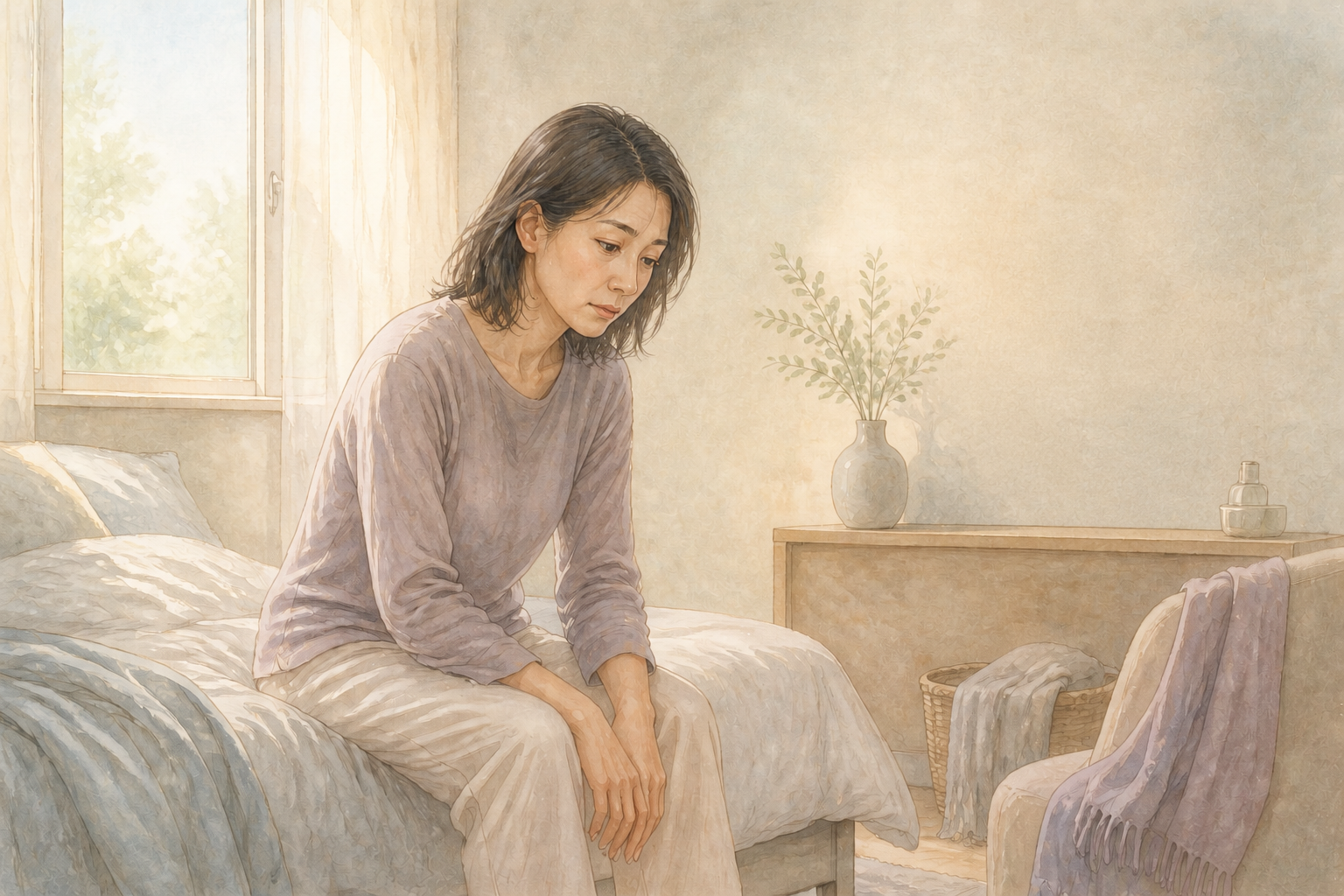
診察室で、40代後半以降の女性たちから繰り返し聞く言葉です。
肌の相談で来られたはずなのに、話していくうちに、こうした「肌以外の不調」がぽろぽろとこぼれてくる。そして最後に、多くの方がこう付け加えます。
「健康診断は、異常なしって言われたんですけど」
異常はない。でも、確実に何かが変わっている。病気ではない。でも、以前の自分とは違う。
その宙ぶらりんな感覚こそが、この時期の女性の身体で起きている変化のサインかもしれません。
そしてその変化は、ひとつではありません。ホルモン、自律神経、睡眠、筋肉、代謝、炎症、肌。身体のあらゆる場所で、同時に、静かに進んでいます。
今日は、その全体像を、できるだけやさしく整理してみたいと思います。
1|ホルモンは「減る」のではなく、「揺れる」
更年期というと、エストロゲンが「減る」時期だと思われがちです。でも、本当の始まりは、もう少し手前にあります。
40代後半の身体で最初に目立つのは、減少だけではなく、「揺らぎ」です。
ある月は比較的分泌され、ある月は大きく落ちる。ホルモンの変動幅が大きくなること自体が、心と身体の変化につながります。
「先月は平気だったのに、今月は別人みたい」。その感覚は、気のせいとは限りません。月経周期や症状の変化とともに、ホルモン環境が本当に揺れている可能性があります。
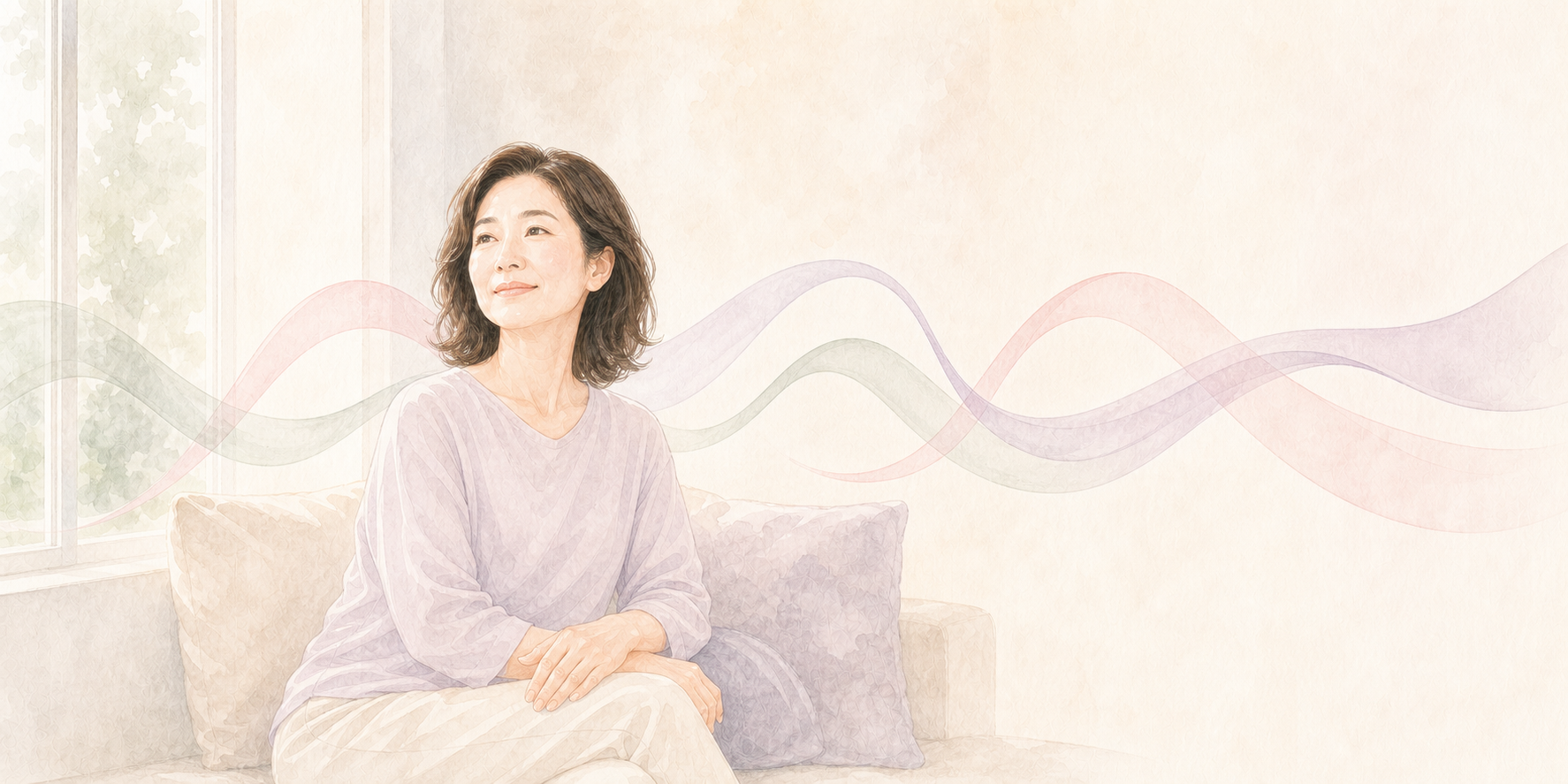
2|自律神経が、いっしょに揺れはじめる
エストロゲンの変化は、体温調節や自律神経に関わる脳の領域と相互に関係しています。そのため、ホルモンが揺れると、自律神経の働きにも影響が及ぶことがあります。
ホットフラッシュ、動悸、寝汗、急にやってくる不安感、夜になかなか寝つけない感じ。これらは自律神経の変化と関係する代表的な症状です。
「気のせい」でも「気持ちの問題」でもありません。ただし、似た症状は甲状腺の病気や不整脈など、別の原因でも起こります。症状が強い場合や急に出てきた場合は、更年期と決めつけず、医療機関で確認することが大切です。
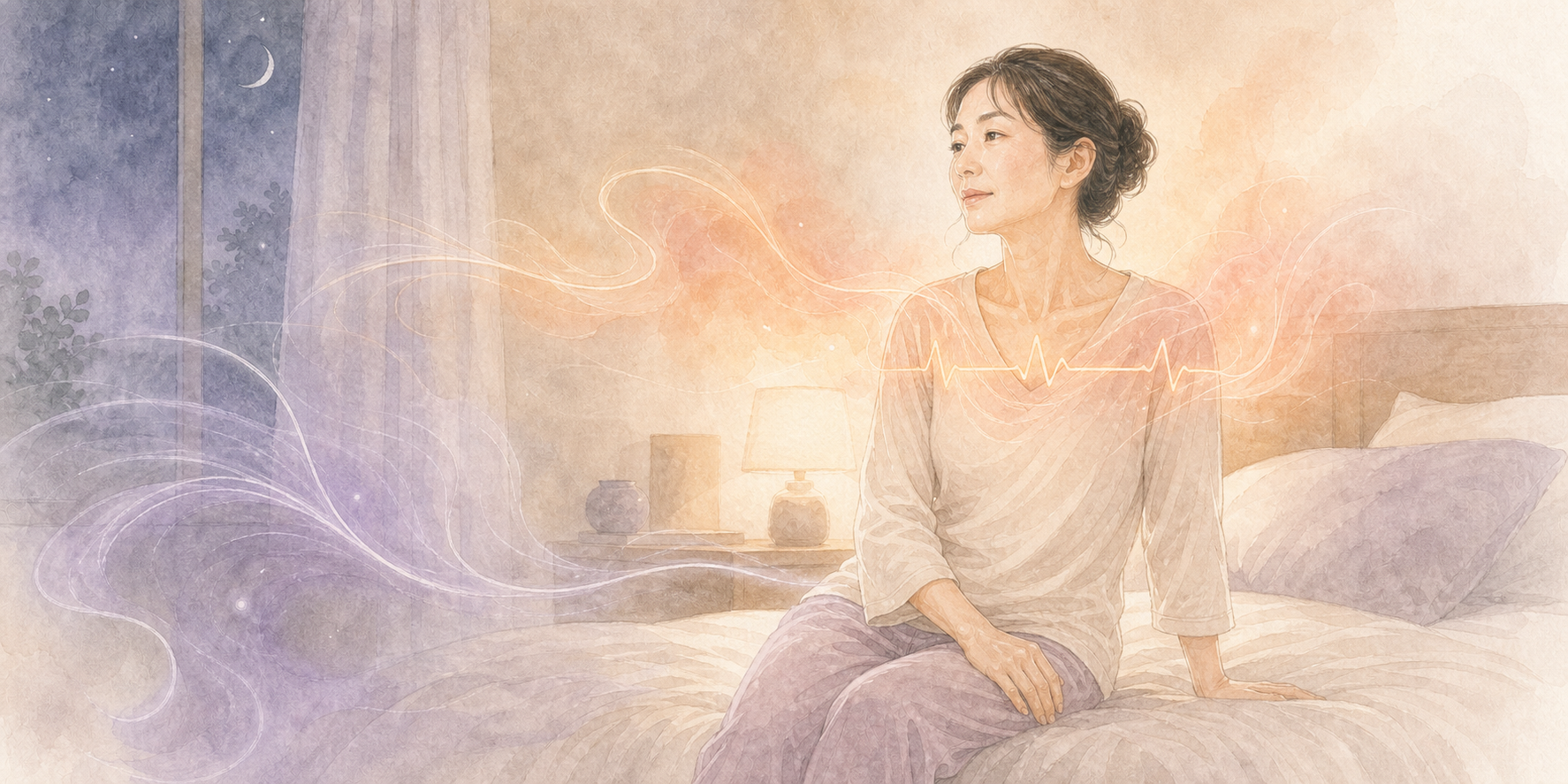
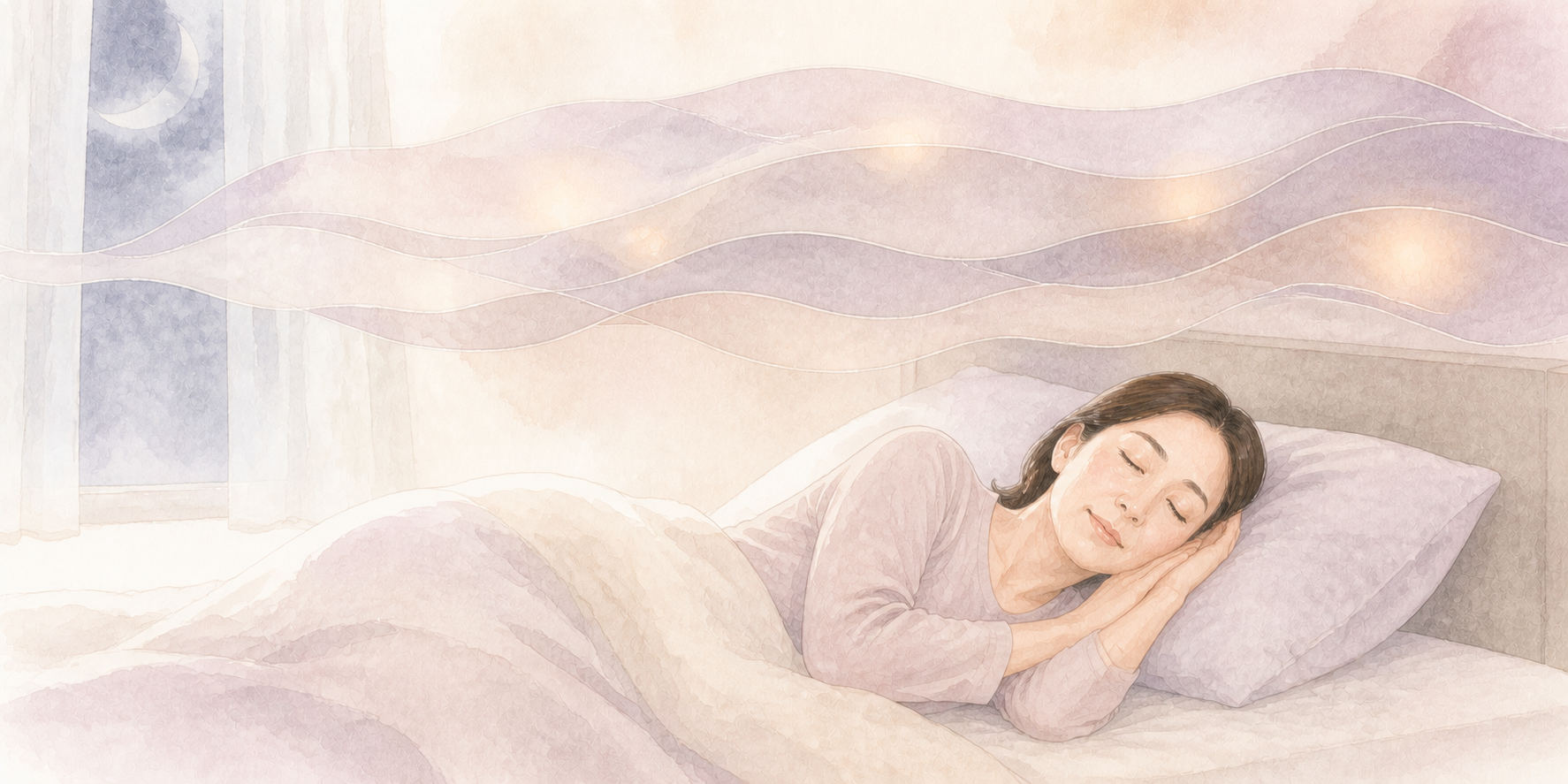
3|眠っているのに、回復しない
この時期、多くの女性が口にするのが、「眠れているのに疲れがとれない」という感覚です。
理由のひとつは、年齢とともに深い睡眠が減っていくこと。肌や身体の修復に関わる成長ホルモンは、深い眠りのときに分泌が高まります。その「深さ」が、少しずつ浅くなっていくのです。
もうひとつは、寝汗やほてりで、夜中に何度も眠りが途切れていること。本人ははっきり目覚めたと感じていなくても、睡眠が細切れになっている場合があります。
時間は足りていても、中身が薄い。これが、「眠っても回復しない」感覚の一因です。
4|筋肉は、静かに減っていく
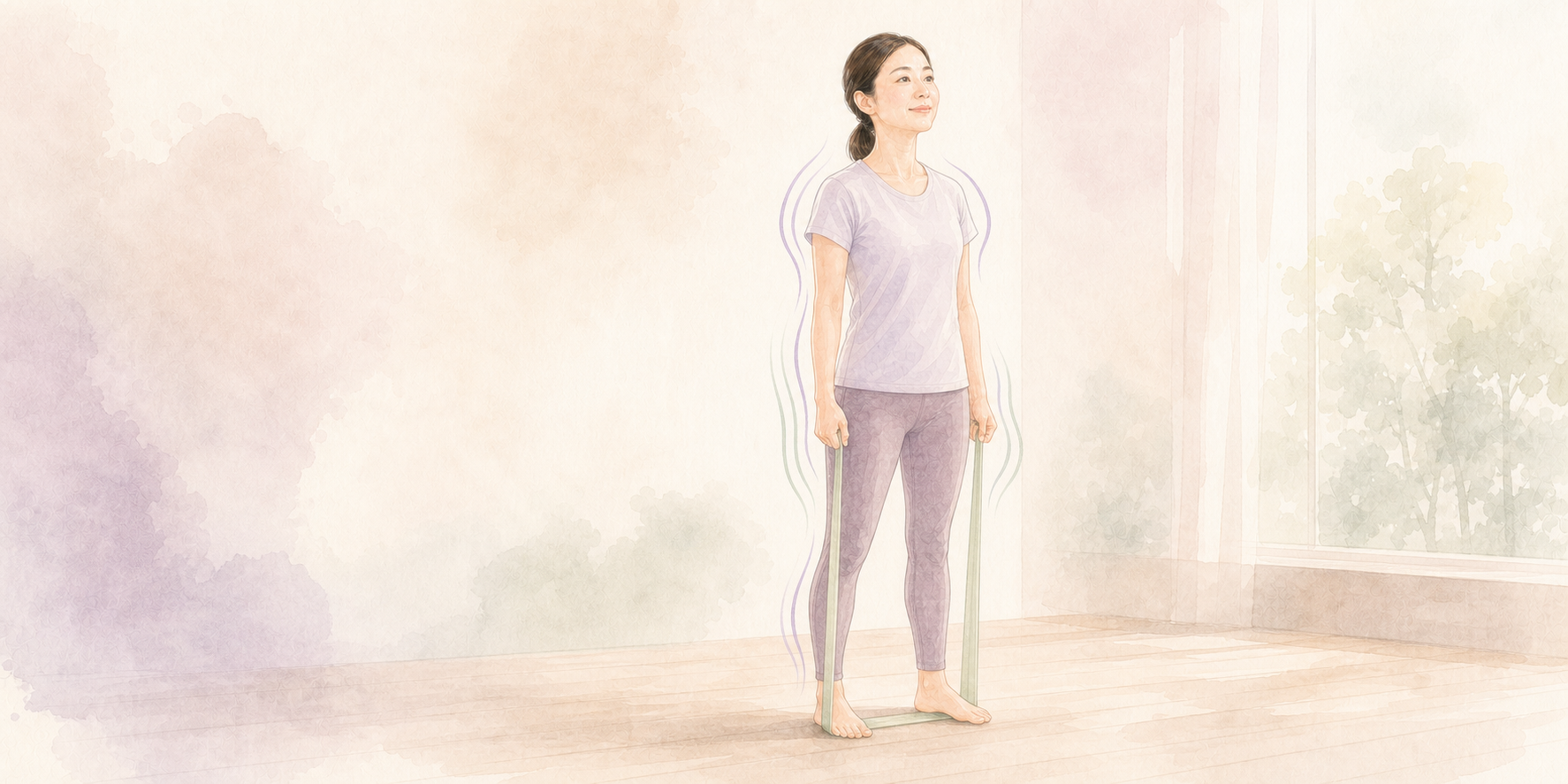
筋肉は、大人になってからもゆっくり変化します。閉経前後の時期には、年齢や活動量など複数の要因が重なり、筋肉量や除脂肪量の減少が目立つことが報告されています。
エストロゲンは、筋肉の代謝や修復に関わる可能性があります。エストロゲンが低下する時期には、運動不足や睡眠不足、食事量の変化も重なり、筋肉の維持が難しくなることがあります。
筋肉が減ると、代謝が落ちる、姿勢が崩れる、冷えやすくなる、疲れやすくなる。顔も身体も、ラインがぼやけてくる。
肌のたるみも、なんとなくの疲労感も、身体の奥には筋肉や姿勢の変化が隠れていることがあります。
5|同じ生活なのに、お腹だけ変わる
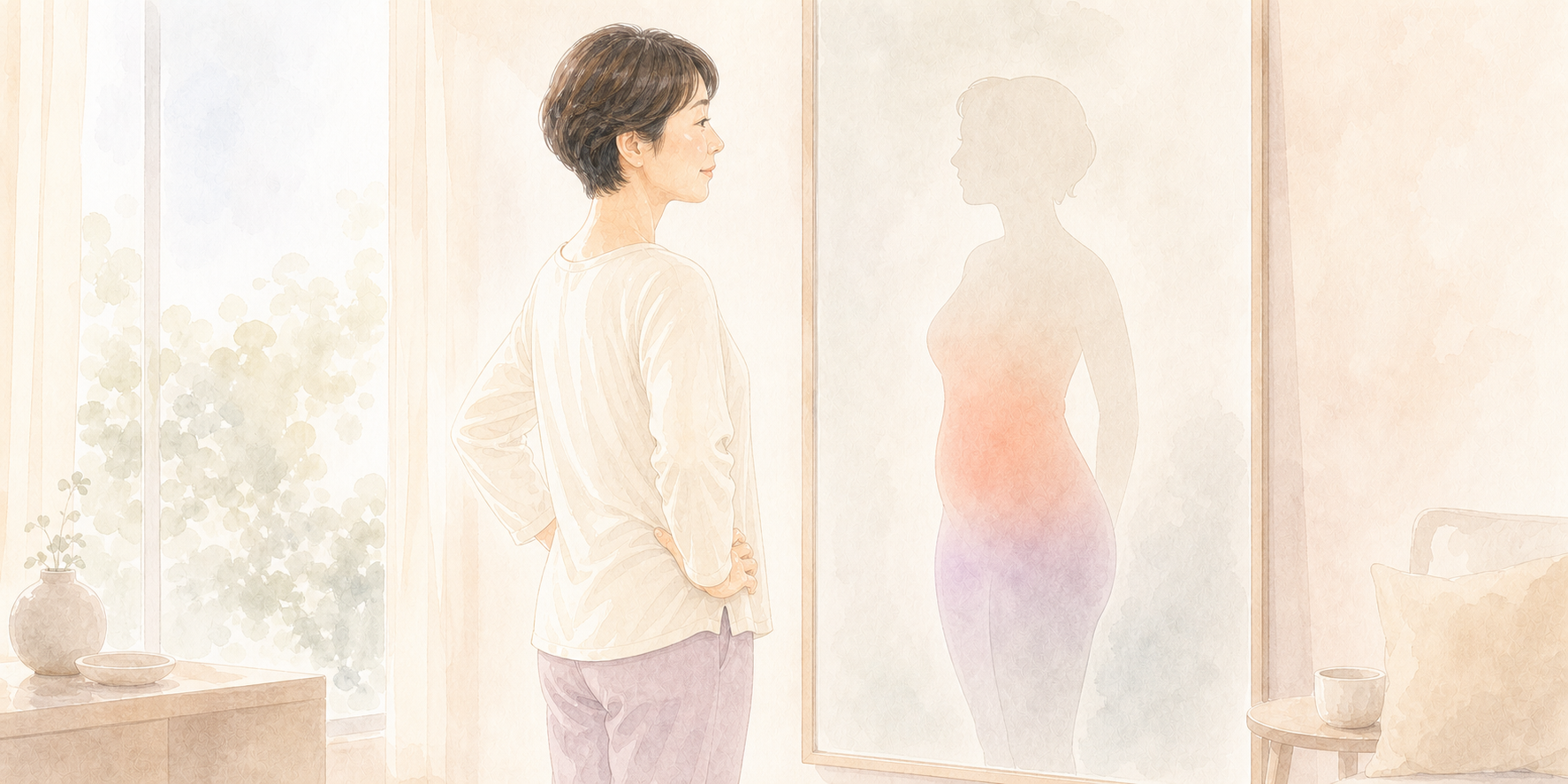
「体重はそんなに変わっていないのに、お腹まわりだけ気になる」。そう感じることはありませんか。
これも、エストロゲンの変化や加齢、活動量などが重なって起こる脂肪分布の変化と関係することがあります。閉経前後には、皮下脂肪よりも内臓脂肪が増えやすい方向に身体の配分が変わることが報告されています。
内臓脂肪は、ただついているだけではなく、炎症や代謝に関わる物質を出します。これが、次のお話につながっていきます。
6|静かに進む、「体の中の小さな火事」
老化研究の世界で、いま注目されている言葉があります。
インフラメイジング。直訳すると、「炎症性老化」です。
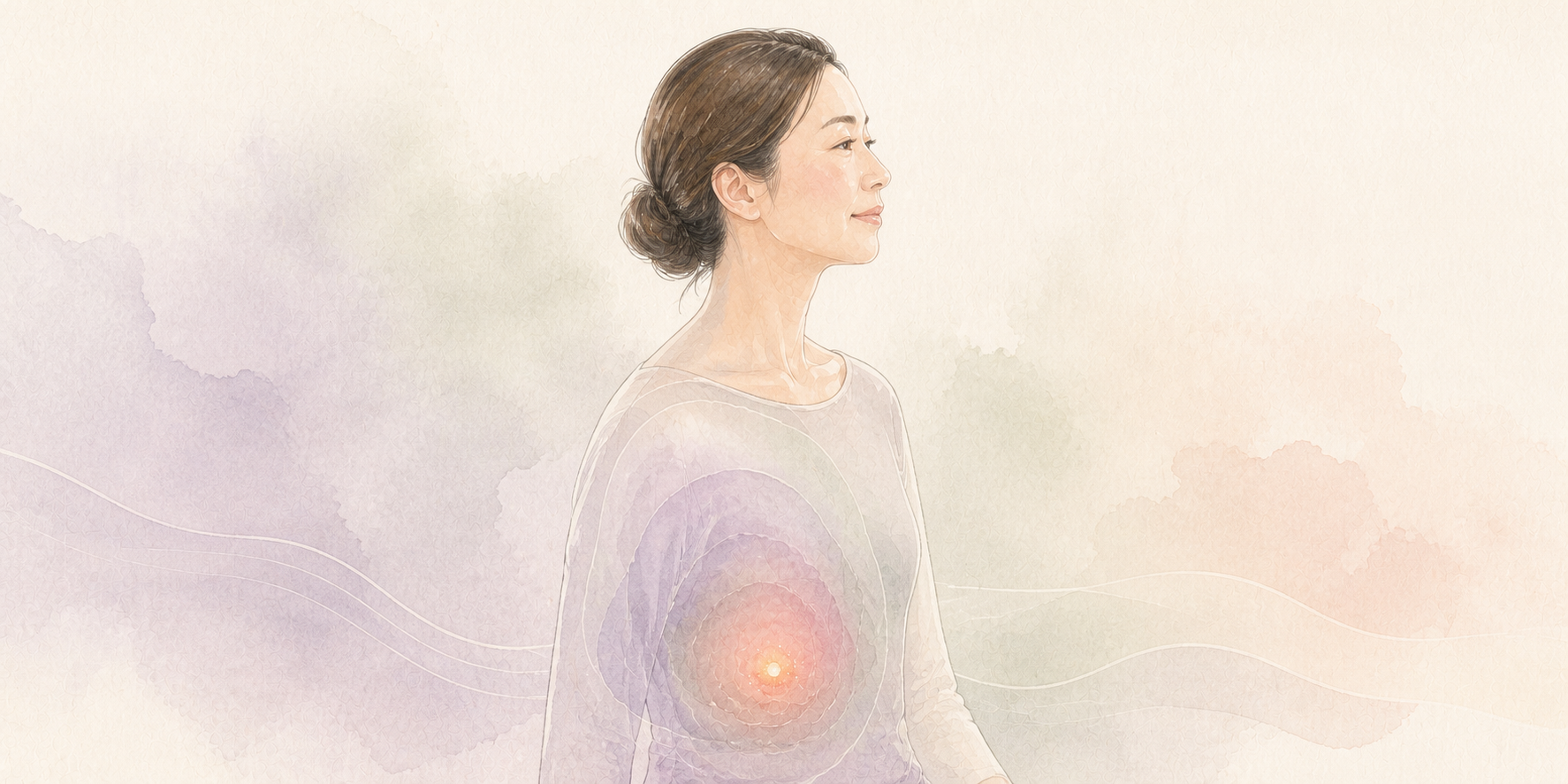
病気とは限らないけれど、身体の中で低いレベルの炎症が長く続く状態を指す言葉です。老化や脂肪組織の変化、免疫の変化などとの関係が研究されています。
エストロゲンには免疫や炎症反応を調整する働きもあるため、閉経の前後で炎症に関わる環境が変わる可能性があります。
肌のくすみ、なかなかとれないシワ、理由のない疲労感、気分の落ち込み。こうした変化と慢性的な炎症の関係は研究されていますが、すべてが炎症だけで説明できるわけではありません。
7|そして、肌が変わる
ここまでの変化が、最後にすべて肌に集まってきます。
閉経前後の数年には、肌のコラーゲン量が減少することが報告されています。ターンオーバーは遅れ、バリア機能は弱まり、皮脂も減って、乾きやすくなる。
「同じスキンケアなのに、効かなくなった気がする」と感じるのは、気のせいとは限りません。肌そのものが変わってきている可能性があります。
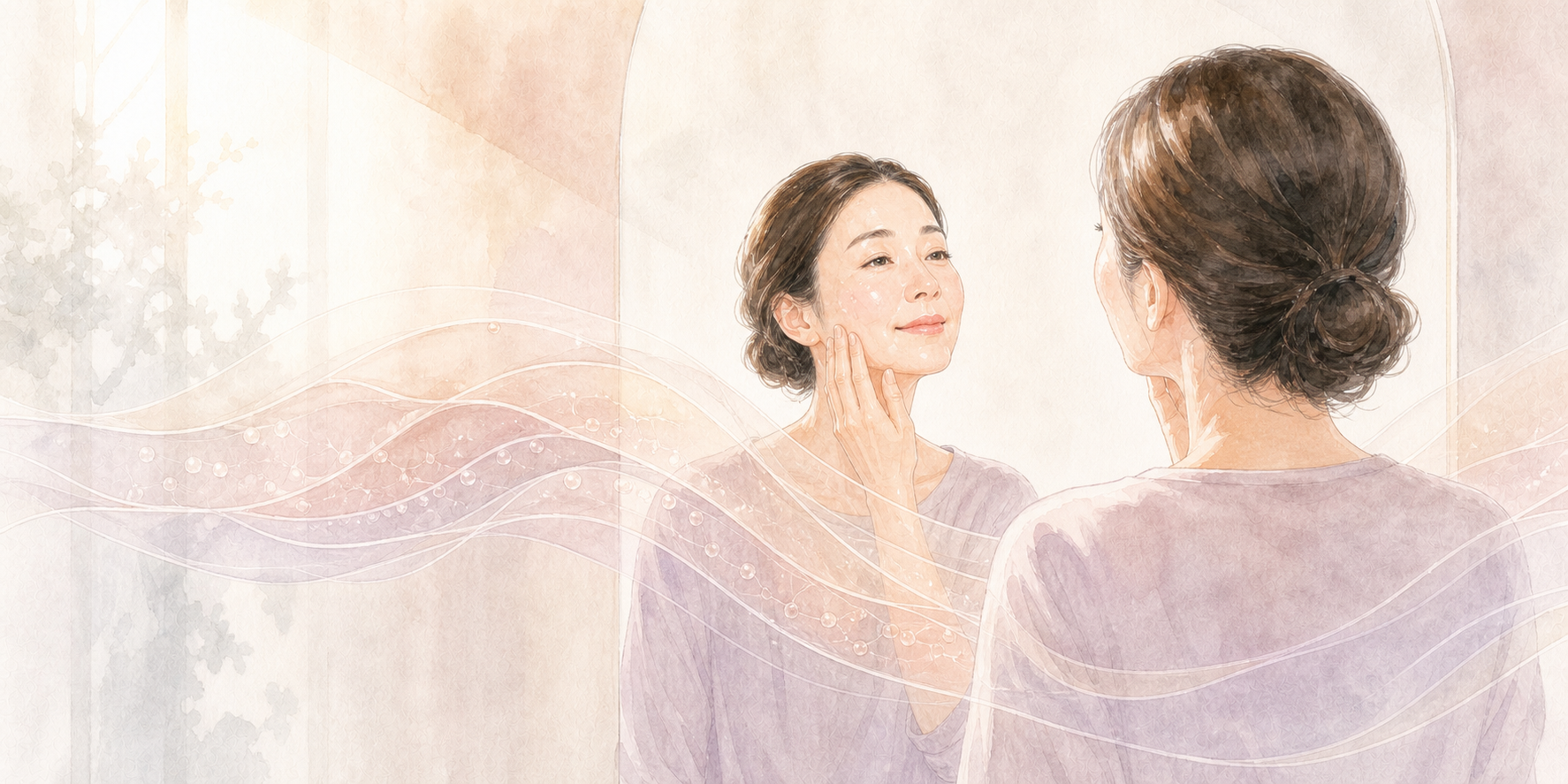
これらは、別々の話ではない
ここまで、7つの変化を並べてきました。でも本当に大事なのは、これらが互いにつながっているということです。
身体の変化は、ひとつの流れでつながっています
- 01
HORMONE
ホルモンが揺れる
- 02
AUTONOMIC NERVES
自律神経に影響する
- 03
SLEEP
夜中に目が覚める
- 04
RECOVERY
深い眠りが減り、回復しにくくなる
- 05
REPAIR
肌が再生しにくい。筋肉が修復しにくい
- 06
APPEARANCE
疲れる。たるむ。気持ちまで沈む
- 07
INFLAMMATION
ストレスや生活リズムの乱れが重なり、炎症が長引きやすくなる
- 08
VISIBLE CHANGE
さらに、肌が老けて見える。さらに、疲れる
起こる順番や強さは人によって異なりますが、変化は互いに影響し合っています。だから、肌だけ、睡眠だけと切り分けず、いま全体のどこに変化が起きているのかを見ることが大切です。
肌だけ治療しても眠りが浅ければ回復しにくい。プロテインやサプリも、睡眠・運動・消化吸収の状態によって受け止め方が変わります。ひとつだけを足すのではなく、必要な順番を考えることが、整える第一歩です。
この時期の不調は、どこかひとつが壊れているのではなく、全体のバランスが少しずつずれている状態かもしれません。
なぜ、健康診断では不調が見つかりにくいのか
検査では問題がないのに、なぜつらいのだろうと思う方もいるかもしれません。
理由は、健康診断と、いま感じている不調が見ているものが違うからです。
健康診断は、血糖値、コレステロール、肝機能、腎機能などから、病気のリスクや治療が必要な状態に入っているかを確認する検査です。
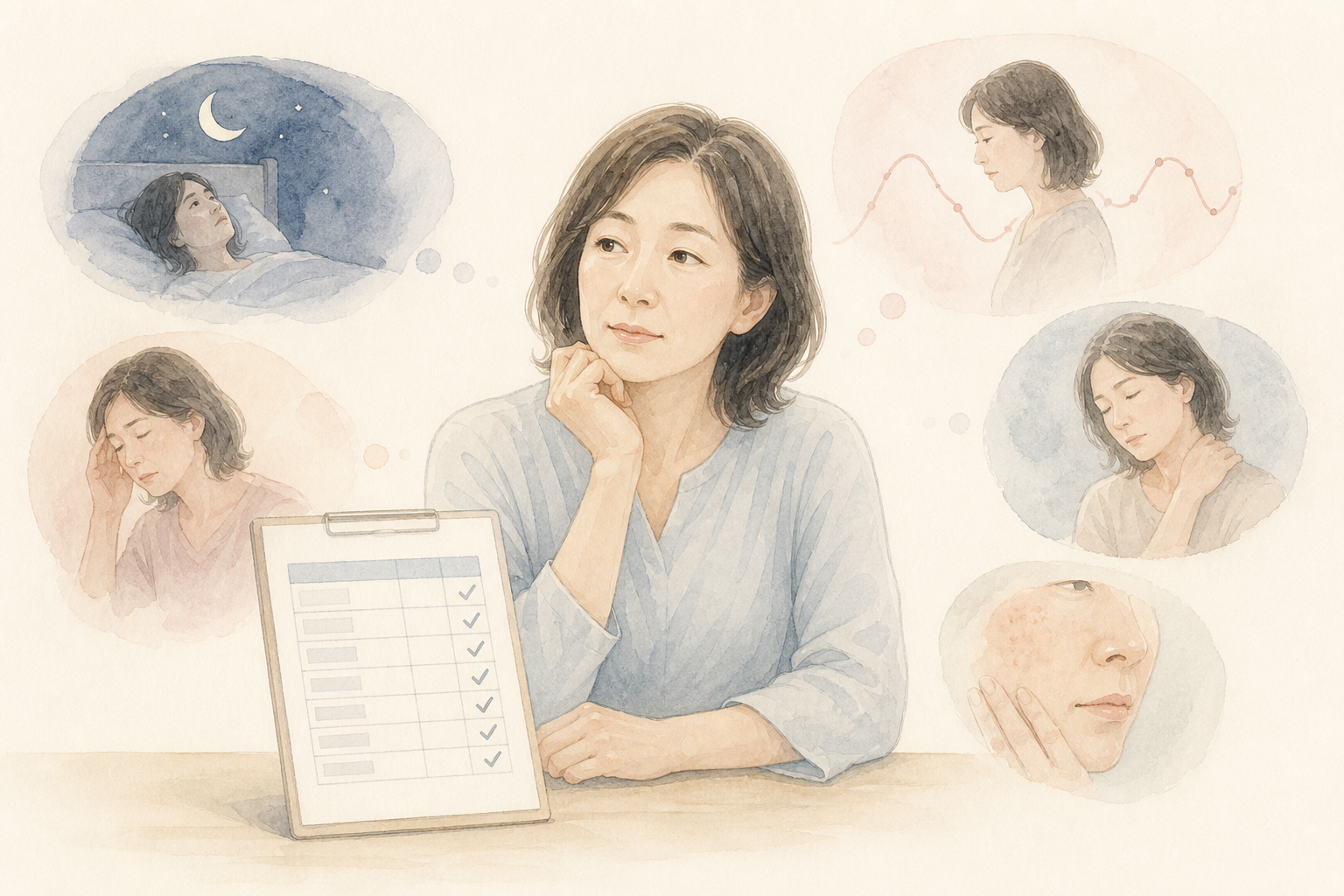
一方で、40代後半の女性に起きているのは、病気ではなく、機能や質の変化である場合があります。
- ホルモンの揺らぎは、一度の採血だけでは捉えにくい
- 睡眠の浅さは、一般的な健康診断では測られない
- 筋肉の質や身体の配分は、体重計だけでは分からない
- 低いレベルで続く炎症は、基本の検査項目に含まれないことがある
- 肌の再生力を直接測る検査は、一般的ではない
つまり、いまあなたが感じている不調は、健康診断では見つけにくい種類のものかもしれません。
「検査では問題ないと言われたのに、つらい」。その違和感は、軽く扱わなくてよいものです。ただし、症状の原因が更年期だけとは限りません。日常生活に支障があるとき、症状が強いとき、急に悪化したときは、婦人科やかかりつけ医に相談してください。
このグレイスジャーナルで、伝えていきたいこと
40代後半からの不調は、ひとつの治療や、ひとつのサプリだけで整理できない時期に入ります。身体全体が、ゆっくりと変化しているからです。
私は美容皮膚科の診察で、肌の相談に来られた方から、眠りや疲れ、表情、気分の変化まで伺ってきました。肌の変化と生活の変化が、同じ時期に始まっている方も少なくありません。だからこそ、肌だけを切り取らず、身体全体を整える視点をお伝えしたいと思い、この連載を書いています。
健康感のある肌をしている人は、よく眠れている。表情がやわらかい人は、慢性的な疲れを抱えていない。若々しく見える人は、筋肉や姿勢が保たれている。
肌は、身体全体の状態を映す、いちばん外側の臓器です。だから本当に肌を整えたいなら、肌の外側だけを見ていてはたどり着けないことがあります。
このグレイスジャーナルでは、「疲れて見える顔」の正体、睡眠と肌老化の関係、更年期と美容医療のつきあい方、注入治療は本当は何を補正しているのか、美容皮膚科医が栄養を大切にする理由、健康感のある人が共通して持っている習慣。そんなテーマを、医学的な視点で、でも、できるだけ日常の言葉で書いていこうと思います。
年齢を重ねるほど、「何を足すか」より、「どう整えるか」が大切になっていきます。
足し算の美容から、整える美容へ。そのための視点を、ここから一緒に育てていけたらうれしいです。
よくある質問
健康診断が正常なら、更年期の影響はないのでしょうか?
健康診断が正常でも、更年期の症状がないとは限りません。月経の変化や症状の経過を含めて、婦人科などで相談してください。
肌の治療だけでは、肌の変化は整わないのでしょうか?
肌の治療が役立つ場面はありますが、睡眠、栄養、筋肉、炎症なども肌に影響します。肌だけでなく全体の状態を見て優先順位を考えることが大切です。
本記事は、更年期前後に起こりうる身体の変化を一般的な医学情報として整理したものです。症状には個人差があり、他の病気が隠れている場合もあります。診断や治療の代わりになるものではありません。症状が強い場合や長く続く場合は、医療機関へご相談ください。
診察室で更年期前後の女性と向き合うなかで、肌の変化の背景に、眠り、疲れ、表情、気持ちの揺らぎが重なっていることを見てきました。だからこそ、肌だけを切り取らず、身体全体の変化として考える視点をお伝えしたいと思い、この連載を書いています。注入治療と女性の顔の印象変化に向き合いながら、必要な治療を必要な順番で考え、その方らしさが自然に引き立つ診療を大切にしています。詳しいプロフィール →
CLINIC INFORMATION
ヒルズグレイスクリニック
アクセスの詳細を見る →
肌を整える時間を、診察の外にも。


Conclusion | View feeling “vaguely unwell” around menopause as a change in the body as a whole
Feeling “vaguely unwell” from the late 40s onwards is not a change taking place in just one part of the body. At the threshold of the menopausal years, oestrogen does not so much fall in a straight line as first fluctuate widely. That fluctuation can set off a chain of effects on the autonomic nervous system, sleep, muscle, fat distribution, inflammation and the skin. Looking back together over sleep, menstruation, hot flushes, mood, muscle strength, weight and waistline, and changes in the skin, rather than isolating a single symptom, and including not only illnesses that show up in test results but also functional changes that are hard to detect in a health check-up, can give you useful clues when seeking advice.
What this article covers
- Why hormones “fluctuate” before they “decline”
- How the autonomic nervous system, sleep, muscle, fat, inflammation and skin are connected
- Why you may feel unwell even when a health check-up finds nothing abnormal
- A perspective that looks after the whole body rather than relying on aesthetic medicine alone
Articles in the series on menopause and aesthetic medicine can be found in the list of Dr. Mikako Oku’s Grace Journal series.
Introduction | When you feel you are not the person you used to be
“Lately I just can’t shake off my tiredness.”
“I sleep, yet mornings are the hardest.”
“When I look in the mirror, I look so much older it doesn’t seem like me.”
“There are days when I feel low even though nothing in particular has happened.”
These are words I hear again and again in the consultation room from women in their late 40s and beyond.
They come to see me about their skin, yet as we talk, these “complaints beyond the skin” spill out one after another. And at the end, many of them add:
“My health check-up said there was nothing abnormal, though.”
Nothing abnormal. Yet something has definitely changed. It is not an illness. Yet they are not the person they used to be.
That sense of being left in limbo may itself be a sign of the changes taking place in women’s bodies at this stage of life.
And those changes are not limited to one. Hormones, the autonomic nervous system, sleep, muscle, metabolism, inflammation, skin. They are progressing simultaneously and quietly throughout the body.
Today I would like to set out the overall picture as gently as I can.
1 | Hormones do not simply “decline”, they “fluctuate”
The menopausal years tend to be thought of as the time when oestrogen “declines”. But the real beginning comes a little earlier.
What first stands out in the body in the late 40s is not only decline but “fluctuation”.
In some months relatively more is secreted; in others, levels drop sharply. The widening range of hormonal fluctuation itself leads to changes in mind and body.
“Last month I was fine, but this month I feel like a different person.” That feeling is not necessarily just your imagination. Along with changes in your menstrual cycle and symptoms, your hormonal environment may genuinely be fluctuating.
2 | The autonomic nervous system begins to fluctuate too
Changes in oestrogen interact with the regions of the brain involved in temperature regulation and the autonomic nervous system. So when hormones fluctuate, the workings of the autonomic nervous system can also be affected.
Hot flushes, palpitations, night sweats, sudden feelings of anxiety, difficulty falling asleep at night. These are typical symptoms related to changes in the autonomic nervous system.
They are neither “imagined” nor “just a matter of feelings”. However, similar symptoms can also arise from other causes, such as thyroid disease or arrhythmia. If symptoms are severe or appear suddenly, it is important not to assume they are due to menopause but to have them checked at a medical institution.
3 | Sleeping, but not recovering
At this stage, a feeling many women mention is “I’m sleeping, but my tiredness doesn’t go away”.
One reason is that deep sleep decreases with age. Secretion of growth hormone, which is involved in repairing the skin and body, rises during deep sleep. That “depth” gradually becomes shallower.
Another is that sleep is interrupted several times during the night by night sweats or hot flushes. Even if you do not feel you have clearly woken up, your sleep may be fragmented.
Enough hours, but thin in substance. This is one cause of the feeling of “not recovering even after sleeping”.
4 | Muscle quietly diminishes
Muscle continues to change slowly even in adulthood. It has been reported that around menopause, as multiple factors such as age and activity level combine, decreases in muscle mass and lean mass become noticeable.
Oestrogen may be involved in muscle metabolism and repair. During the period when oestrogen declines, lack of exercise, lack of sleep and changes in food intake may also overlap, making it harder to maintain muscle.
When muscle decreases, metabolism slows, posture deteriorates, you feel the cold more easily and tire more easily. In both the face and the body, contours become less defined.
Behind both sagging skin and a vague sense of fatigue, changes in muscle and posture deep within the body may be hidden.
Read more about the relationship between muscle loss and menopause →
5 | Same lifestyle, yet only the waistline changes
“My weight hasn’t changed much, but my waistline bothers me.” Do you ever feel that way?
This, too, may be related to changes in fat distribution that arise from a combination of changes in oestrogen, ageing, activity level and other factors. It has been reported that around menopause, the body’s allocation shifts in a direction in which visceral fat increases more readily than subcutaneous fat.
Visceral fat does not just sit there; it releases substances involved in inflammation and metabolism. This leads on to the next topic.
6 | A quietly progressing “small fire inside the body”
In the world of ageing research, there is a term that is attracting attention today.
Inflammaging. Literally, “inflammatory ageing”.
It refers to a state in which low-level inflammation continues in the body over a long period, though not necessarily as a disease. Its relationship with ageing, changes in adipose tissue, changes in immunity and so on is being studied.
Because oestrogen also helps regulate immunity and inflammatory responses, the environment relating to inflammation may change around menopause.
Dull skin, wrinkles that are slow to fade, unexplained fatigue, low mood. The relationship between such changes and chronic inflammation is being researched, but not everything can be explained by inflammation alone.
7 | And then the skin changes
All the changes described so far ultimately converge on the skin.
It has been reported that skin collagen decreases in the years around menopause. Turnover slows, barrier function weakens, sebum decreases, and the skin dries out more easily.
Feeling that “my usual skincare doesn’t seem to work any more” is not necessarily just your imagination. The skin itself may be changing.
These are not separate stories
So far I have set out seven changes. But what really matters is that they are connected to one another.
Changes in the body are connected in a single flow
- 01
HORMONE
Hormones fluctuate
- 02
AUTONOMIC NERVES
The autonomic nervous system is affected
- 03
SLEEP
You wake during the night
- 04
RECOVERY
Deep sleep decreases and recovery becomes harder
- 05
REPAIR
The skin regenerates less easily. Muscle repairs less easily
- 06
APPEARANCE
You tire. Things sag. Even your mood sinks
- 07
INFLAMMATION
Stress and disrupted daily rhythms add up, and inflammation tends to linger
- 08
VISIBLE CHANGE
The skin looks older still. You tire more still
The order and intensity vary from person to person, but the changes influence one another. That is why it is important not to separate out just the skin or just sleep, but to look at where in the whole picture changes are occurring now.
Even if only the skin is treated, recovery is harder if sleep is shallow. How the body receives protein and supplements also depends on the state of sleep, exercise, and digestion and absorption. Rather than adding just one thing, thinking about the order of what is needed is the first step towards restoring balance.
Discomfort at this stage may not mean that one particular part has broken down, but that the overall balance is gradually shifting.
Why health check-ups rarely pick up these complaints
Some of you may wonder why you feel so unwell when tests show no problems.
The reason is that a health check-up and the discomfort you are feeling now are looking at different things.
A health check-up uses measures such as blood glucose, cholesterol, liver function and kidney function to check the risk of disease and whether you have entered a state that requires treatment.
On the other hand, what is happening to women in their late 40s may be not illness but changes in function and quality.
- Hormonal fluctuation is hard to capture with a single blood test
- Shallow sleep is not measured in a standard health check-up
- Muscle quality and the body’s distribution cannot be judged from the scales alone
- Persistent low-level inflammation may not be included in the basic test items
- Tests that directly measure the skin’s regenerative capacity are not common
In other words, the discomfort you are feeling now may be of a kind that is hard to detect in a health check-up.
“I was told the tests showed no problems, yet I feel unwell.” That sense that something is not right is not something you need to brush aside. However, the cause of your symptoms is not necessarily menopause alone. When symptoms interfere with daily life, are severe or worsen suddenly, please consult a gynaecologist or your family doctor.
What I want to share through this Grace Journal
From the late 40s, we enter a period in which discomfort cannot be sorted out with a single treatment or a single supplement. That is because the whole body is slowly changing.
In my aesthetic dermatology consultations, I have heard from people who came about their skin about changes in their sleep, fatigue, expression and mood as well. For many of them, changes in their skin and changes in their lives began around the same time. That is precisely why I am writing this series: I want to share a perspective that does not consider the skin in isolation but looks after the body as a whole.
People with healthy-looking skin sleep well. People with soft expressions are not carrying chronic fatigue. People who look youthful have maintained their muscle and posture.
The skin is the outermost organ, reflecting the condition of the whole body. So if you truly want to look after your skin, looking only at the outside of the skin may not get you there.
In this Grace Journal, I plan to write about themes such as what lies behind a “tired-looking face”, the relationship between sleep and skin ageing, how to approach aesthetic medicine around menopause, what injectable treatments are really correcting, why an aesthetic dermatologist values nutrition, and the habits that healthy-looking people have in common, from a medical perspective but in everyday language as far as possible.
The more we age, the more important it becomes to ask not “what to add” but “how to restore balance”.
From beauty by addition to beauty by balance. I would be delighted if we could cultivate that perspective together from here on.
Frequently asked questions
If my health check-up is normal, does that mean menopause is not affecting me?
A normal health check-up does not necessarily mean you have no menopausal symptoms. Please seek advice from a gynaecologist or other medical institution, including changes in your periods and how your symptoms have developed.
Is skin treatment alone not enough to address changes in the skin?
There are situations in which skin treatment helps, but sleep, nutrition, muscle, inflammation and other factors also affect the skin. It is important to look at your overall condition, not just your skin, and consider priorities.
This article sets out, as general medical information, the physical changes that can occur around menopause. Symptoms vary between individuals, and another illness may be hidden behind them. It is not a substitute for diagnosis or treatment. If symptoms are severe or persist, please consult a medical institution.
Working with women around menopause in the consultation room, I have seen that behind changes in the skin lie overlapping changes in sleep, fatigue, facial expression and emotional ups and downs. That is why I am writing this series: I want to share a perspective that does not consider the skin in isolation but as part of changes in the body as a whole. While focusing on injectable treatments and changes in the impression a woman’s face gives, I value care that considers the treatments needed, in the order they are needed, so that each person’s own character comes through naturally. Full profile →
CLINIC INFORMATION
Hills Grace Clinic
Access details →
Caring for your skin beyond the consultation room
HOME CARE
Online shop
Doctor-selected skincare and supplements, delivered to your home. For some products, a free online consultation is available before purchase.
CONSULTATION
Consult us at the clinic
Every person's skin is different. We look into what lies behind pigmentation and melasma, and suggest the care and the order of treatment your skin needs now.