院長 奥 謙太郎|2025年1月16日の記録(2026年10月23日に加筆・再構成)
この記事の要点
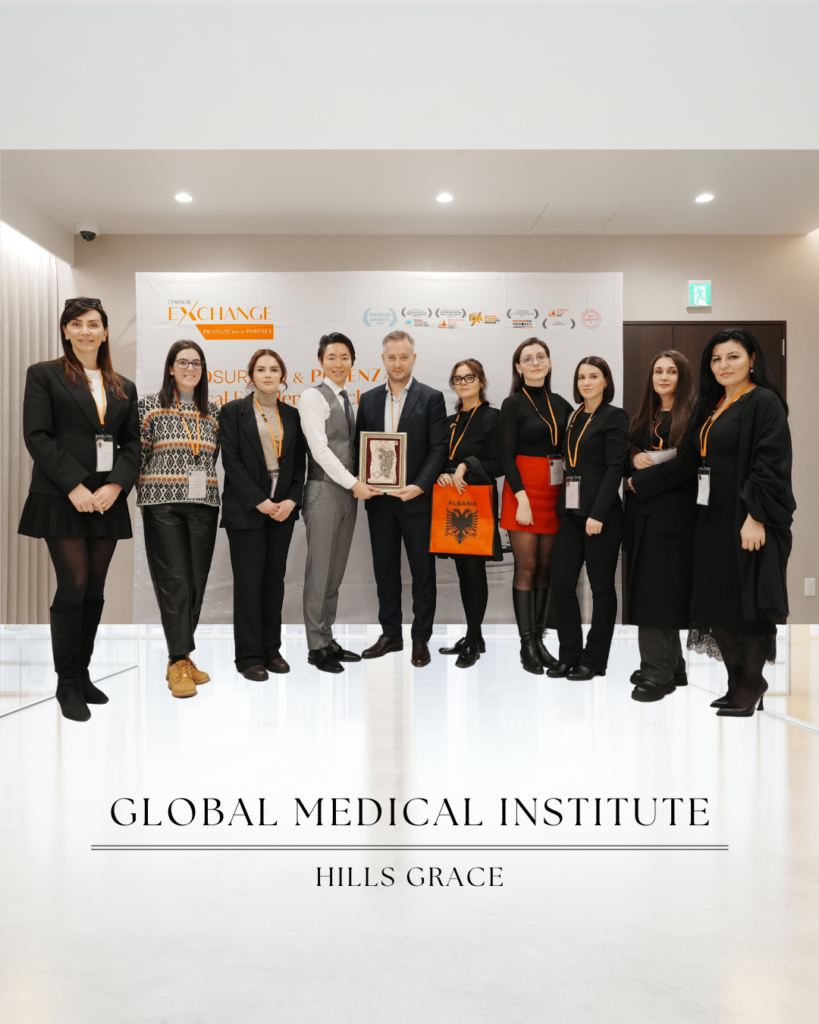
2025年1月、ヒルズグレイスクリニック内に設立した当院の教育機関GMI(Global Medical Institute)の第6回セッションに、東欧アルバニアから9名の医師をお迎えしました。テーマは、ポテンツァ(国内未承認の医療機器)単独のセッションと、ポテンツァとピコシュアプロを組み合わせる治療サイノグロー(CynoGlow™)の理論と実践です。中心になったのは、色白の西洋人の肌とアジア人の肌とでは、同じ設定で照射しても熱の吸収や回復の過程が異なるという点でした。機器の設定はその肌に応じて考えるものだという視点は、日本の患者様の治療にも通じます。
はじめに
同じ機器を同じ設定で使っても、肌質が違えば肌の反応は変わります。第6回のGMIには、東欧アルバニアの医師たちをお迎えしました。アジア人とは異なる肌質の患者様を診ている医師たちと、その肌に応じた設定とはどういうことかを考えた一日です。
1. アルバニアから9名の医師を迎えた第6回セッション
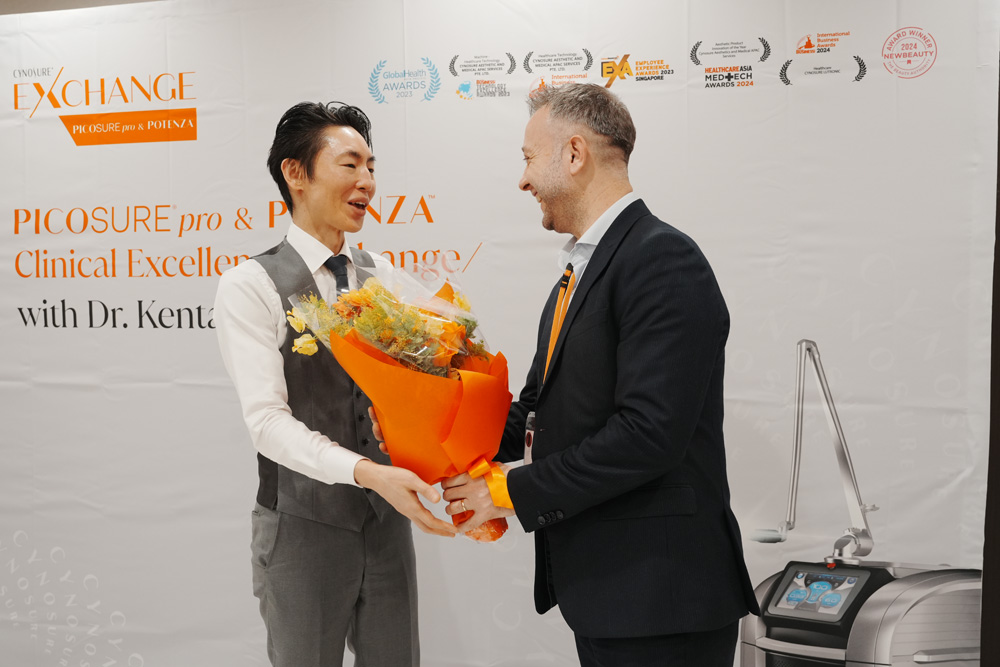
GMIは、ヒルズグレイスクリニック内に設立した当院の教育機関で、医師を対象にしたトレーニングを行っています。第6回のセッションには、東欧のアルバニアから9名の医師が参加しました。
これまでのGMIではAPAC(アジア太平洋)地域の医師を多く迎えてきましたが、今回はヨーロッパのアルバニアという、異なる背景を持つ医師たちをお迎えし、熱のこもったセッションになりました。
この日のテーマは二つあり、午前と午後で分けて進めました。
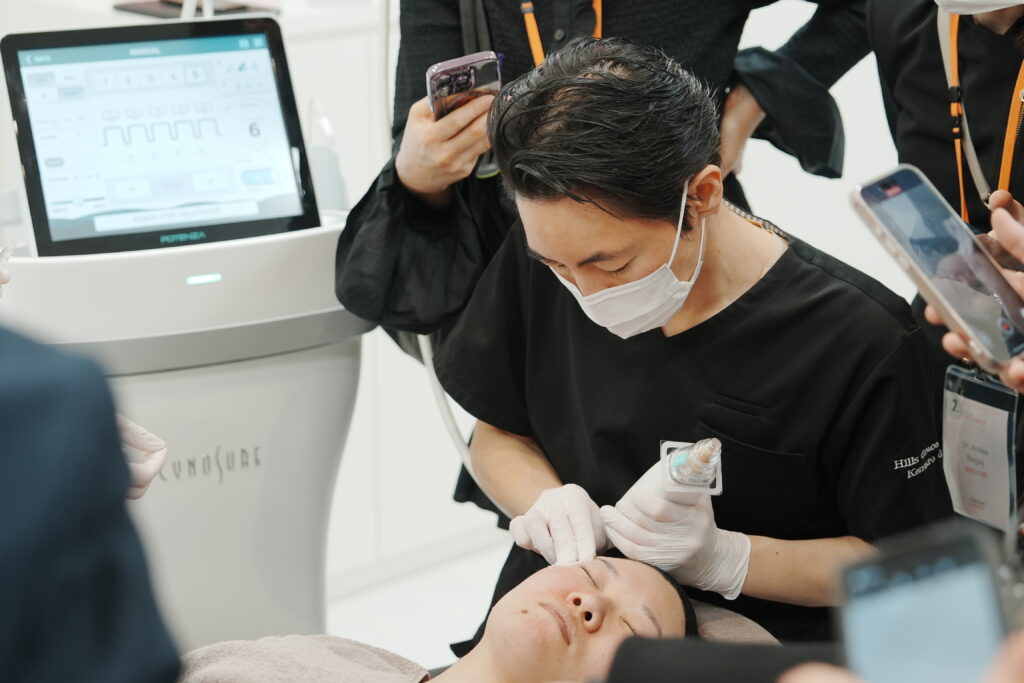
- 午前:ポテンツァ単独のセッション。科学的な特徴の座学と、肌質に合わせた設定の組み立て方、そしてライブデモンストレーション(実際の施術の実演)
- 午後:ポテンツァとピコシュアプロを組み合わせるサイノグロー(CynoGlow™)の理論と実践
2. 色白の肌(FST1〜2)に合わせてポテンツァの設定を組み立てる
ポテンツァは、細い針を肌に刺し、針先から高周波(RF)の熱を加えるマイクロニードルRFと呼ばれる機器で、国内未承認の医療機器です。
アルバニアの医師たちが診ている患者様の多くは、フィッツパトリックスキンタイプ(FST:肌の色の濃さなどによる肌タイプの分類)が1〜2の、とても色白な肌です。メラニン(肌の色をつくる色素)が少なく、赤みや光老化(紫外線による肌の老化)が出やすいという特徴があります。
アジア人に多いFST3〜4の肌とは、反応が大きく異なります。そこで座学では、まずポテンツァの科学的な特徴を整理し、そのうえでアルバニアの患者様の肌に応じた設定をどう考えるかを掘り下げました。
続くライブデモンストレーションでは、次の技術的なポイントを具体的にお伝えしました。照射の中での細かな調整にどんな意味があるのかを目の前で見た医師たちからは、鋭い質問が相次ぎました。
- シングルニードル(1本針)とマルチニードル(複数の針)の使い分け:深いしわを狙うのか、毛穴を狙うのか。目的に応じてどのチップ(針の先端部品)を選ぶか
- エネルギー設定の微調整:照射中の肌の反応をその場で観察し、安全な範囲を守りながら効果を引き出すための調整
3. サイノグロー ― なぜ二つのエネルギーを組み合わせるのか
午後は、マイクロニードルRFのポテンツァと、ピコ秒レーザー(1兆分の1秒単位で光を当てるレーザー)のピコシュアプロを組み合わせる、当院が提唱する治療サイノグローのセッションです。
私がはじめにお話ししたのは、二つの機器をただ当てるのではない、ということです。なぜこの二つのエネルギーを組み合わせるのか、その理論的な根拠から説明しました。
ここでも鍵になったのは、アジアとヨーロッパの肌質の違いです。同じ設定で照射しても、肌質が違えば吸収される熱エネルギーも、その後の回復の過程も異なります。
安全で効果が期待できる治療の手順(プロトコル)をつくるには、肌質に合わせてエネルギー量や照射時間を細かく設定することが欠かせません。これが、この日のサイノグローの講義で伝えた中心の考え方です。
4. 機器の違いを越えて伝えた「思考の方法」
このセッションで印象に残ったのは、参加した医師たちの背景の多様さです。自院で使っている機器はさまざまで、治療へのこれまでの取り組み方も一人ひとり異なっていました。
そこで私は、特定の機器の使い方を教えるだけでなく、「どのような考え方に従って、エネルギーを皮膚に作用させるべきか」という、美容医療における思考の方法を伝えることに力を注ぎました。
機器はあくまで道具で、それをどう使うかは、医師が持つ物理学と皮膚科学への理解にかかっています。自院に戻ったとき、手元の機器の力を引き出すための視点を持ち帰ってもらうことが、この日の目標でした。
肌の違いに応じて設定を考えるというこの視点は、横浜あざみ野で日本の患者様の治療を考えるときにも通じるものです。
よくある質問
ポテンツァとはどのような治療ですか?
ポテンツァは、細い針を肌に刺し、針先から高周波(RF)の熱を加えるマイクロニードルRFと呼ばれる機器で、国内未承認の医療機器です。GMIでは、深いしわを狙うのか毛穴を狙うのかによって、シングルニードル(1本針)とマルチニードル(複数の針)を使い分ける考え方をお伝えしました。適した設定は肌質によって異なり、効果の感じ方には個人差があります。詳しくは公式サイトの治療ページをご覧ください。
サイノグロー(CynoGlow™)とはどのような治療ですか?
サイノグローは、ピコ秒レーザーのピコシュアプロと、マイクロニードルRFのポテンツァ(国内未承認の医療機器)を組み合わせる、当院が提唱する治療です。GMIの講義では、二つの機器をただ当てるのではなく、なぜこの組み合わせなのかという理論から説明しました。肌質によって熱の吸収や回復の過程が異なるため、エネルギー量や照射時間をその肌に応じて決めることが前提になります。効果には個人差があります。
肌の色や肌質によって、レーザーや高周波の設定は変わるのですか?
GMI第6回では、西洋人に多い色白の肌(FST1〜2)と、アジア人に多いFST3〜4の肌とでは、反応が大きく異なることをテーマにしました。同じ設定で照射しても、吸収される熱エネルギーや回復の過程が異なります。そのため、エネルギー量や照射時間は肌の違いに応じて細かく決める必要がある、とお伝えしました。どのような設定が合うかは一人ひとり異なり、効果にも個人差があります。
おわりに
肌質が違えば、同じ機器でも設定の組み立て方は変わります。GMI第6回では、アルバニアの医師たちとその考え方を共有しました。ポテンツァを単独で取り上げた第5回や、APACの医師とサイノグローを扱った第8回の記録もあわせてご覧ください。
シミ・たるみ・肌質のお悩みは、横浜あざみ野のヒルズグレイスクリニックまでご相談ください。診察のうえで、一人ひとりに合った治療の組み立てをご提案します。カウンセリングのご予約はこちら →
シミ・肝斑・毛穴など、肌に現れた悩みに向き合うとき、私が大切にしているのは、症状だけでなく、その症状が生じた肌の状態まで見極めることです。
レーザー・高周波・超音波などの機器は、同じ設定で照射しても、結果は一人ひとり異なります。その差を生むのは、肌が熱を受け止め、治療に応えられる状態にあるかどうか。だからこそ、必要に応じて肌が応えられる状態を整えながら、適切な治療を、適切な順序でご提案します。
この考えを治療設計の起点に据え、「Thermal Thread Technique®」として体系化し、2024年に『Lasers in Surgery and Medicine』誌へ発表しました。同論文は同誌のTop Viewed・Top Cited Articleに選出されています。高周波照射法「Mono-Bi CrossLIFT Technique」および、注入治療と医療機器を組み合わせる「CrossTALK® protocol」も『Journal of Cosmetic Dermatology』誌に発表しています。
米国レーザー医学会(ASLMS)専門医、医療法人社団光悠会理事長。Cynosure社のアドバイザリーボードには日本から唯一参加し、PicoSure Proの開発段階から携わり、第1号機による症例報告も行ってきました。世界最大のレーザー医学会ASLMSやIMCAS ASIA、KOREA DERMAなどの国際学会で招待講演を行い、国際的な医師教育プログラム「GMI」を主宰。海外の医師の指導・育成にも取り組んでいます。
これまでの治療で思うような手応えを得られなかった方にも、なぜその肌にその症状が起きているのかを見極め、必要な治療の順序からご提案します。肌を診て、治療を設計し、経過に合わせて組み立てを更新する。そこまでを含めて、肌治療だと考えています。詳しいプロフィール →
CLINIC INFORMATION
ヒルズグレイスクリニック
アクセスの詳細を見る →
肌を整える時間を、診察の外にも。

Director Kentaro Oku | Record of 16 January 2025 (expanded and restructured on 23 October 2026)
Key points
In January 2025, we welcomed nine doctors from Albania in Eastern Europe to Session 6 of GMI (Global Medical Institute), our clinic’s educational institution established within Hills Grace Clinic. The themes were a session on Potenza (a medical device not approved in Japan) on its own, and the theory and practice of CynoGlow™, a treatment that combines Potenza and PicoSure Pro. The central point was that fair-skinned Western skin and Asian skin differ in how heat is absorbed and how they recover, even when treated with the same settings. The perspective that device settings should be considered according to the skin in question also applies to the treatment of patients in Japan.
Introduction
Even when the same device is used with the same settings, the skin’s response changes if the skin type is different. For Session 6 of GMI, we welcomed doctors from Albania in Eastern Europe. It was a day spent considering, with doctors who treat patients whose skin type differs from that of Asian patients, what it means to choose settings suited to that skin.
1. Session 6: welcoming nine doctors from Albania
GMI is our clinic’s educational institution, established within Hills Grace Clinic, and provides training for doctors. Nine doctors from Albania in Eastern Europe took part in Session 6.
Until now, GMI had welcomed many doctors from the APAC (Asia-Pacific) region, but this time we welcomed doctors from a different background, from Albania in Europe, and it became an intensely engaged session.
The day had two themes, divided between the morning and the afternoon.
- Morning: a session on Potenza on its own. Classroom teaching on its scientific characteristics, how to build settings according to skin type, and a live demonstration (an actual treatment performed on site)
- Afternoon: the theory and practice of CynoGlow™, which combines Potenza and PicoSure Pro
2. Building Potenza settings for fair skin (FST 1–2)
Potenza is a device known as microneedle RF, which inserts fine needles into the skin and delivers radiofrequency (RF) heat from the needle tips; it is not approved as a medical device in Japan.
Many of the patients seen by the Albanian doctors have very fair skin, with a Fitzpatrick skin type (FST: a classification of skin types based on factors such as how dark the skin is) of 1–2. This skin has little melanin (the pigment that gives skin its colour) and is prone to redness and photo-ageing (ageing of the skin caused by ultraviolet light).
Its response differs greatly from that of FST 3–4 skin, which is common among Asian people. So in the classroom session, we first went over the scientific characteristics of Potenza, and then explored in depth how to think about settings suited to the skin of patients in Albania.
In the live demonstration that followed, I explained the following technical points in concrete terms. Having seen in front of them what the fine adjustments made during treatment mean, the doctors asked one sharp question after another.
- Choosing between single-needle (one needle) and multi-needle (several needles): whether to target deep wrinkles or pores, and which tip (the part at the end holding the needles) to select according to the aim
- Fine-tuning energy settings: observing the skin’s response on the spot during treatment, and adjusting to bring out the effect while staying within a safe range
3. CynoGlow®: why combine two energies?
The afternoon was a session on CynoGlow®, a treatment proposed by our clinic that combines Potenza, a microneedle RF device, with PicoSure Pro, a picosecond laser (a laser that delivers light in units of one trillionth of a second).
The first thing I said was that this is not simply a matter of applying two devices. I explained, starting from the theoretical basis, why these two energies are combined.
Here too, the key was the difference between Asian and European skin types. Even when treated with the same settings, skin of a different type absorbs a different amount of heat energy and goes through a different recovery process afterwards.
To create a treatment procedure (protocol) that is safe and from which an effect can be expected, it is essential to set the amount of energy and the treatment time precisely according to skin type. This was the core idea conveyed in the CynoGlow® lecture that day.
4. A “way of thinking” conveyed beyond differences in devices
What stayed with me from this session was the diversity of the participating doctors’ backgrounds. The devices they use at their own clinics varied, and each had their own approach to treatment so far.
So rather than only teaching how to use a particular device, I focused on conveying a way of thinking in aesthetic medicine: “according to what principles energy should be made to act on the skin”.
A device is only a tool, and how it is used depends on the doctor’s understanding of physics and dermatology. The aim of the day was for the doctors to take home a perspective that would help them bring out the capabilities of the devices they have when they return to their own clinics.
This perspective of considering settings according to differences in skin also applies when we think about the treatment of patients in Japan in Azamino, Yokohama.
Frequently asked questions
What kind of treatment is Potenza?
Potenza is a device known as microneedle RF, which inserts fine needles into the skin and delivers radiofrequency (RF) heat from the needle tips; it is not approved as a medical device in Japan. At GMI, I explained the approach of choosing between single-needle (one needle) and multi-needle (several needles) depending on whether deep wrinkles or pores are being targeted. Suitable settings differ according to skin type, and how the effect is felt varies between individuals. For details, please see the treatment page on our official website.
What kind of treatment is CynoGlow™?
CynoGlow® is a treatment proposed by our clinic that combines PicoSure Pro, a picosecond laser, with Potenza, a microneedle RF device (not approved as a medical device in Japan). In the GMI lecture, I explained, starting from the theory, that this is not simply a matter of applying two devices, and why this particular combination is used. Because heat absorption and the recovery process differ according to skin type, deciding the amount of energy and the treatment time according to the skin in question is a prerequisite. Results vary between individuals.
Do laser and radiofrequency settings change depending on skin colour and skin type?
The theme of GMI Session 6 was that fair skin (FST 1–2), common among Western people, and FST 3–4 skin, common among Asian people, respond very differently. Even when treated with the same settings, the heat energy absorbed and the recovery process differ. I therefore explained that the amount of energy and the treatment time need to be decided precisely according to differences in skin. Which settings are suitable differs from person to person, and results also vary between individuals.
In closing
When the skin type differs, the way settings are built changes, even with the same device. At GMI Session 6, I shared this way of thinking with the doctors from Albania. Please also see the records of Session 5, which focused on Potenza on its own, and Session 8, which covered CynoGlow® with doctors from APAC.
For concerns about pigmentation, sagging or skin quality, please consult Hills Grace Clinic in Azamino, Yokohama. After an examination, we will propose a treatment plan suited to each individual. Book a consultation →
When addressing concerns that appear on the skin, such as pigmentation, melasma and pores, what I value is assessing not only the symptoms but also the condition of the skin in which those symptoms have arisen.
With devices such as lasers, radiofrequency and ultrasound, results differ from person to person even when treated with the same settings. What creates that difference is whether the skin is in a state to receive heat and respond to treatment. That is why, while preparing the skin so that it can respond where necessary, I propose the appropriate treatments in the appropriate order.
Placing this idea at the starting point of treatment design, I systematised it as the “Thermal Thread Technique®” and published it in “Lasers in Surgery and Medicine” in 2024. The paper was selected as a Top Viewed and Top Cited Article in the journal. I have also published the radiofrequency treatment method “Mono-Bi CrossLIFT Technique” and the “CrossTALK® protocol”, which combines injectable treatments with medical devices, in the “Journal of Cosmetic Dermatology”.
Specialist of the American Society for Laser Medicine and Surgery (ASLMS) and Chair of the Board of Koyukai Medical Corporation. I am the only member from Japan on Cynosure’s advisory board, have been involved with PicoSure Pro since its development stage, and have reported cases treated with the very first unit. I have given invited lectures at international congresses including ASLMS, the world’s largest laser medicine society, IMCAS ASIA and KOREA DERMA, and I lead the international physician education programme “GMI”, through which I also teach and train doctors from overseas.
Even for those who have not had the results they hoped for from previous treatments, I assess why that symptom is occurring in that skin and propose treatment starting from the order in which it is needed. Examining the skin, designing the treatment, and updating the plan as it progresses: I consider all of this to be skin treatment. Full profile →
CLINIC INFORMATION
Hills Grace Clinic
Access details →
Caring for your skin beyond the consultation room
HOME CARE
Online shop
Doctor-selected skincare and supplements, delivered to your home. For some products, a free online consultation is available before purchase.
CONSULTATION
Consult us at the clinic
Every person's skin is different. We look into what lies behind pigmentation and melasma, and suggest the care and the order of treatment your skin needs now.