「ピコレーザー」はシミ治療において、他治療より一歩先を行っています。
なぜか?
新しいレーザーだから?
エネルギーが強くてシミが取れやすいから?
どちらもNOです。答えは…
「シミの周りのお肌を壊さずにシミだけを壊すことのできるエネルギーを使うことができるから」です。
ポイント1|シミの取れやすさ
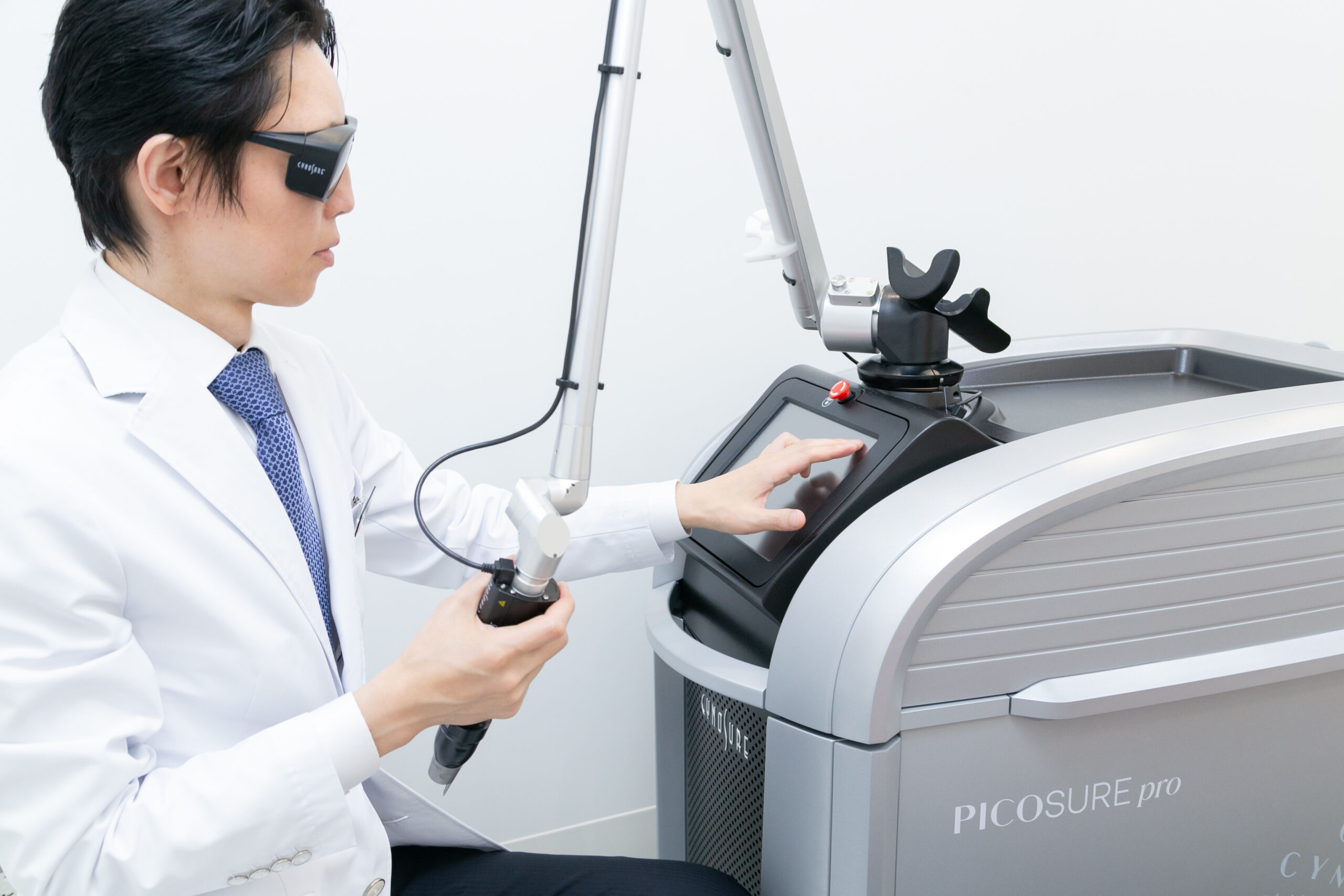
当院のピコレーザー:ピコシュアプロを用いたシミ治療はこれらの症例のように効果が非常に高いのですが、


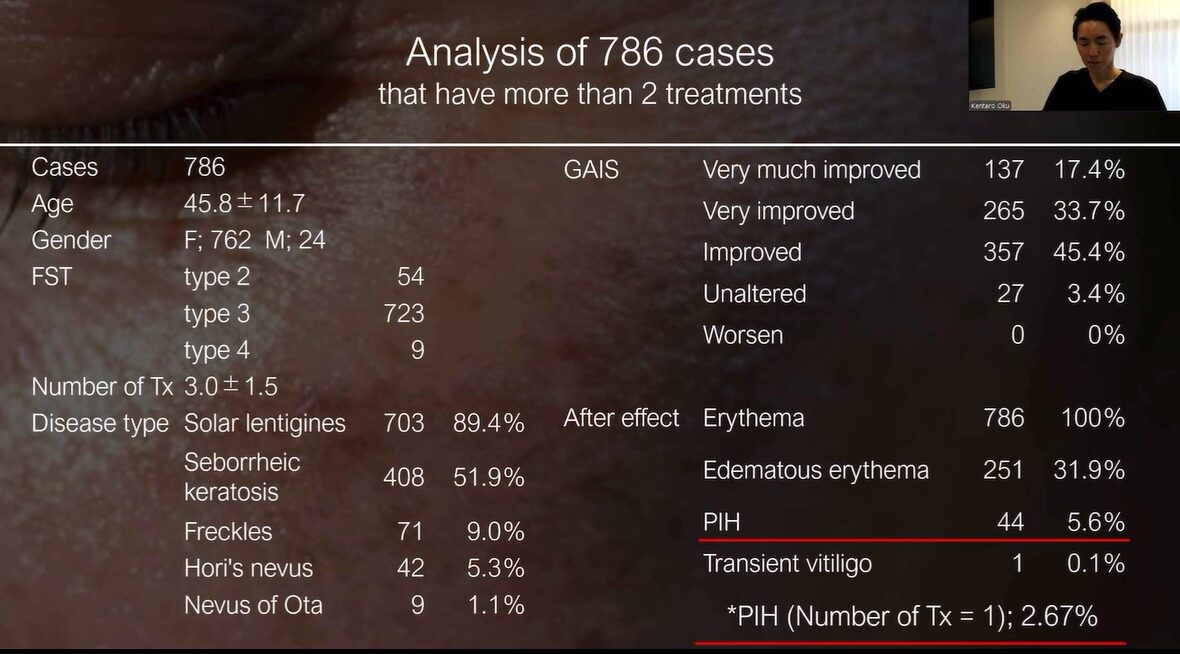
もう一つ大きな特徴があります。それはシミ治療における最大の敵「炎症後色素沈着:PIH」(色戻り、とも言われます)の発生率が2.67%(1回治療の場合)と非常に低いということです。
ポイント2|炎症後色素沈着(PIH)とは?
炎症後色素沈着(PIH)は、一度取れたと思ったシミが、治療後2-3週間で同じ場所に、同じような色合いで戻ってくる現象です。数か月の時間をかけて少しずつ薄くなっていくのですが、なくなったと思ったシミが帰ってくるものであるため治療の満足度を大きく損なう「シミ治療の大敵」です。
レーザー治療では、いらない部分(シミ)を壊すことだけに集中して強いエネルギーを照射すればいいと考えがちですが、照射後に「皮膚を回復させて、通常の皮膚を再生させる」ことができなければ、火傷の痕のような瘢痕になったり、色素沈着の発生率が高くなったりします。
ポイント3|シミ治療に適したエネルギー
シミ治療の歴史を紐解いていくと、シミを壊すことがポイントなのではなく、「いかに周りの皮膚を守るか」がポイントとであることが見えてきます。
ピコレーザーで一番大切なのは、「どのくらいのエネルギーで照射すれば、シミだけを壊すことができるか(閾値フルエンスと言います)」なのです。
ピコシュアプロでは、この「閾値フルエンス」を実際の治療で使用することができます。
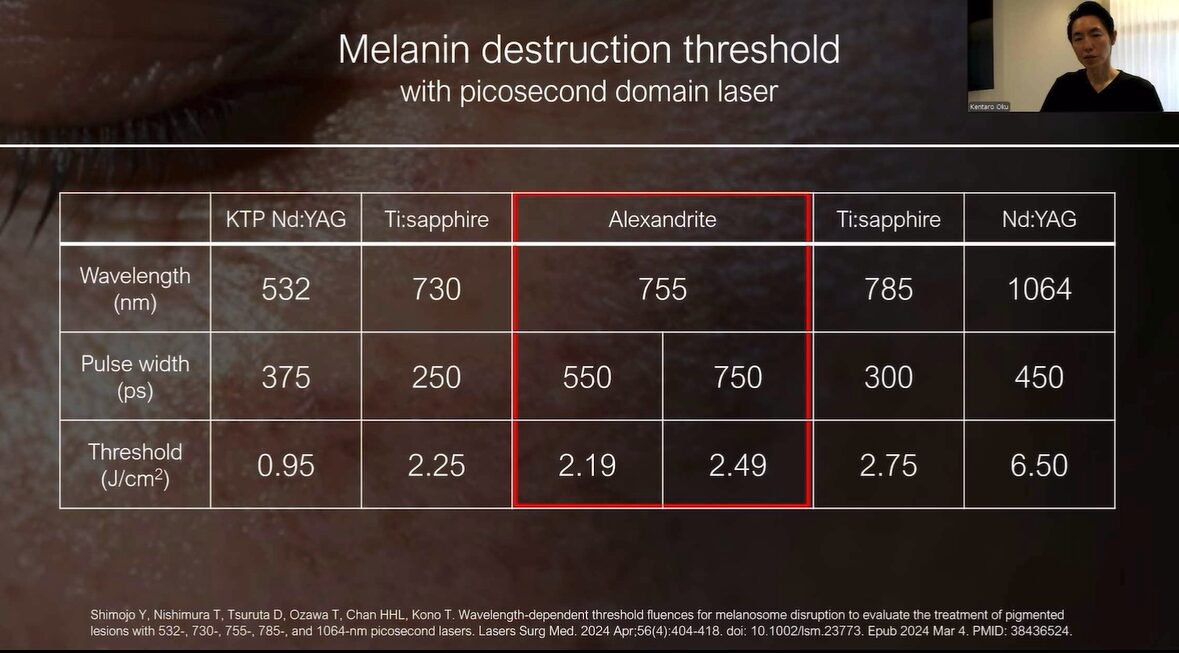
フルエンスは高くすればするほど炎症後色素沈着の発生率が高くなります。そのため、まずこの閾値を理解して照射しているか否かが大切になります。さらに、この閾値フルエンスを使いながら「シミを確実に取り除いていく」方法が大切です。
ポイント4|ピコシュアプロの炎症後色素沈着発生率:2.67%
先日発刊された美容皮膚科学会雑誌に、同じくピコレーザーであるピコウェイ(Picoway):波長532nmで、51症例のシミ(老人性色素斑)治療を「1回」行った場合の炎症後色素沈着発生率が掲載されました。この研究によるとピコウェイにおける炎症後色素沈着の発生率は、治療後1か月時点で31%、2か月時点で25%とされています(Aesthetic Dermatology Vol.34:507~513, 2024)。
私の研究も同様に掲載されているのですが(詳しくはこちら)、ピコシュア・ピコシュアプロ(PICOSUREpro):波長755nmで、786症例のシミ・アザ治療を「2回以上」行った場合の色素沈着発生率は5.6%です(Aesthetic Dermatology Vol.33: 493~499, 2023)。シミ除去率を高く保ちながら色素沈着の発生率を抑えることができるのが当院の照射方法の特徴です。
ポイント5|シミ治療の極意
同じようにピコレーザーを使用している国内外のDr達から「なぜこんなに低く抑えられるのか?」と多くの質問を受けてきましたが、その答えが「閾値フルエンスの使用した効率の良いシミ破壊」なのです。
シミを治療しようとすると、どうしてもそのシミを「破壊すること」に重きを置きがちなのですが、その場合、色素沈着の発生率は必然的に高くなります。
「壊すべきものだけを壊し、周りはしっかり守る」
これがシミ治療の極意です。
これまで多くのレーザーに触れ、ピコシュアプロの開発からローンチ後の調整と照射方法の構築までを行ってきましたが、現時点でシミ治療に対して最も効果と安全性が高いピコレーザーはピコシュアプロ(PICOSUREpro)であることが、基礎医学データ・臨床データから示されています。
ポイント6|今後のシミ治療について議論
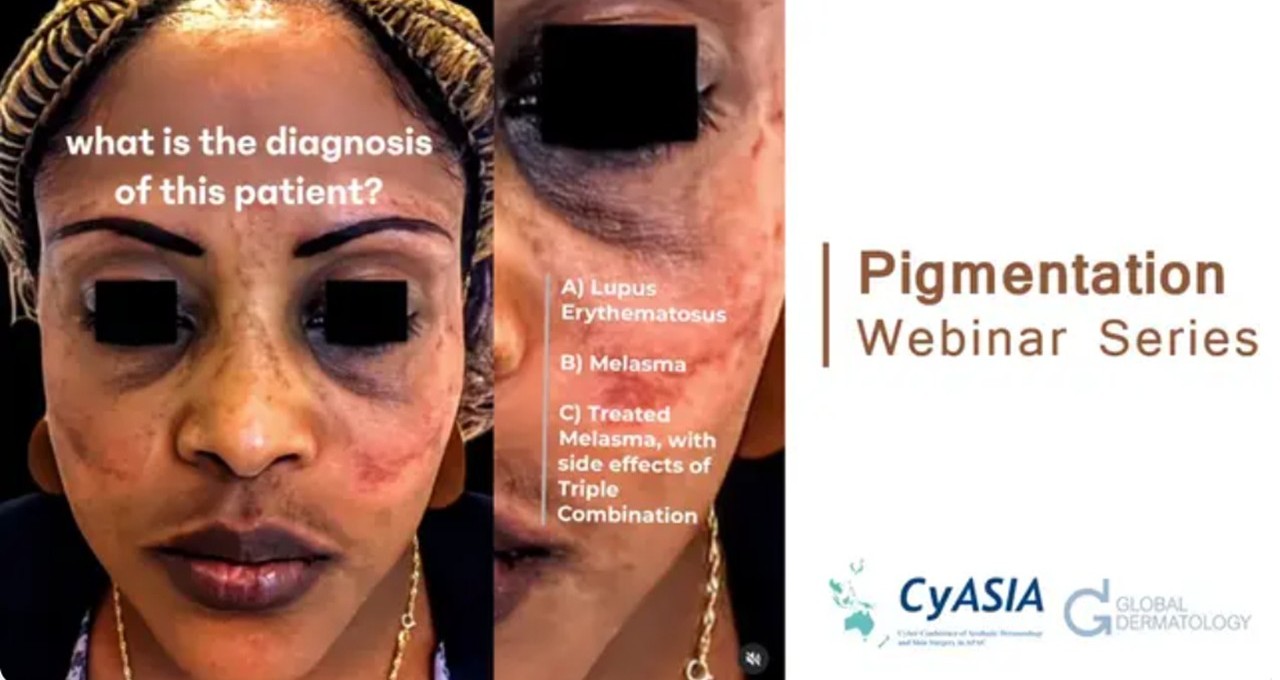
先日、Global DermatologyとCyASIAのセッションにおいて、この知見を報告するとともに、今後のシミ治療についてディカッションを行いました。
プレゼン動画視聴を希望の方はこちら
多くの国際学会で共に議論し、より良い治療法を模索してきたDr達とこういったセッションを持てるのは非常に大きな意味があると思っています。
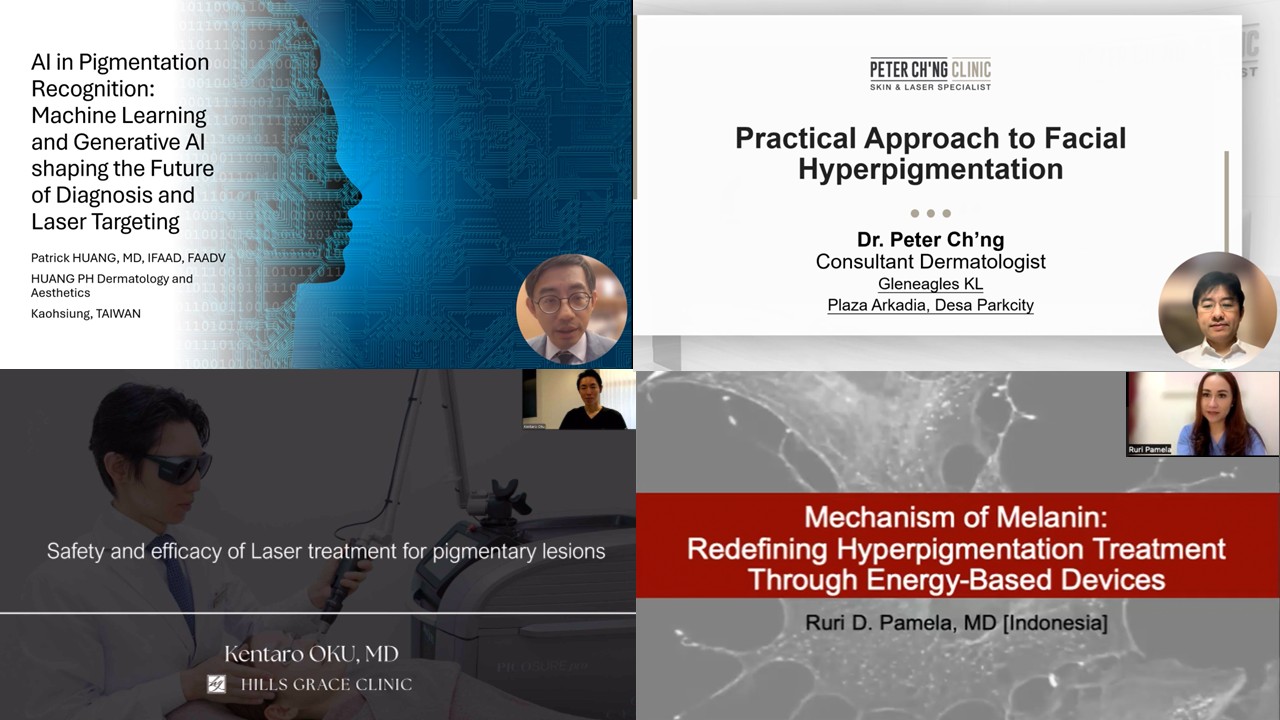
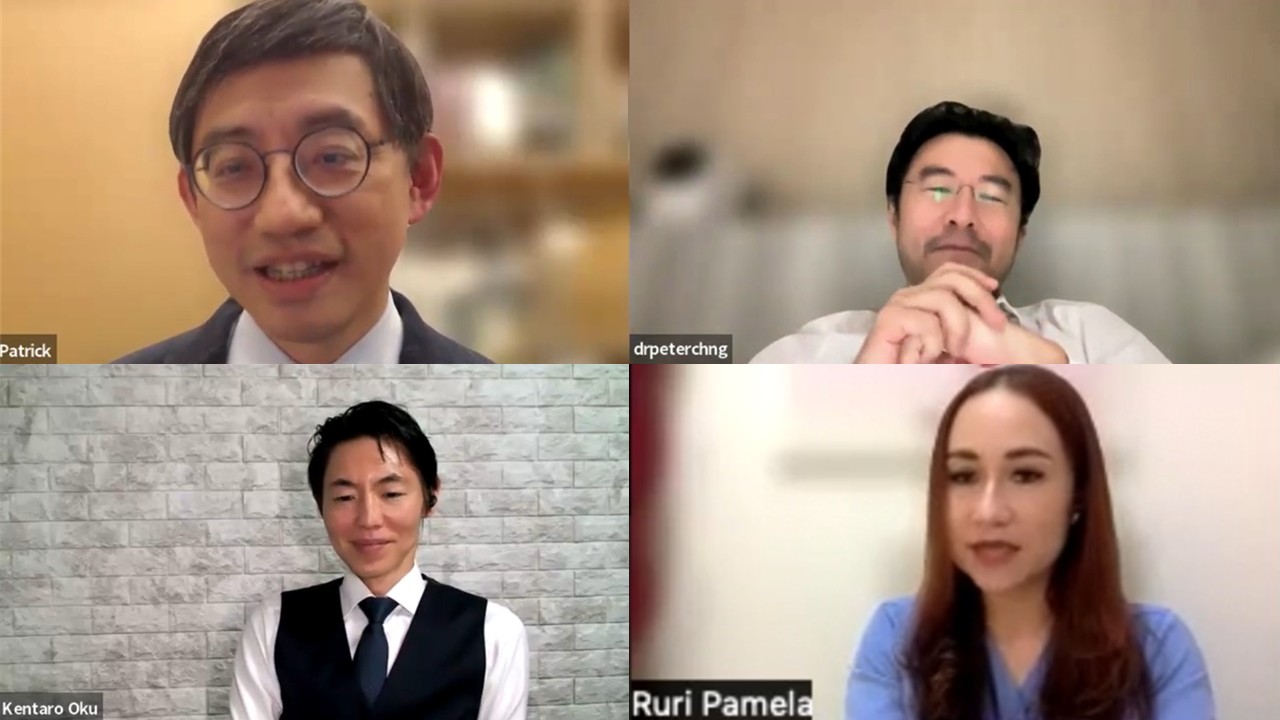
今回CyASIAのセッションとして座長を務めてくださった台湾のDr. Patcik, 共に演者・ディスカッサーを務めたシンガポールのDr. Peter、インドネシアのDr. Ruri、さらにこのwebinarをオーガナイズしてくださったDr. Hsuにこの場を借りて感謝申し上げます。ありがとうございました。
今後もピコシュアプロを用いたシミ治療における、さらなる効果・安全性向上に向け、研究を続けていこうと思います。
CLINIC INFORMATION
ヒルズグレイスクリニック
アクセスの詳細を見る →
肌を整える時間を、診察の外にも。

“Picosecond lasers” are a step ahead of other treatments when it comes to treating pigmentation.
Why?
Because they are new lasers?
Because their energy is strong, so pigmentation clears easily?
The answer to both is no. The answer is…
“Because they can use an energy level that destroys only the pigmentation, without damaging the skin around it.”
Point 1 | How readily pigmentation clears
Pigmentation treatment with our clinic’s picosecond laser, PicoSure Pro, is highly effective, as these cases show, but
it has another major feature. The incidence of the greatest enemy in pigmentation treatment, “post-inflammatory hyperpigmentation: PIH” (also called “returning pigmentation”), is very low at 2.67% (with a single treatment).
Point 2 | What is post-inflammatory hyperpigmentation (PIH)?
Post-inflammatory hyperpigmentation (PIH) is a phenomenon in which pigmentation you thought had cleared comes back in the same place, in a similar shade, 2–3 weeks after treatment. It fades gradually over several months, but because pigmentation you thought was gone returns, it greatly reduces satisfaction with treatment: it is “the great enemy of pigmentation treatment”.
With laser treatment, it is tempting to think that you only need to focus on destroying the unwanted part (the pigmentation) and deliver strong energy. However, if the skin cannot “recover and regenerate as normal skin” after treatment, it may leave scarring like a burn scar, or the incidence of hyperpigmentation may increase.
Point 3 | The right energy for treating pigmentation
Looking back at the history of pigmentation treatment, it becomes clear that the key is not destroying the pigmentation, but “how well the surrounding skin is protected”.
With picosecond lasers, the most important thing is “how much energy is needed to destroy only the pigmentation (this is called the threshold fluence)”.
With PicoSure Pro, this “threshold fluence” can be used in actual treatment.
The higher the fluence, the higher the incidence of post-inflammatory hyperpigmentation. For this reason, what matters first is whether the treatment is delivered with an understanding of this threshold. Beyond that, what matters is a method that “reliably removes the pigmentation” while using this threshold fluence.
Point 4 | Incidence of post-inflammatory hyperpigmentation with PicoSure Pro: 2.67%
A recently published issue of the journal of the Japanese Society of Aesthetic Dermatology reported the incidence of post-inflammatory hyperpigmentation when 51 cases of pigmentation (solar lentigines) received a “single” treatment with Picoway, another picosecond laser, at a wavelength of 532 nm. According to this study, the incidence of post-inflammatory hyperpigmentation with Picoway was 31% at 1 month after treatment and 25% at 2 months (Aesthetic Dermatology Vol.34:507~513, 2024).
My own study has been published in the same journal (details here): with PicoSure and PicoSure Pro (PICOSUREpro) at a wavelength of 755 nm, the incidence of hyperpigmentation when 786 cases of pigmentation and birthmarks received “two or more” treatments was 5.6% (Aesthetic Dermatology Vol.33: 493~499, 2023). A feature of our clinic’s treatment method is that it keeps the incidence of hyperpigmentation down while maintaining a high pigmentation clearance rate.
Point 5 | The art of treating pigmentation
Doctors in Japan and abroad who also use picosecond lasers have often asked me, “How can you keep it so low?” The answer is “efficient destruction of pigmentation using the threshold fluence”.
When treating pigmentation, there is a natural tendency to put the emphasis on “destroying” it, but when that happens, the incidence of hyperpigmentation inevitably rises.
“Destroy only what needs to be destroyed, and protect the surroundings well.”
This is the art of treating pigmentation.
I have worked with many lasers and have been involved with PicoSure Pro from its development through to adjustments after launch and the development of treatment methods, and basic medical data and clinical data show that, at present, the picosecond laser with the highest efficacy and safety for treating pigmentation is PicoSure Pro (PICOSUREpro).
Point 6 | Discussing the future of pigmentation treatment
Recently, at a Global Dermatology and CyASIA session, I reported these findings and took part in a discussion on the future of pigmentation treatment.
If you would like to watch the presentation video, please click here
I believe it is very meaningful to hold sessions like this with doctors with whom I have discussed and searched for better treatments at many international congresses.
I would like to take this opportunity to thank Dr. Patcik of Taiwan, who chaired this CyASIA session, Dr. Peter of Singapore and Dr. Ruri of Indonesia, who joined me as speakers and discussants, and Dr. Hsu, who organised this webinar. Thank you very much.
I intend to continue my research to further improve the efficacy and safety of pigmentation treatment with PicoSure Pro.
CLINIC INFORMATION
Hills Grace Clinic
Access details →
Caring for your skin beyond the consultation room
HOME CARE
Online shop
Doctor-selected skincare and supplements, delivered to your home. For some products, a free online consultation is available before purchase.
CONSULTATION
Consult us at the clinic
Every person's skin is different. We look into what lies behind pigmentation and melasma, and suggest the care and the order of treatment your skin needs now.