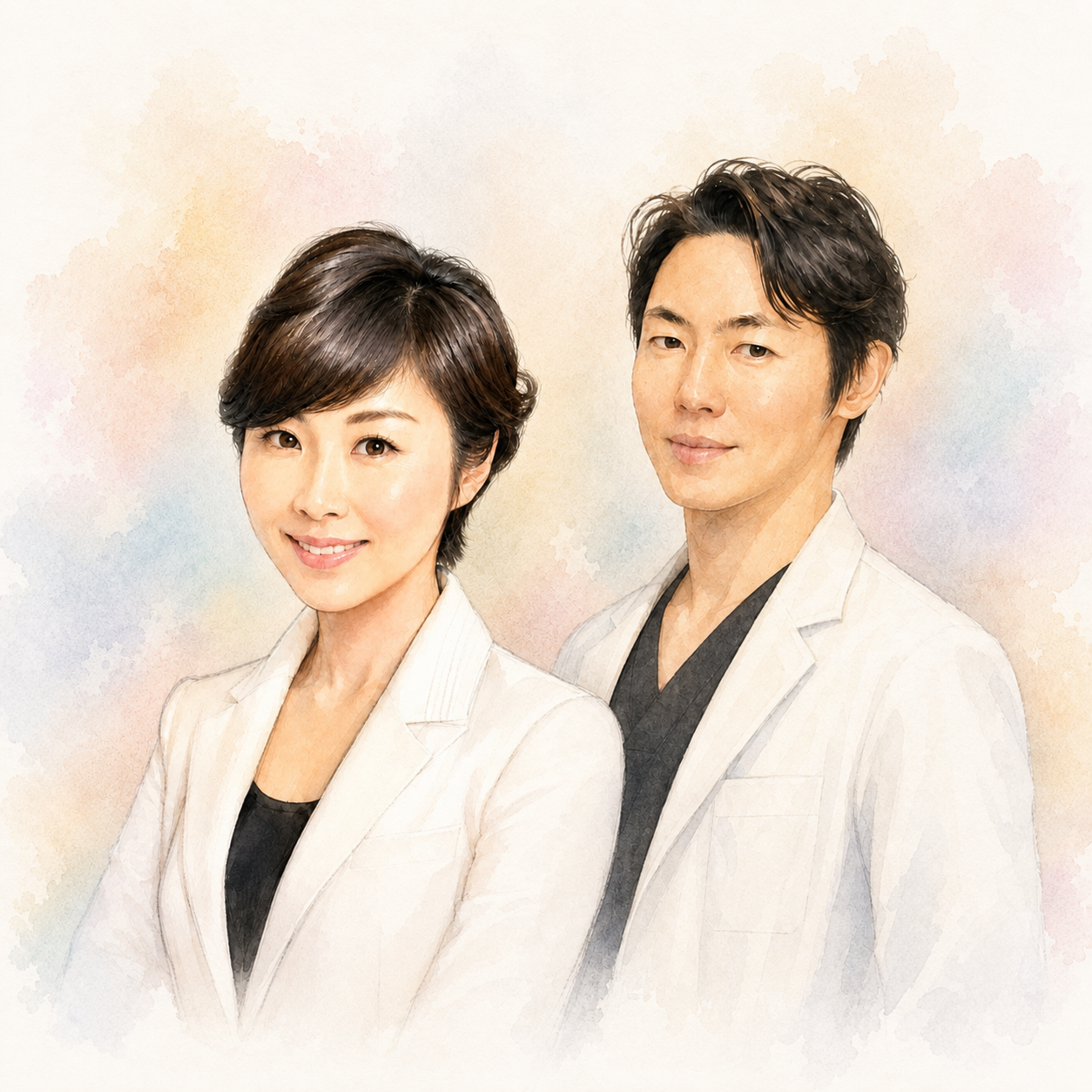
今回のコロナ渦で、様々な局面で急激な変化を余儀なくされ、学会講演やセミナーもオンライン形式に変わりました。
今までのように、どこかに一堂に会するのではなく、場所や人数を問わずに講演できるというのは、時間や移動など様々な面でメリットが大きいと感じます。
「肌診断」についてオンラインセミナーで講演
さて、去る4月19日には、「シミ治療 私の極意~レーザー治療と肌画像撮影器の活用~」と題し、「肌診断」についてオンラインセミナーを行い、湘南藤沢形成外科クリニックの山下 理絵先生とご一緒させていただきました。

シミの原因であるメラニンは、私達の目に見えないレベルで少しずつ肌の奥に溜まっていきます。
ある量以上溜まったところで、「シミ」として私たちの目に見えるようになるので、私たちが見ているメラニンは、実は「氷山の一角」なのです。

気になるシミをよく診察すると、その周りには「まだ目には見えないけれど、もう少しでハッキリと見えるようになるシミ」が多く眠っています。
特に気を付けなくてはならないのが「隠れ肝斑」です。
「隠れ肝斑」の有無で治療法が大きく変わる
隠れ肝斑を見逃して治療してしまうと…
「気になるシミにレーザー照射をしたらシミがかえって濃くなった。」だとか「治療後にまわりから淡いシミもでてきてしまった」といった悲しい事態が起きてしまいます。
ここで、私達医師の「目の精度」を上げてくれるのが、肌画像診断システムです。

肉眼では見えないものを細かく見せてくれるので、どんな肌質なのか、レーザー治療が合うのか合わないのか、などを判断することが出来るようになります。
さらに、レーザーを照射する前にメイク残りがないか、ニキビの予備軍(ポルフィリン)がどのくらいいるのか、など肉眼では見ることのできないものが見えるようになるため、治療の「後」に気を付けなければならないことも分かってきます。

左の画像(肉眼)ではハッキリしないシミが、右の画像だと明らかになっているのがお分かりになるかと思います。右の画像で淡く広がりを見せているシミ、これが先ほどから話題に出ている隠れ肝斑です。

シミ治療は、正しい診断が何よりも大事
レントゲン(X線写真)やCT、MRIといったなじみのある画像診断と同じく、シミ治療にはこの画像診断が必ず必要な情報だと私は考えています。
そのため当院では、治療の前に必ず画像診断システムで撮影を行い、さらに専門の医師が診察・治療を行います。こうすることで、診断と治療の精度を上げながら、色素沈着など望まぬ反応がおこらないよう抑えることができます。
当院でのレーザー照射後の色素沈着の発生率が約2.5%(Qスイッチレーザー照射後の色素沈着の発生率は約45%)と低く抑えられているのは、治療前の診断で肌質を見極めていることが一因です。
安全で効果的な治療が行うためには、目に見えない情報をしっかり集め、精度の高い診断をすることが何より大切です。
┈┈┈┈┈┈┈┈┈┈✄┈┈┈┈┈┈┈┈┈┈
2022年4月に移転・名称変更にいたしました。(2023年4月追記)
医療法人光悠会 ヒルズグレイスクリニック
045-507-7420(火・水・金・土曜 9:00~17:00)
LINE限定のクーポンやシークレットセールなど、大変お得な情報を配信中。
今なら、お友達登録で3,000円割引クーポンをプレゼント。ご登録はこちらから↓

CLINIC INFORMATION
ヒルズグレイスクリニック
アクセスの詳細を見る →
肌を整える時間を、診察の外にも。

With the COVID-19 pandemic, rapid change has been forced on us in many areas, and society lectures and seminars have also moved online.
Rather than everyone gathering in one place as before, we can now give lectures regardless of location or audience size, and I feel this brings major advantages in many respects, including time and travel.
A lecture on “skin diagnosis” at an online seminar
On 19 April, I gave an online seminar on “skin diagnosis” titled “Treating pigmentation, my secrets: making use of laser treatment and skin imaging devices”, alongside Dr. Rie Yamashita of Shonan Fujisawa Plastic Surgery Clinic.
Melanin, the cause of pigmentation, gradually accumulates deep in the skin at a level invisible to our eyes.
Once more than a certain amount has built up, it becomes visible to us as a “dark spot”, so the melanin we see is in fact only “the tip of the iceberg”.
When I examine a dark spot that bothers a patient closely, I find many “spots that cannot yet be seen but will soon become clearly visible” lying dormant around it.
What we must be especially careful about is “hidden melasma”.
Whether “hidden melasma” is present greatly changes the treatment approach
If hidden melasma is overlooked and treatment goes ahead…
Unfortunate situations can occur, such as “I had laser treatment on a spot that bothered me, and the spot actually became darker” or “After treatment, faint spots appeared around it too”.
This is where the skin image diagnosis system comes in, raising the “precision of the eye” of us doctors.
Because it shows in detail what cannot be seen with the naked eye, it allows us to judge what kind of skin type a person has and whether or not laser treatment is suitable.
Furthermore, because it makes visible things that cannot be seen with the naked eye, such as whether any make-up remains before laser treatment and how much acne in the making (porphyrins) is present, we also learn what needs care “after” treatment.
You can probably see that pigmentation that is unclear in the image on the left (naked eye) becomes evident in the image on the right. The pigmentation spreading faintly in the right image is the hidden melasma I have been discussing.
In treating pigmentation, a correct diagnosis matters above all
Just like familiar forms of image diagnosis such as X-rays, CT and MRI, I believe this image diagnosis provides essential information for treating pigmentation.
For this reason, at our clinic we always take images with the image diagnosis system before treatment, and a specialist doctor carries out the examination and treatment. In this way, we can raise the precision of diagnosis and treatment while working to keep unwanted reactions such as hyperpigmentation from occurring.
One reason the incidence of hyperpigmentation after laser treatment at our clinic is kept low, at about 2.5% (the incidence of hyperpigmentation after Q-switched laser treatment is about 45%), is that we assess skin type through diagnosis before treatment.
To carry out safe and effective treatment, what matters most is thoroughly gathering invisible information and making a highly precise diagnosis.
┈┈┈┈┈┈┈┈┈┈✄┈┈┈┈┈┈┈┈┈┈
In April 2022 we relocated and changed our name. (Note added April 2023)
Koyukai Medical Corporation, Hills Grace Clinic
045-507-7420 (Tue, Wed, Fri & Sat 9:00–17:00)
We share very good-value information, such as LINE-only coupons and secret sales.
Right now, when you add us as a friend, you will receive a ¥3,000 discount coupon. Register here ↓
CLINIC INFORMATION
Hills Grace Clinic
Access details →
Caring for your skin beyond the consultation room
HOME CARE
Online shop
Doctor-selected skincare and supplements, delivered to your home. For some products, a free online consultation is available before purchase.
CONSULTATION
Consult us at the clinic
Every person's skin is different. We look into what lies behind pigmentation and melasma, and suggest the care and the order of treatment your skin needs now.