院長 奥 謙太郎|2024年9月19日の記録(2026年10月23日に加筆・再構成)
この記事の要点
2024年9月、ヒルズグレイスクリニック内に設立した当院の教育機関GMIで、第3回グローバルセミナーを開催しました。香港、マレーシア、インドネシアの医師をお迎えし、レーザー理論とニードルRFの組み合わせ方、毛穴治療における針の角度やRFエネルギーの調整をテーマにしました。あわせて、プリセットモード(あらかじめ設定された数値)ではなく、マニュアルモードで患者様一人ひとりの肌に応じた治療を行う重要性を解説しました。患者様にとっては、医師が学ぶ場で何が共有されているのかを知る手がかりになります。

はじめに
ニードルRFは、効果の感じ方に差が出ることがあります。同じ機器なのに、なぜか。第3回のGMIでは、香港、マレーシア、インドネシアの医師の皆様と、この問いを設定の考え方から掘り下げました。
1. 香港・マレーシア・インドネシアから ― 第3回のセッション
3回目を迎えたGMIのグローバルトレーニングセッションには、香港、マレーシア、インドネシアから医師の皆様をお迎えしました。
国や地域によって、求められる治療の内容は異なります。それでも変わらないのは、機器治療に必要な基礎的な知識と技術です。GMIでは、機器の背景にある科学を深く理解し、それを臨床の現場で応用する力を育むことを重視しています。
「これにはこれ」という短絡的な方法論ではなく、「なぜこうなるのか」を考える。GMIが育成を目指しているのは、目の前の現象に応じた治療法を組み立てる応用力です。

2. 議論で浮かび上がる知識の背景
GMIの座学では、質問や意見が出たら、それを参加者全員やグループで議論します。聞いているだけでは気づかなかった知識の背景が議論の中で浮かび上がると、その現象に対する理解の解像度が一気に上がります。
このやり取りを繰り返すことで、自分の患者さんに適した治療を組み立てられるようになっていく。それが、GMIの座学で目指していることです。

3. 今回のテーマ ― レーザー理論とニードルRF、そして毛穴治療
第3回のテーマは、次の2つでした。
ニードルRFは、針を皮膚に入れながら高周波を照射する機器です。背景として補足すると、どの層に針を進め、どのような性質の高周波を使うかを慎重に決める必要があります。
設定が適切でないと、熱が意図しない部分に強く作用し、色素沈着や肌のへこみにつながるリスクもあります。いずれも、のちの第5回で取り上げた観点です。
- レーザー理論とニードルRF(針を用いて高周波を流す治療)の組み合わせ方
- 毛穴治療における、針の角度やRF(高周波)エネルギーの調整の実践
4. プリセットではなく、マニュアルモードで
日本でも人気の高いニードルRFですが、プリセットモード(あらかじめ設定された数値で照射するモード)では、効果にムラが出ることがあります。よく効いたと感じる方がいる一方で、効果をあまり感じない方もいる。その理由の一つがプリセットモードにある、と当時の私は考えていました。
そのためGMIでは、マニュアルモードで患者様一人ひとりの肌に応じた治療法を提供する重要性を解説しました。同じ肌を持つ人は一人もいないため、機器の性能を引き出すには個別の対応が欠かせません。
なお、肌の厚みやインピーダンス(電気の流れにくさ)、炎症の状態が人によって異なることは、のちの第8回でも取り上げた観点です。
このときお話ししたポテンツァ(国内未承認の医療機器)の「オートマ」と「マニュアル」の違いは、次の第4回で、ピコシュアとピコシュアプロの違いをたとえる際にも使いました。
5. 考え方を広めるために、学ぶ場を続ける
こうした考え方を広めるには、まだまだ伝えていく努力が必要だと感じていました。GMIではこれからも、実践的な知識と技術を共有し、患者様一人ひとりに適した治療法を提供するためのサポートを行っていきます。
医師に伝えている、一人ひとりの肌を見て設定を考えるという姿勢は、横浜あざみ野での日々の診療で私が大切にしている考え方と同じです。
よくある質問
ニードルRFの効果に、人によって差が出るのはなぜですか?
理由の一つとして、プリセットモードだけでは一人ひとりの肌の違いに対応しきれないことが挙げられます。同じ肌を持つ人は一人もいないため、第3回のGMIでは、マニュアルモードで個別に設定する重要性を医師に解説しました。肌の厚みや電気の流れにくさ、炎症の状態が人によって異なることは、のちの第8回でも取り上げた観点です。適切な設定であっても、効果の出方には個人差があります。
ニードルRFのプリセットモードとマニュアルモードの違いは何ですか?
プリセットモードは、あらかじめ設定された数値で照射するモードです。マニュアルモードは、医師が肌の状態を見ながら設定を自ら決めるモードです。一例として、ポテンツァ(国内未承認の医療機器です)にもオートマとマニュアルがあります。設定が適切でないと色素沈着や肌のへこみなどのリスクがあることは、のちの第5回でも取り上げており、機器の理論を理解したうえで扱うことが大切です。
ニードルRFの毛穴治療では、どのような点を調整するのですか?
第3回のGMIでは、毛穴治療における針の角度やRF(高周波)エネルギーの調整を、医師向けの実践テーマとして取り上げました。のちの第5回でも、どの層に針を進め、どのような性質の高周波を使うかを慎重に決める必要があることを解説しています。毛穴の状態は人によって異なり、効果や経過には個人差があります。気になる点は、診察時に医師へご相談ください。
おわりに
第3回のGMIでは、ニードルRFの設定を患者様一人ひとりの肌に応じて考えることを、針の角度やエネルギー調整という具体的な話題から解説しました。続く第4回では、中国の医師を対象に、ピコシュアプロのトレーニングを行いました。
シミ・たるみ・肌質のお悩みは、横浜あざみ野のヒルズグレイスクリニックまでご相談ください。診察のうえで、一人ひとりに合った治療の組み立てをご提案します。カウンセリングのご予約はこちら →
シミ・肝斑・毛穴など、肌に現れた悩みに向き合うとき、私が大切にしているのは、症状だけでなく、その症状が生じた肌の状態まで見極めることです。
レーザー・高周波・超音波などの機器は、同じ設定で照射しても、結果は一人ひとり異なります。その差を生むのは、肌が熱を受け止め、治療に応えられる状態にあるかどうか。だからこそ、必要に応じて肌が応えられる状態を整えながら、適切な治療を、適切な順序でご提案します。
この考えを治療設計の起点に据え、「Thermal Thread Technique®」として体系化し、2024年に『Lasers in Surgery and Medicine』誌へ発表しました。同論文は同誌のTop Viewed・Top Cited Articleに選出されています。高周波照射法「Mono-Bi CrossLIFT Technique」および、注入治療と医療機器を組み合わせる「CrossTALK® protocol」も『Journal of Cosmetic Dermatology』誌に発表しています。
米国レーザー医学会(ASLMS)専門医、医療法人社団光悠会理事長。Cynosure社のアドバイザリーボードには日本から唯一参加し、PicoSure Proの開発段階から携わり、第1号機による症例報告も行ってきました。世界最大のレーザー医学会ASLMSやIMCAS ASIA、KOREA DERMAなどの国際学会で招待講演を行い、国際的な医師教育プログラム「GMI」を主宰。海外の医師の指導・育成にも取り組んでいます。
これまでの治療で思うような手応えを得られなかった方にも、なぜその肌にその症状が起きているのかを見極め、必要な治療の順序からご提案します。肌を診て、治療を設計し、経過に合わせて組み立てを更新する。そこまでを含めて、肌治療だと考えています。詳しいプロフィール →
CLINIC INFORMATION
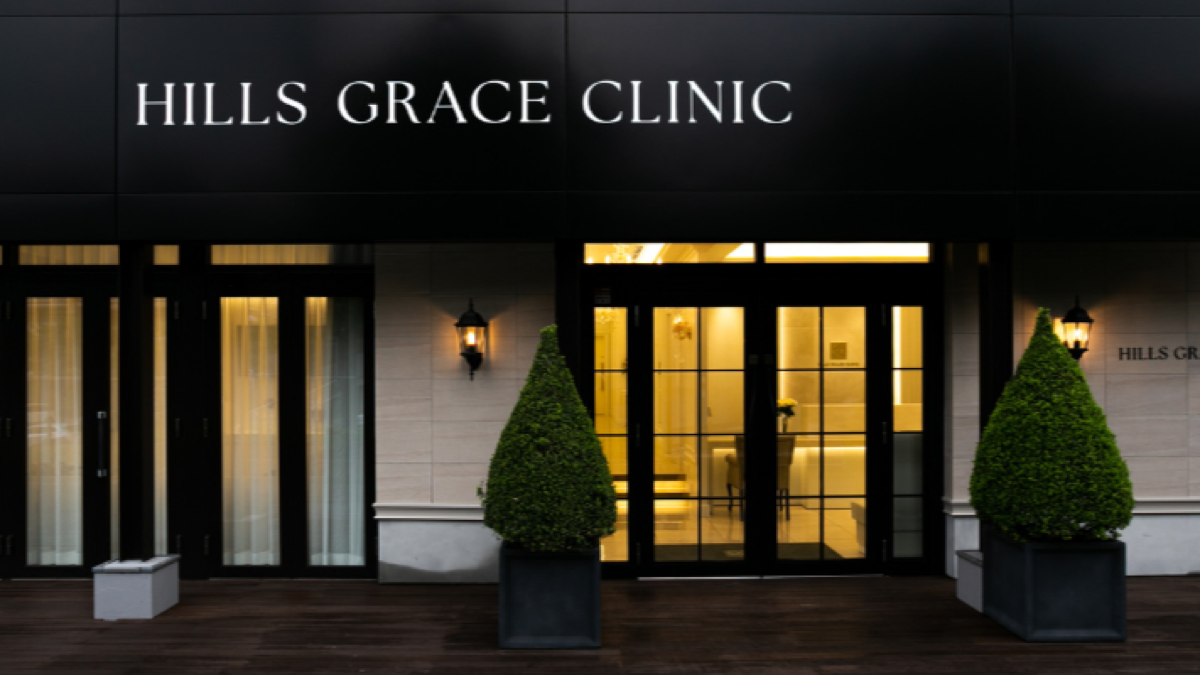
ヒルズグレイスクリニック
アクセスの詳細を見る →
肌を整える時間を、診察の外にも。

Director Kentaro Oku | Record of 19 September 2024 (expanded and restructured on 23 October 2026)
Key points
In September 2024, we held the 3rd Global Seminar at GMI, our clinic’s educational institution established within Hills Grace Clinic. We welcomed doctors from Hong Kong, Malaysia and Indonesia, and the themes were how to combine laser theory with needle RF, and how to adjust the needle angle and RF energy in pore treatment. I also explained the importance of treating according to each patient’s skin in manual mode rather than preset mode (values set in advance). For patients, this offers a clue to what is shared in the places where doctors learn.
Introduction
With needle RF, there can be differences in how the effects are felt. Why, when the device is the same? At the 3rd GMI, together with the doctors from Hong Kong, Malaysia and Indonesia, we explored this question from the perspective of how settings are approached.
1. From Hong Kong, Malaysia and Indonesia: the 3rd session
For the third GMI global training session, we welcomed doctors from Hong Kong, Malaysia and Indonesia.
The treatments in demand differ from country to country and region to region. Even so, what does not change is the fundamental knowledge and skill that device-based treatment requires. At GMI, we place emphasis on developing a deep understanding of the science behind the devices and the ability to apply it in clinical practice.
Rather than a simplistic “this for that” approach, we think about “why this happens”. What GMI aims to develop is the applied ability to construct a treatment suited to the phenomenon in front of you.
2. The background to knowledge that emerges through discussion
In GMI’s lectures, whenever a question or opinion comes up, it is discussed by all participants or in groups. When background to the knowledge that would not have been noticed simply by listening emerges in the discussion, the resolution of one’s understanding of that phenomenon rises sharply.
By repeating these exchanges, participants gradually become able to construct treatments suited to their own patients. That is what GMI’s lectures aim for.
3. This session’s themes: laser theory, needle RF and pore treatment
The 3rd session had the following two themes.
Needle RF is a device that delivers radiofrequency while needles are inserted into the skin. As background, it is necessary to decide carefully which layer to advance the needles into and what kind of radiofrequency to use.
If the settings are not appropriate, heat can act strongly on unintended areas, with a risk of leading to pigmentation or depressions in the skin. Both are points taken up later, in the 5th session.
- How to combine laser theory with needle RF (treatment that passes radiofrequency through needles)
- Practical adjustment of the needle angle and RF (radiofrequency) energy in pore treatment
4. Manual mode, not preset
Needle RF is highly popular in Japan too, but in preset mode (a mode that treats using values set in advance), results can be uneven. Some people feel it worked well, while others feel little effect. At the time, I believed that one of the reasons for this lay in preset mode.
For this reason, at GMI I explained the importance of providing treatment suited to each patient’s skin in manual mode. Since no two people have the same skin, an individual approach is essential to draw out the device’s performance.
The fact that skin thickness, impedance (resistance to the flow of electricity) and the state of inflammation differ from person to person is also a point taken up later, in the 8th session.
The difference between the “Auto” and “Manual” modes of Potenza (a medical device not approved in Japan) that I discussed here was also used in the following 4th session as an analogy for the difference between PicoSure and PicoSure Pro.
5. Continuing to offer a place to learn, to spread this way of thinking
I felt that spreading this way of thinking would still require considerable effort to communicate it. GMI will continue to share practical knowledge and skills and to support doctors in providing treatment suited to each individual patient.
The approach I convey to doctors, of looking at each person’s skin and thinking about the settings, is the same principle I value in my daily practice in Azamino, Yokohama.
Frequently asked questions
Why do the effects of needle RF differ from person to person?
One reason is that preset mode alone cannot fully accommodate the differences in each person’s skin. Since no two people have the same skin, at the 3rd GMI I explained to doctors the importance of setting parameters individually in manual mode. The fact that skin thickness, resistance to the flow of electricity and the state of inflammation differ from person to person is also a point taken up later, in the 8th session. Even with appropriate settings, results vary between individuals.
What is the difference between preset mode and manual mode in needle RF?
Preset mode is a mode that treats using values set in advance. Manual mode is a mode in which the doctor decides the settings themselves while assessing the condition of the skin. As one example, Potenza (a medical device not approved in Japan) also has Auto and Manual modes. The fact that inappropriate settings carry risks such as pigmentation and depressions in the skin was also taken up later, in the 5th session, and it is important to operate the device with an understanding of its theory.
What is adjusted in pore treatment with needle RF?
At the 3rd GMI, adjustment of the needle angle and RF (radiofrequency) energy in pore treatment was taken up as a practical theme for doctors. In the later 5th session, I also explained that it is necessary to decide carefully which layer to advance the needles into and what kind of radiofrequency to use. The condition of pores differs from person to person, and results and progress vary between individuals. If you have any concerns, please consult the doctor during your examination.
In closing
At the 3rd GMI, I explained the idea of considering needle RF settings according to each patient’s skin through the concrete topics of needle angle and energy adjustment. In the following 4th session, we held PicoSure Pro training for doctors from China.
For concerns about pigmentation, sagging or skin quality, please consult Hills Grace Clinic in Azamino, Yokohama. After an examination, we will propose a treatment plan suited to each individual. Book a consultation →
When addressing concerns that appear on the skin, such as dark spots, melasma and pores, what I value is assessing not only the symptoms but also the condition of the skin in which those symptoms arose.
With devices such as lasers, radiofrequency and ultrasound, results differ from person to person even when treatment is performed with the same settings. What creates that difference is whether the skin is in a state that can receive heat and respond to treatment. That is why, where necessary, I prepare the skin so that it can respond, while proposing appropriate treatments in an appropriate order.
Placing this idea at the starting point of treatment design, I systematised it as the “Thermal Thread Technique®” and published it in 2024 in “Lasers in Surgery and Medicine”. The paper was selected as one of the journal’s Top Viewed and Top Cited Articles. I have also published the radiofrequency treatment method “Mono-Bi CrossLIFT Technique” and the “CrossTALK® protocol”, which combines injectable treatments with medical devices, in the “Journal of Cosmetic Dermatology”.
Specialist of the American Society for Laser Medicine and Surgery (ASLMS) and Chair of the Board of Koyukai Medical Corporation. As the only member from Japan on Cynosure’s advisory board, I have been involved with PicoSure Pro since its development stage and have also reported cases using the first unit. I have given invited lectures at international congresses including ASLMS, the world’s largest laser medicine society, IMCAS ASIA and KOREA DERMA, and I lead the international physician education programme “GMI”, also working to teach and train doctors from overseas.
Even for those who have not obtained the results they hoped for from previous treatments, I assess why that skin is showing those symptoms and propose treatment starting from the order in which it is needed. Examining the skin, designing the treatment, and updating the plan as progress unfolds: I consider all of this to be part of skin treatment. Full profile →
CLINIC INFORMATION
Hills Grace Clinic
Access details →
Caring for your skin beyond the consultation room
HOME CARE
Online shop
Doctor-selected skincare and supplements, delivered to your home. For some products, a free online consultation is available before purchase.
CONSULTATION
Consult us at the clinic
Every person's skin is different. We look into what lies behind pigmentation and melasma, and suggest the care and the order of treatment your skin needs now.